
Every morning, the EuroCity Hungaria daytime express train departs the majestic Budapest Nyugati (or western) railway station direct to Hamburg-Altona, a 1,200 kilometre journey with stops in all four countries it serves – Hungary, Slovakia, Czechia and Germany as well as their respective capital cities: Budapest, Bratislava, Prague and Berlin. This happens to be one of the oldest international express trains that dates back to 1960 – and much of the route has been unchanged since.
For any train lover, this journey promises to be incredible with some great scenery and amenities thrown in to pass the time. It’s a route that’s been on my to-do list for some time, so when the opportunity came earlier this month I booked myself a ticket from Budapest to Berlin in First Class, for a journey of over eleven hours. So, did the journey live up to the excitement?
Here’s a map of the full route that the EuroCity Hungaria takes to kick things off:
Departure from Budapest Nyugati
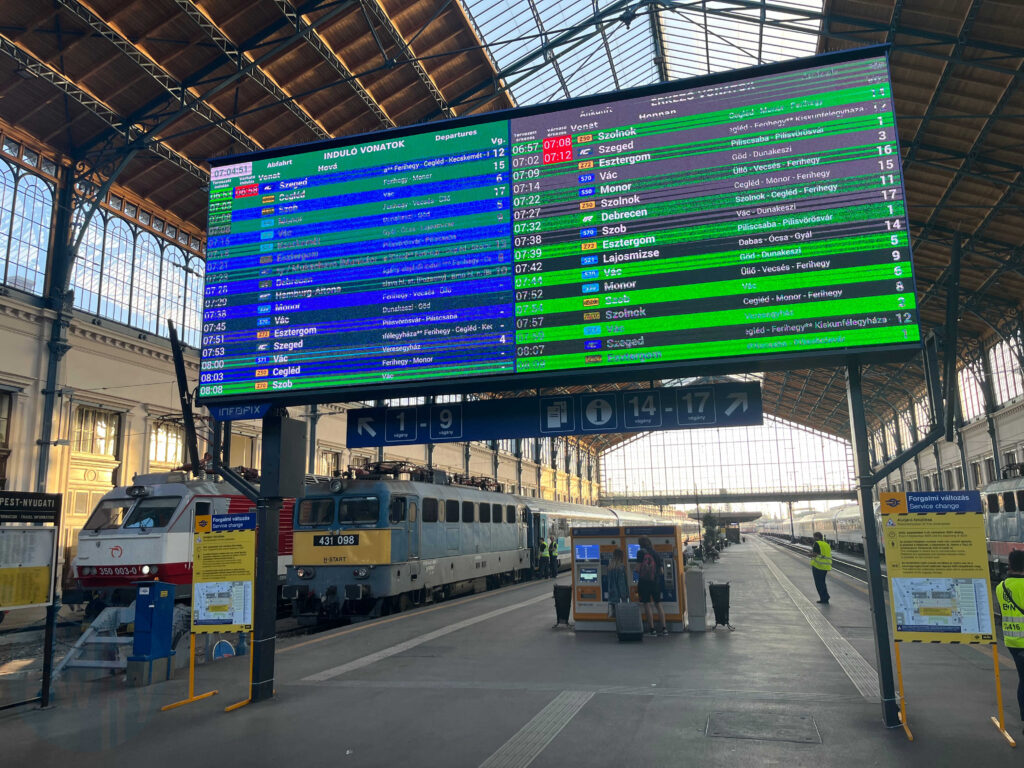
Budapest Nyugati station, which opened in 1877, is one of the main terminus stations in the Hungarian capital, alongside Budapest Keleti (or eastern) station. Both stations offer a unique vibe that’s hard to describe, with station announcement jingles that fill the main train sheds, fuelling excitement while the modern departure screens display all kinds of exotic European destinations.
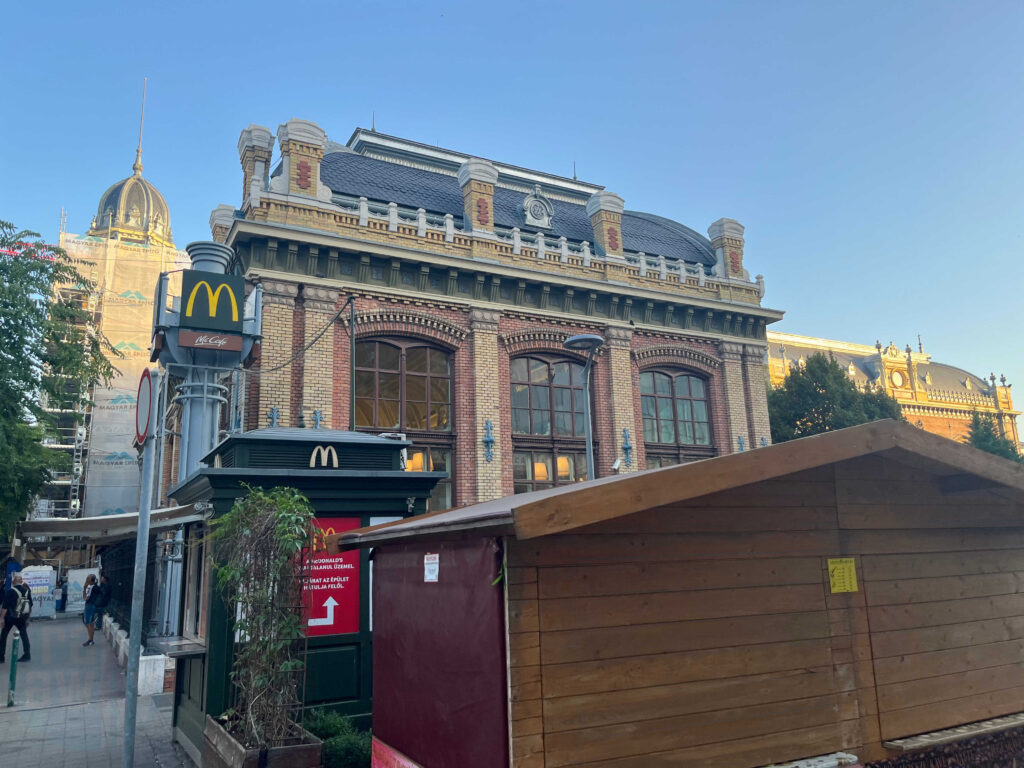
Nyugati is home to trains departing towards Czechia and Germany, as well as the unique InterCity train that takes over six hours to get to Keleti station that’s only down the road – via Hungary’s premier wine region. The station is also home to possibly the world’s most spectacular McDonalds – not that that would be needed on this trip as you’ll see. Otherwise, facilities wise, there is a booking office, shops, left luggage lockers and ATMs for cash.
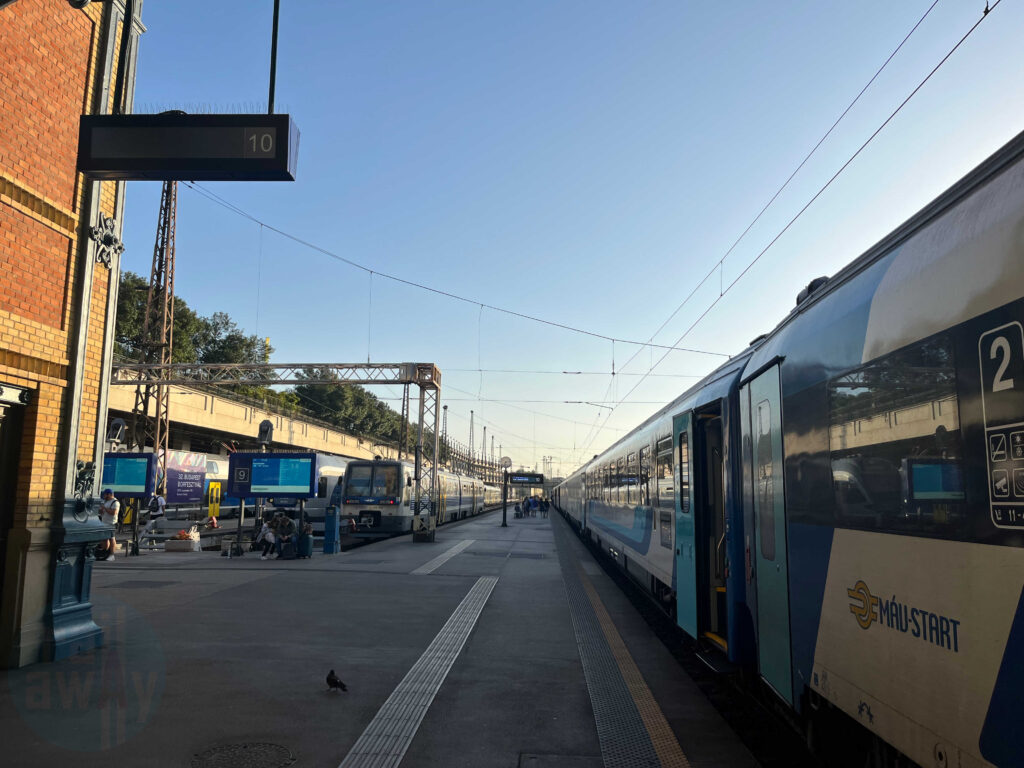
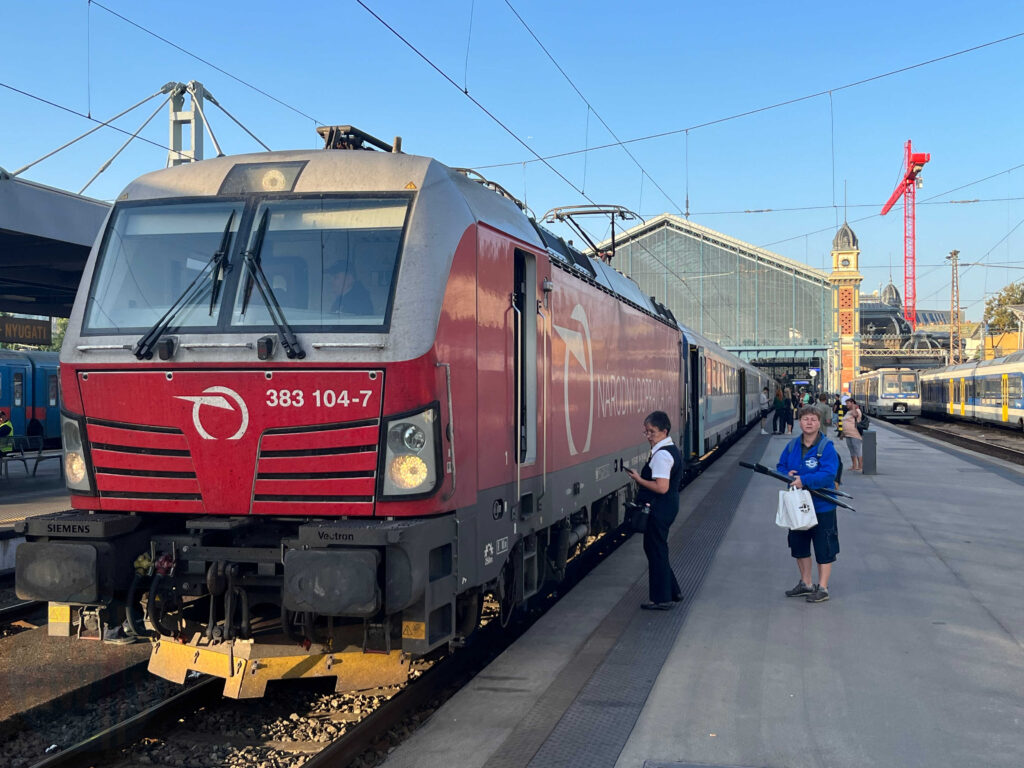
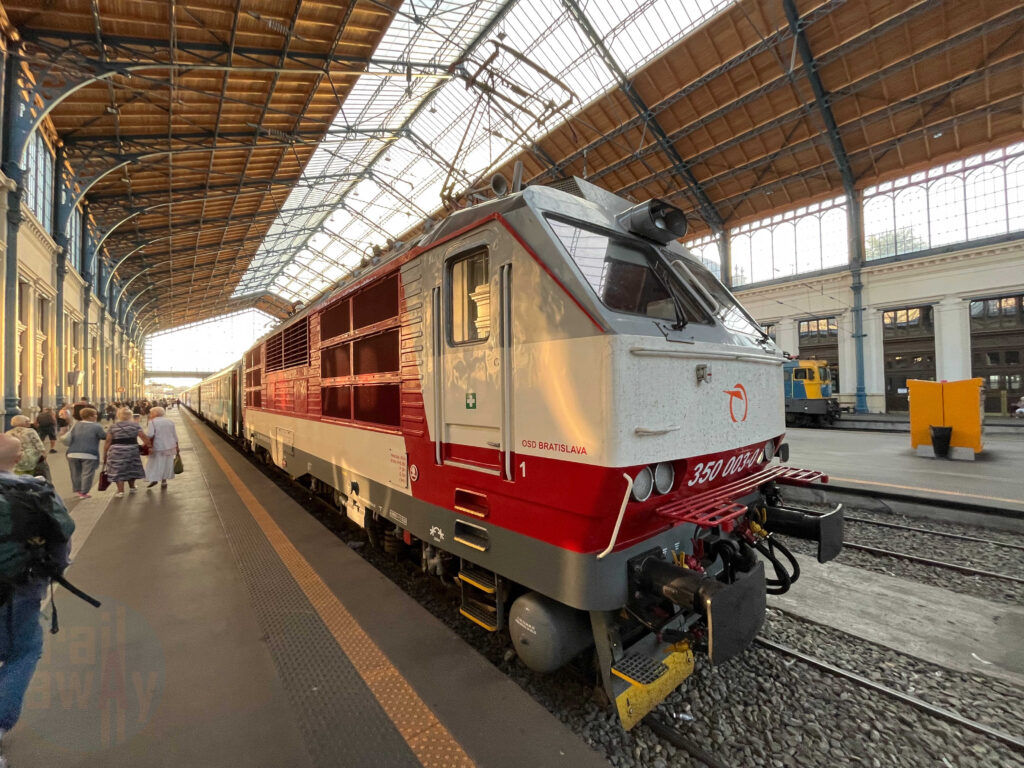
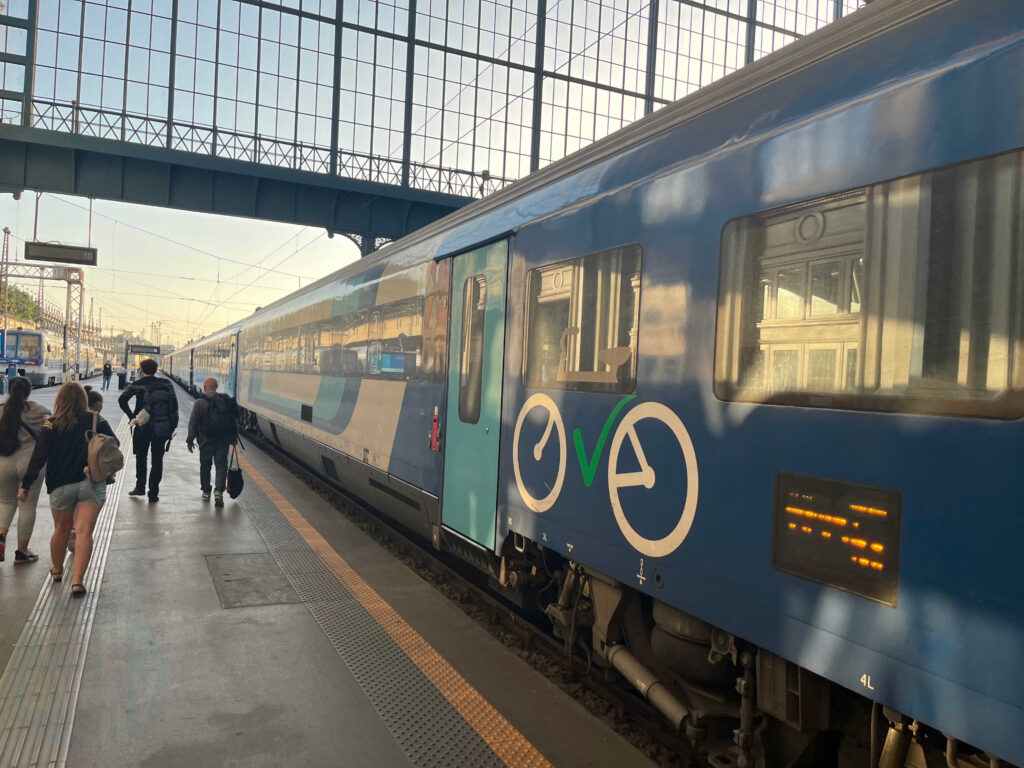
On a bright September day, we arrived at Nyugati to embark on the EuroCity Hungaria, train number EC 172. The train departed early in the morning, 07:29 specifically – a time, I think, that would result in more people just missing their train than if it was simply 07:30. Nevertheless, we had arrived in good time to locate the platform that would be one below the main train shed on platform 10 – what a privilege.
Highlights in Budapest City
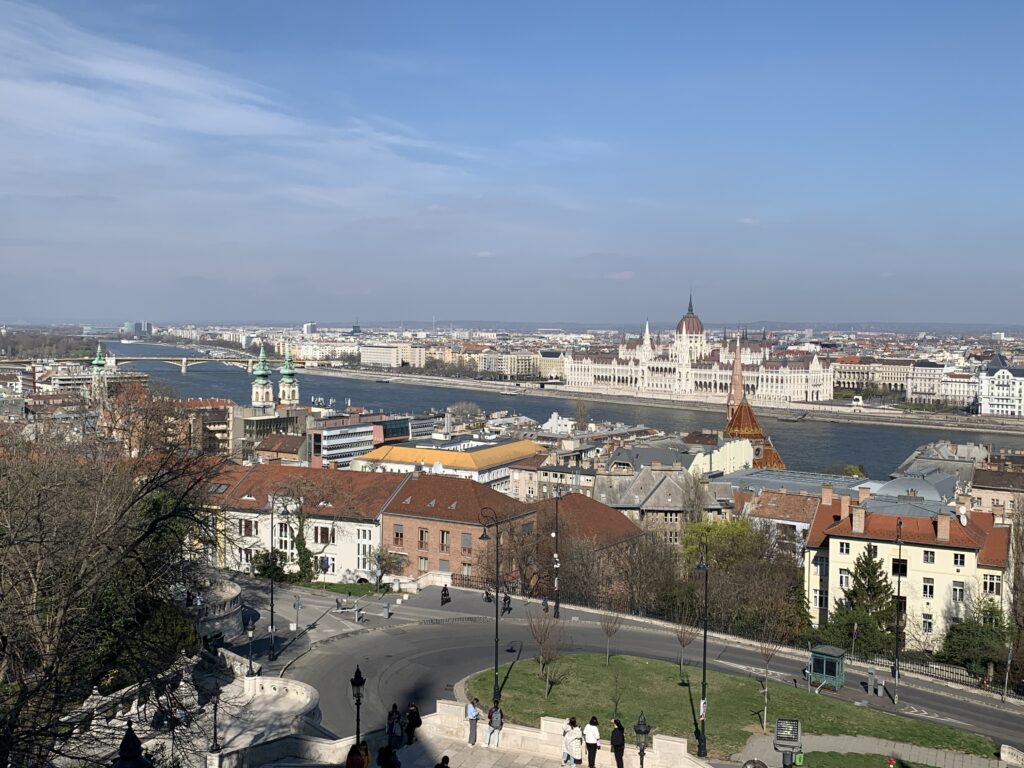
Budapest is one of my favourite cities to visit with an array of attractions and experiences to enjoy. Most attractions are situated around the river on both the Buda and Pest sides.
During my visits to Budapest, I recommend:
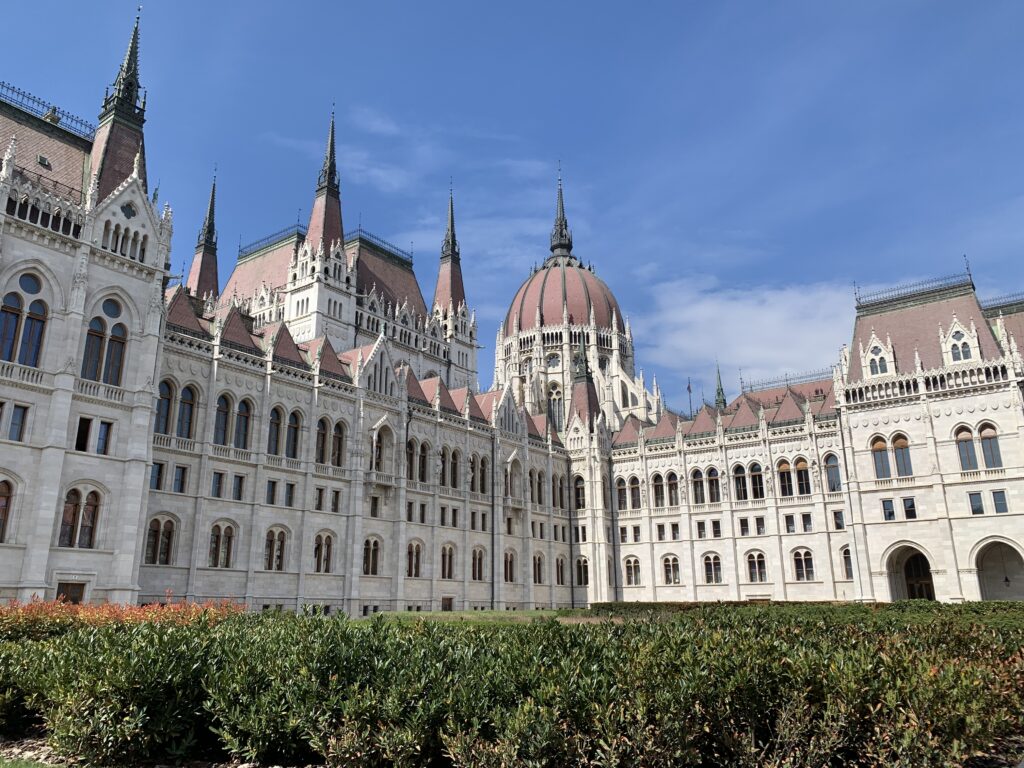
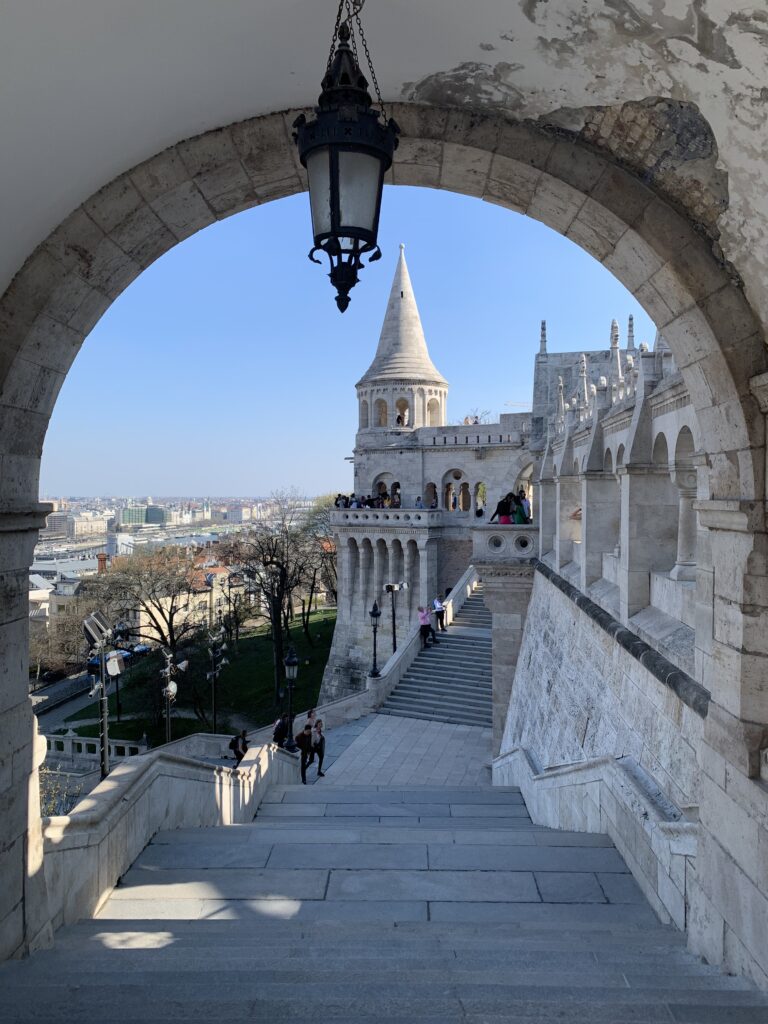
- Fisherman’s Bastion for views across the Danube
- Széchenyi Chain Bridge
- Széchenyi Thermal Bath
- Hungarian Parliament Building
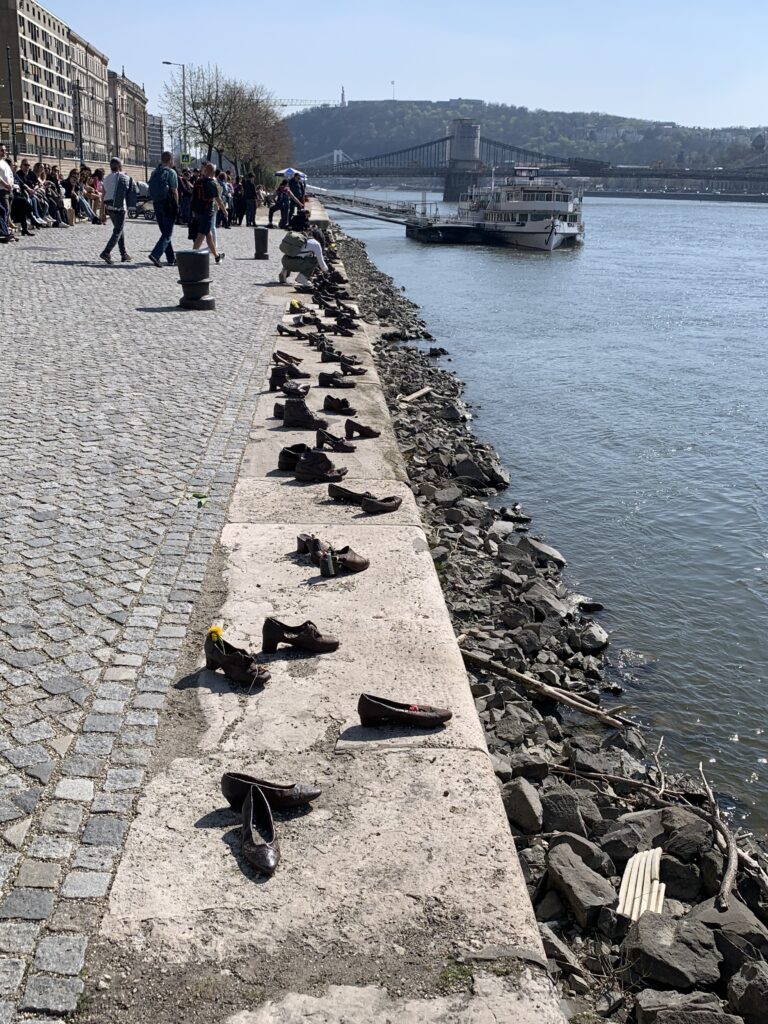
- Shoes on the Danube Bank
- Keleti station
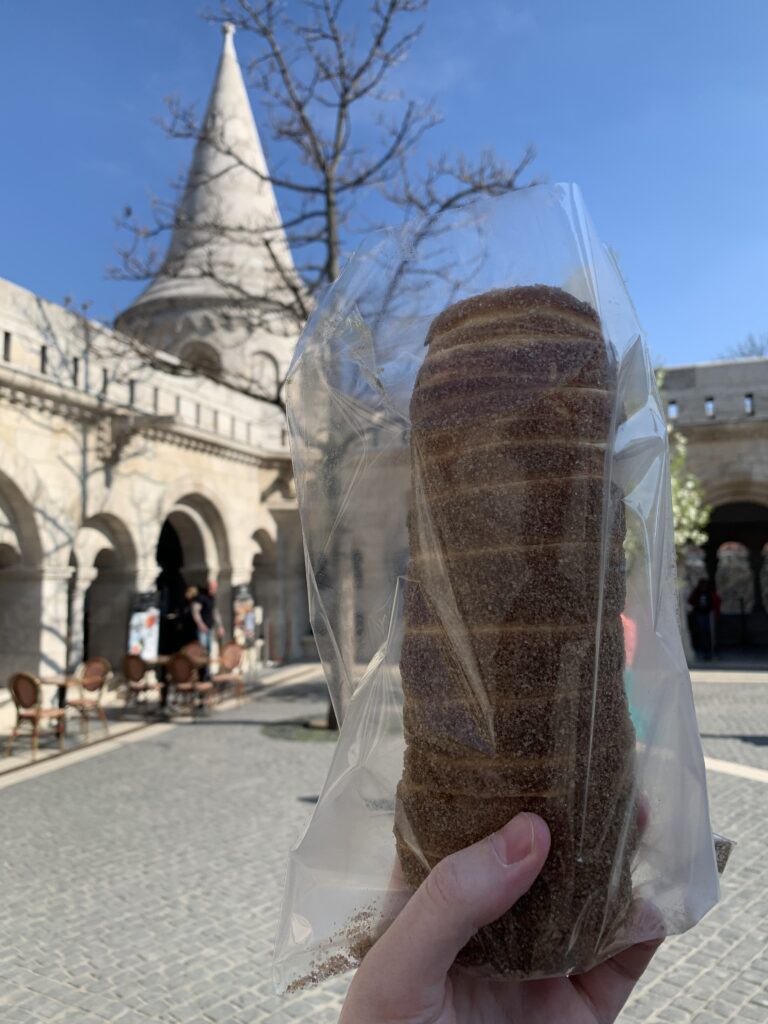
- Grab a Kürtőskalács, or chimney cake, at kiosks around the city
Onboard the EuroCity Hungaria
Conventional EuroCity trains have some complex operations, brought mainly due to being operated jointly by national railway companies the train passes through, as opposed to one operator managing the full service. The EuroCity Hungaria is no exception, although it’s evident that the operation has been simplified somewhat in places.
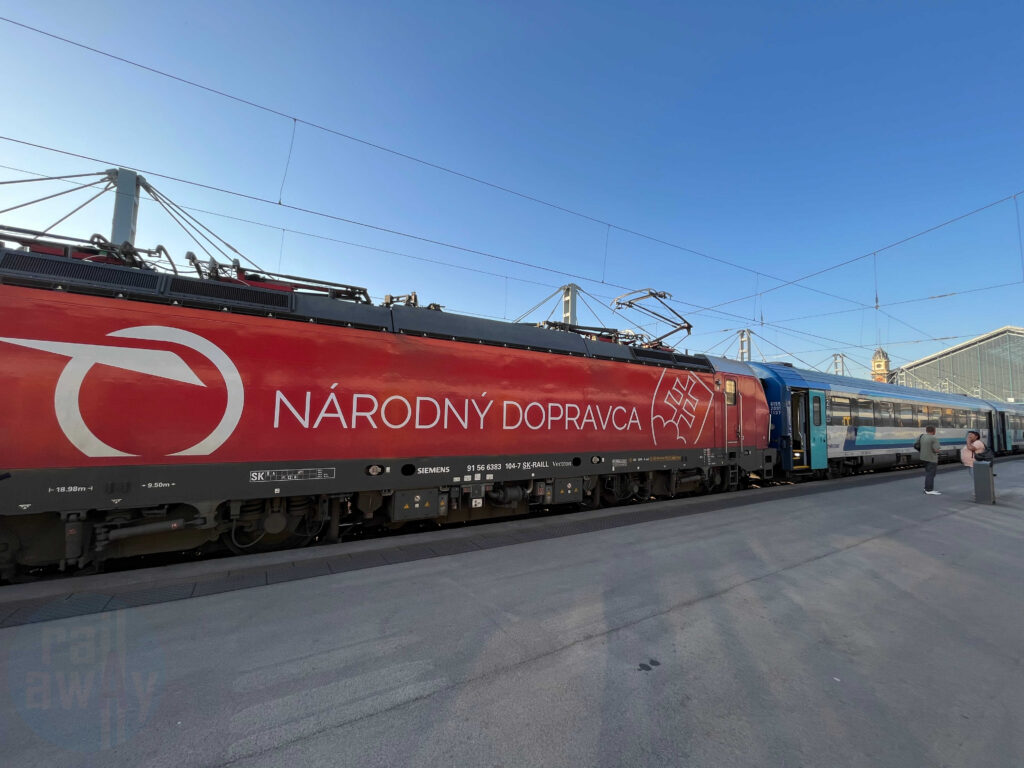
Take the locomotives first. Instead of the locomotive changing at each border, the EuroCity Hungaria currently operates with only one change of locomotive for the full journey – a Slovakian one from Budapest to Prague and a Czech one from Prague to Hamburg.
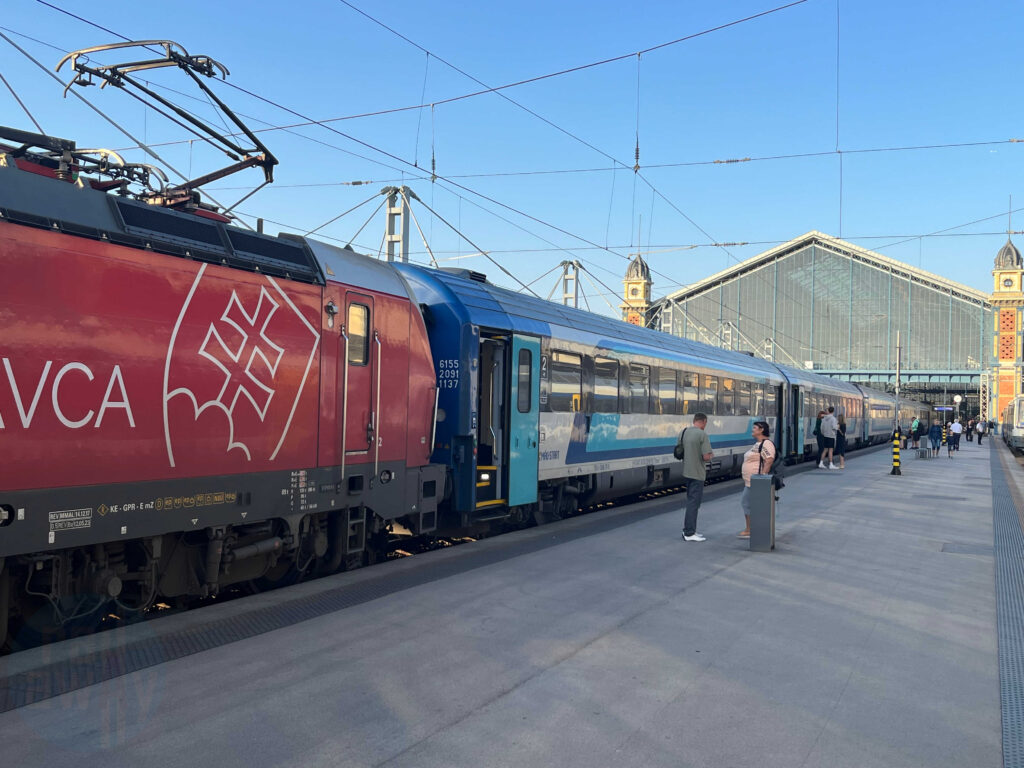
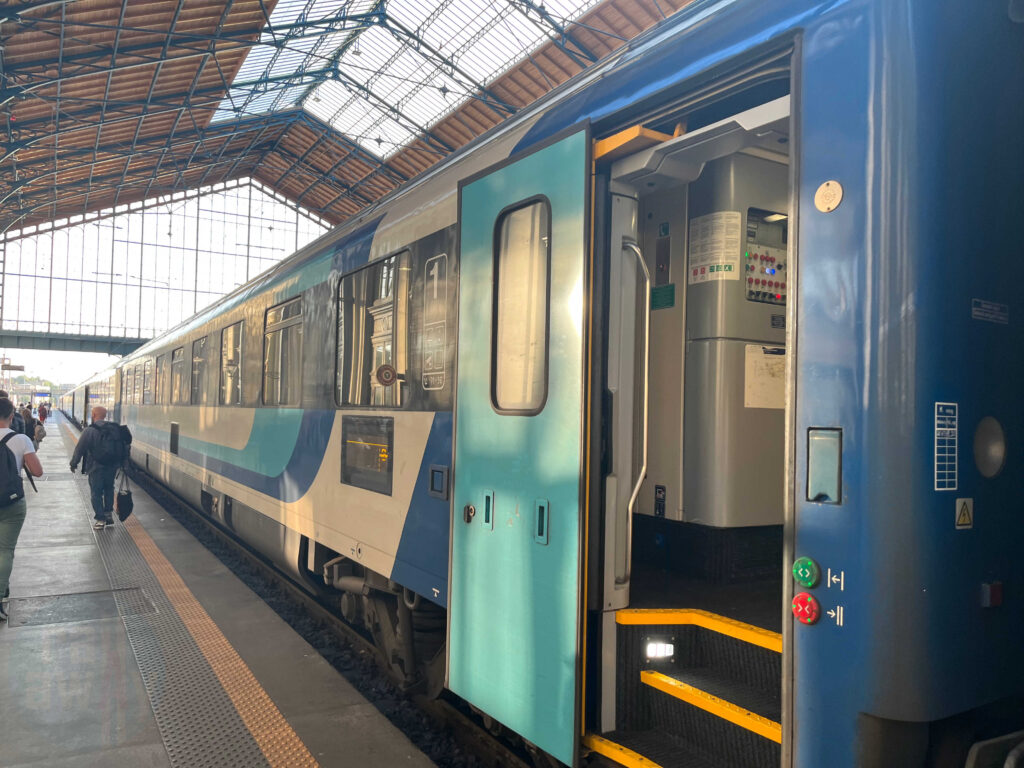
Likewise, the carriages on this train today are exclusively formed from one operator’s stock, Hungarian State Railways (MÁV-START), including a Dining Car and don’t split or join to serve other destinations en-route as other EuroCity trains. It’s impressive to think that a train is being sent over 1,100km away from the nearest station in its home country, i.e. the distance from Hamburg to Szob, the first station in Hungary!
On the contrary, the staffing works in the same way to other EuroCity trains with conductors changing at each border – the full trip meant tickets could be checked as many as four times by different faces – once in each country. Thankfully, however, as each country is a member of the Schengen zone there are no passport or ID checks at all on this train.
First Class Accommodation
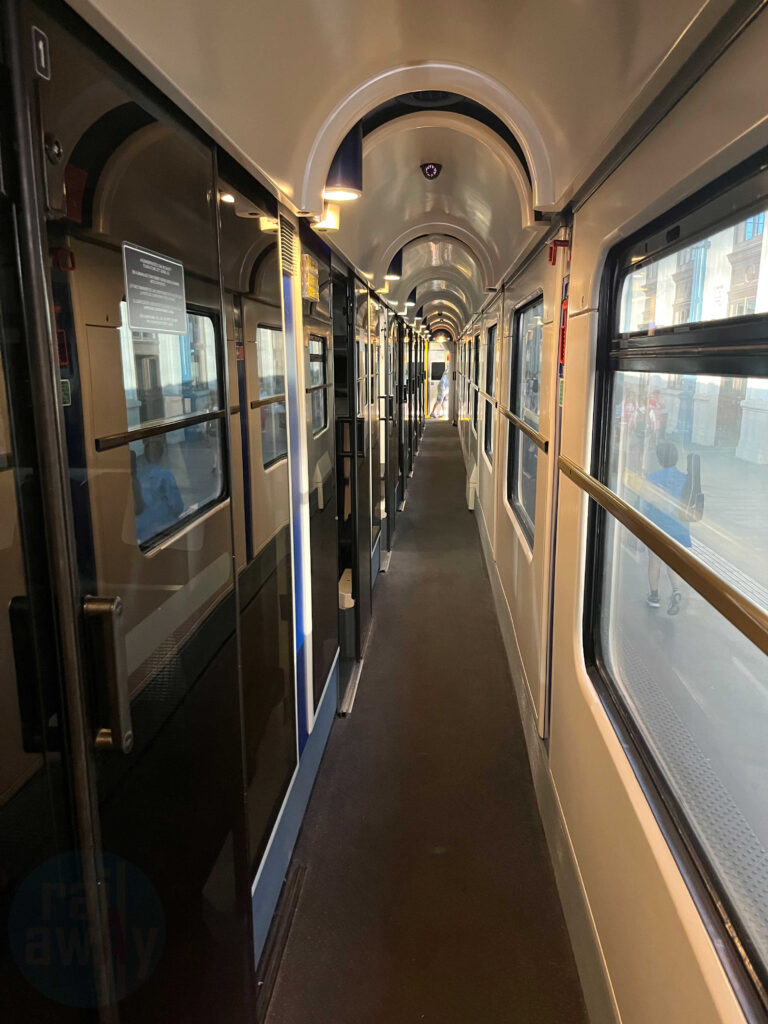
The EuroCity Hungaria tends to convey two carriages dedicated for First Class – one is an open saloon type while the other is seating in compartments. For this trip, I had opted for the latter armed with seat reservations in carriage 262. It is very common for international trains to have large numbers, which I can only assume is something to do with each train needing a unique set.
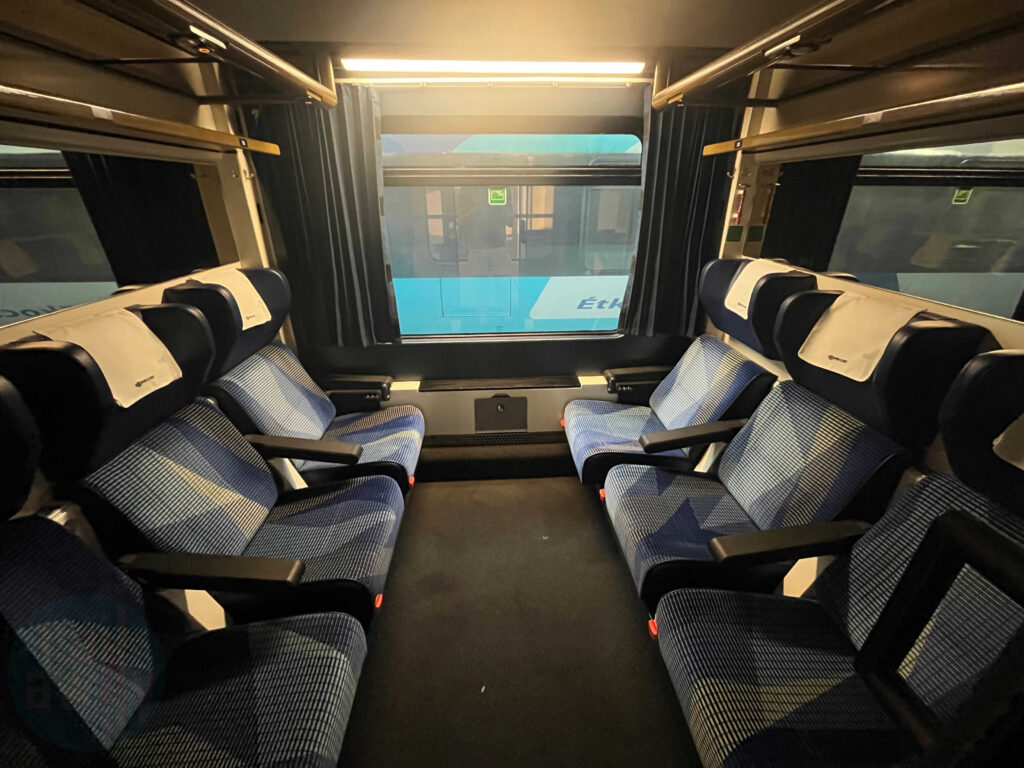
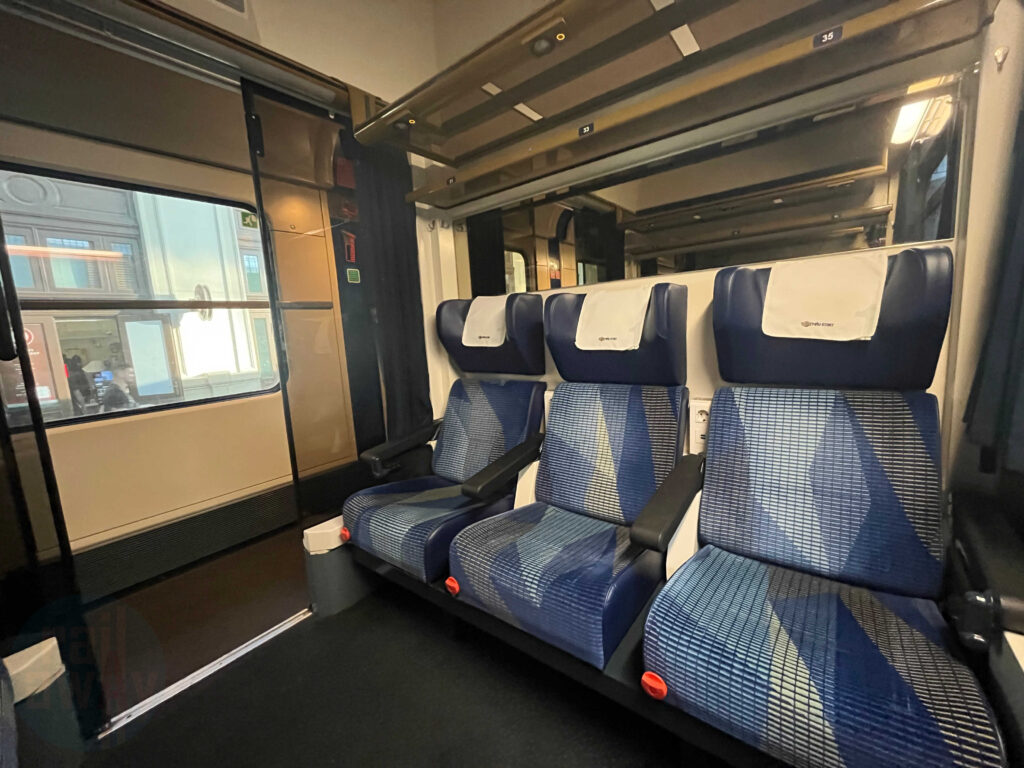
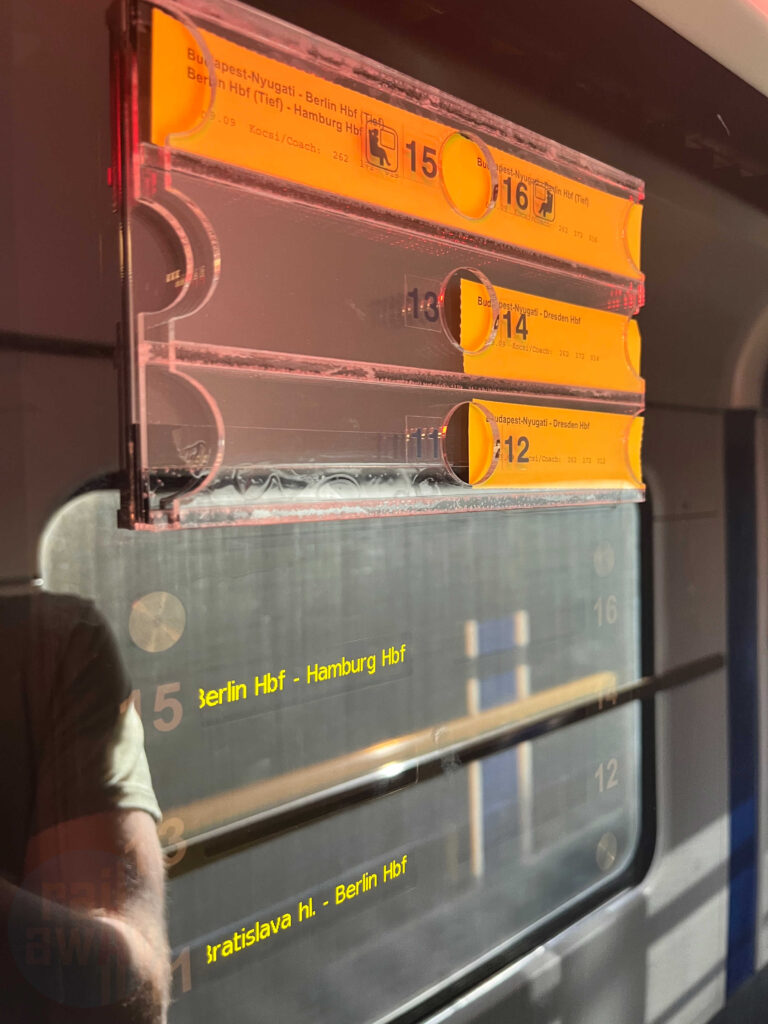
The Hungarian First Class compartments are large and, when they’re quiet, they really facilitate a relaxing journey. For the full journey from Budapest to Berlin we lucked out and we were able to sit in our own compartment with no passengers joining us as they embarked and disembarked en route. The compartment we had booked had three other passengers reserved at different points in the journey – we could tell by the mix of electronic and paper based reservations placed outside the compartment door. These didn’t marry up at all, so one can only assume that some feed from at least two different booking engines.
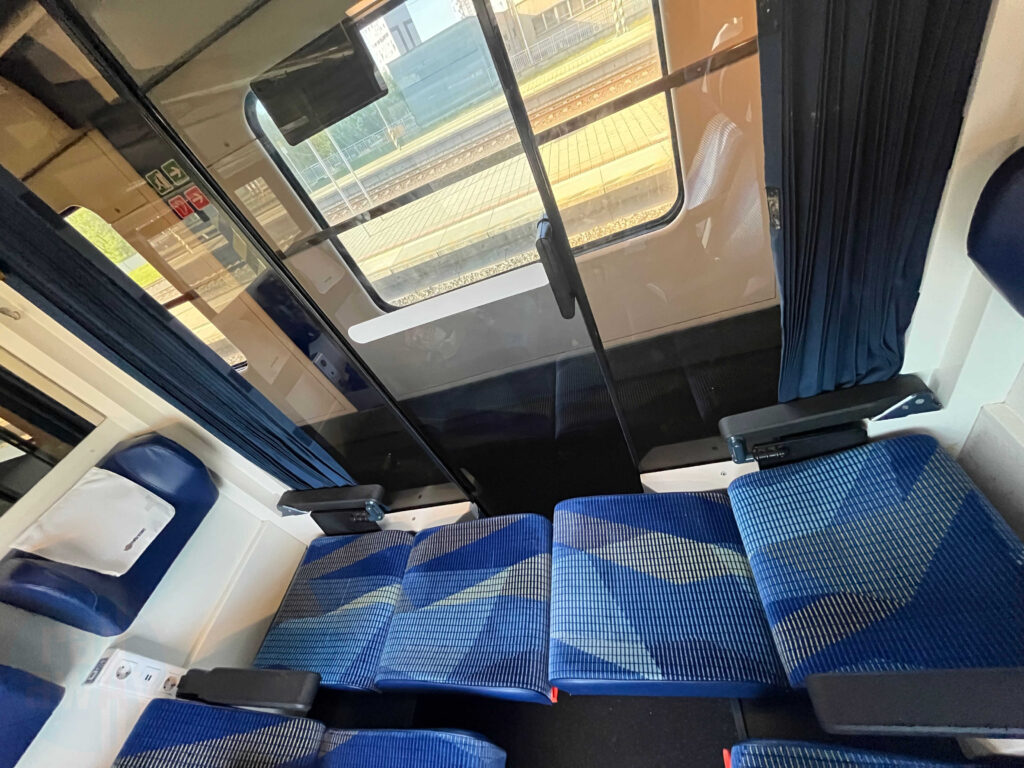
There were two compartments reserved for “Last Minute Reservations”, so we took a chance, and the risk of getting told off by a militant conductor, and set-up camp in one of these instead of our booked places. The risk paid off and we were able to move around to our heart’s content and even adjust the seats into beds for a much needed lie-down towards the end of the trip after a busy week of train travel and sightseeing.
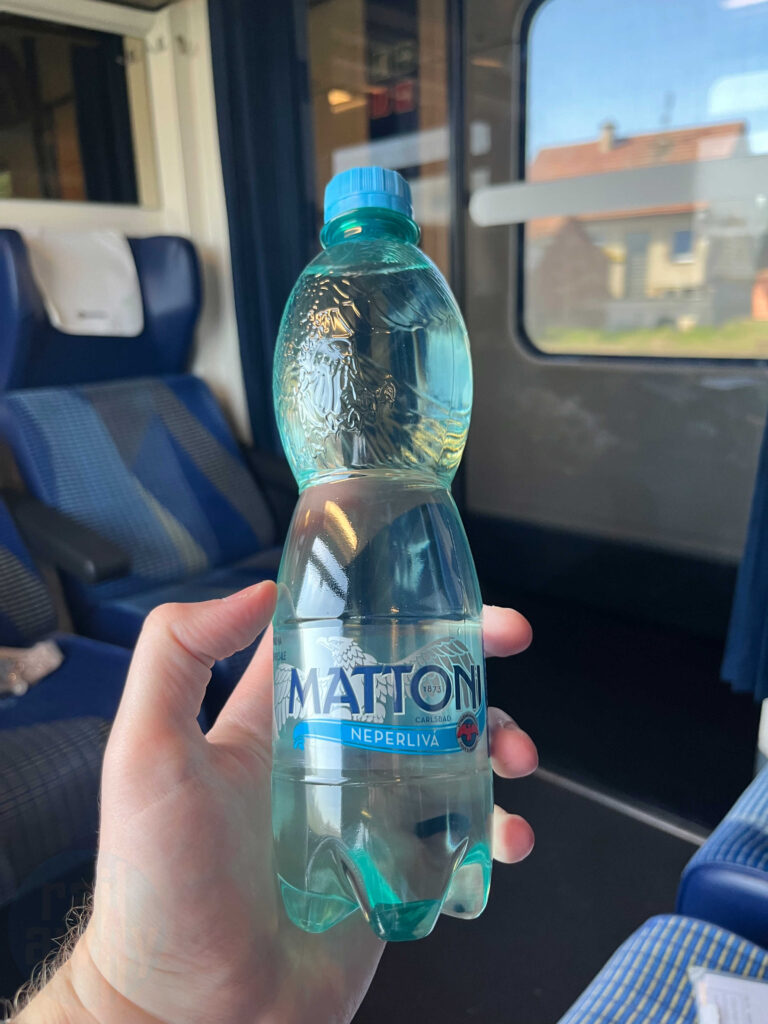
First Class, as is commonplace in continental Europe, doesn’t get you any complimentary food and drink, only a larger seat, more space and a usually quieter environment. The exception is when the train travels through Czechia when the conductor will bring you round a complimentary bottle of water. This is irrespective of whether the train is international or domestic, unlike in Slovakia, at least in my experience, where you will only be offered this on domestic long distance trains – so not on the EuroCity Hungaria! It’s always best to stock up on your own water on such a trip, just in case!
Second Class
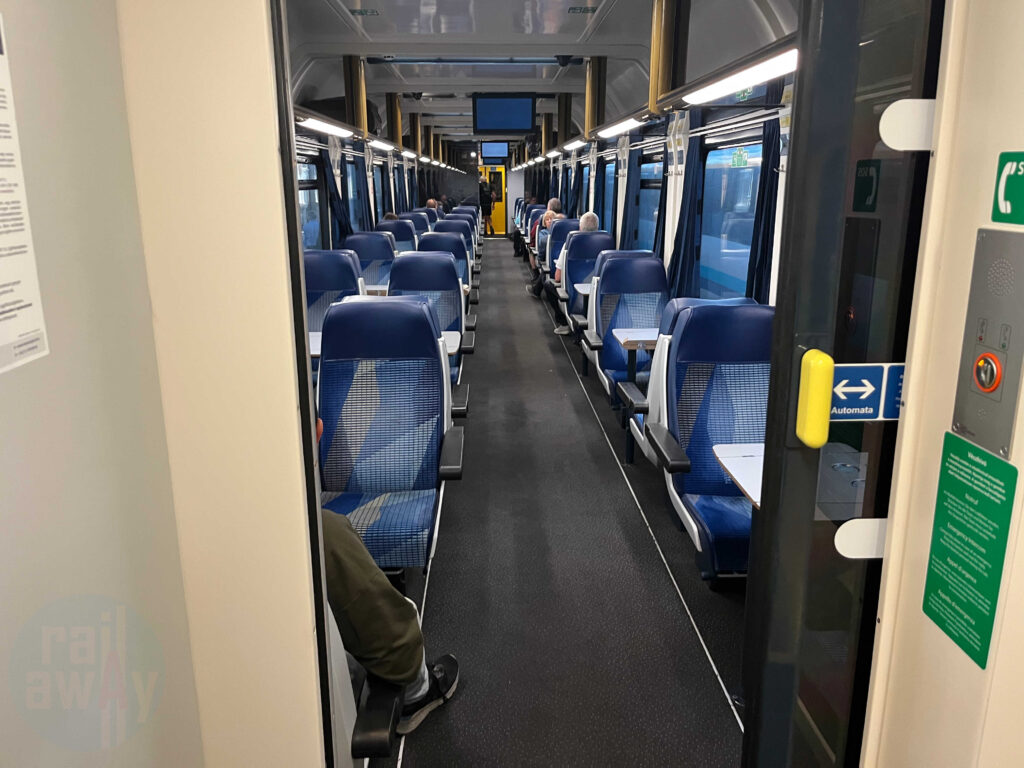
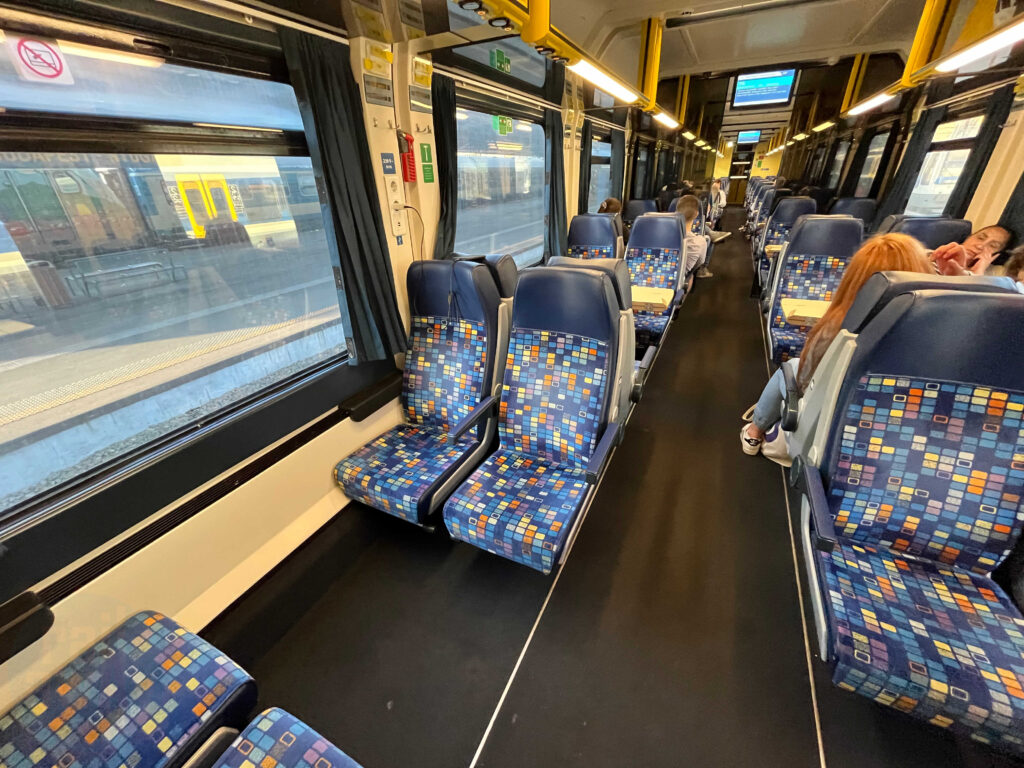
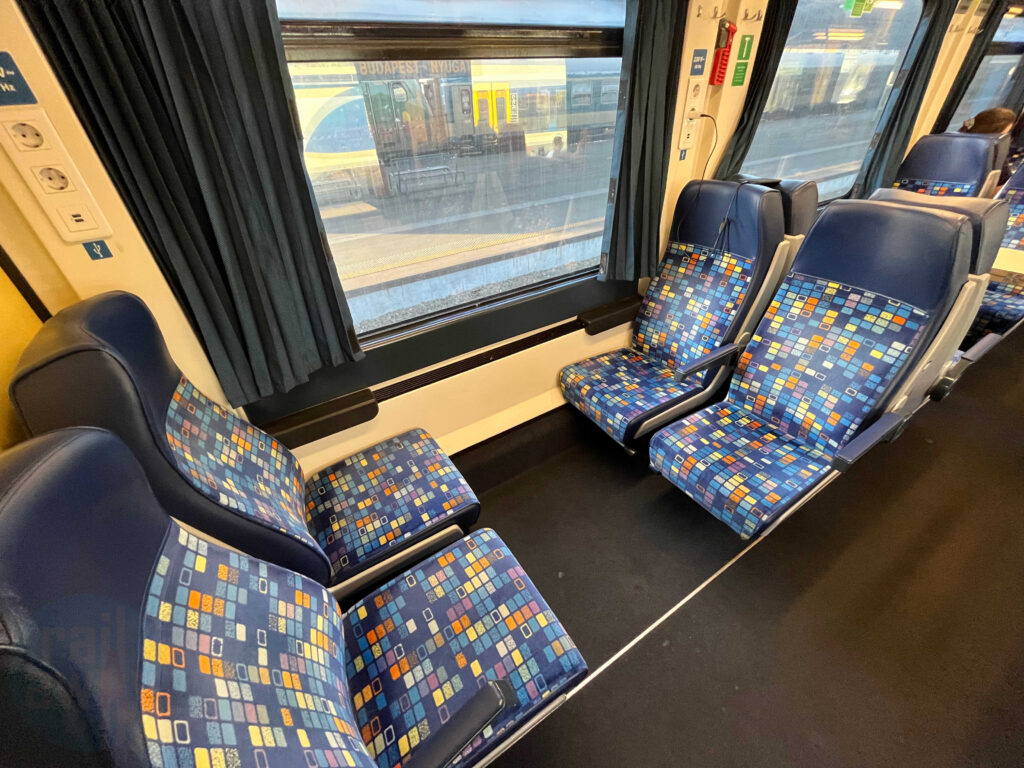
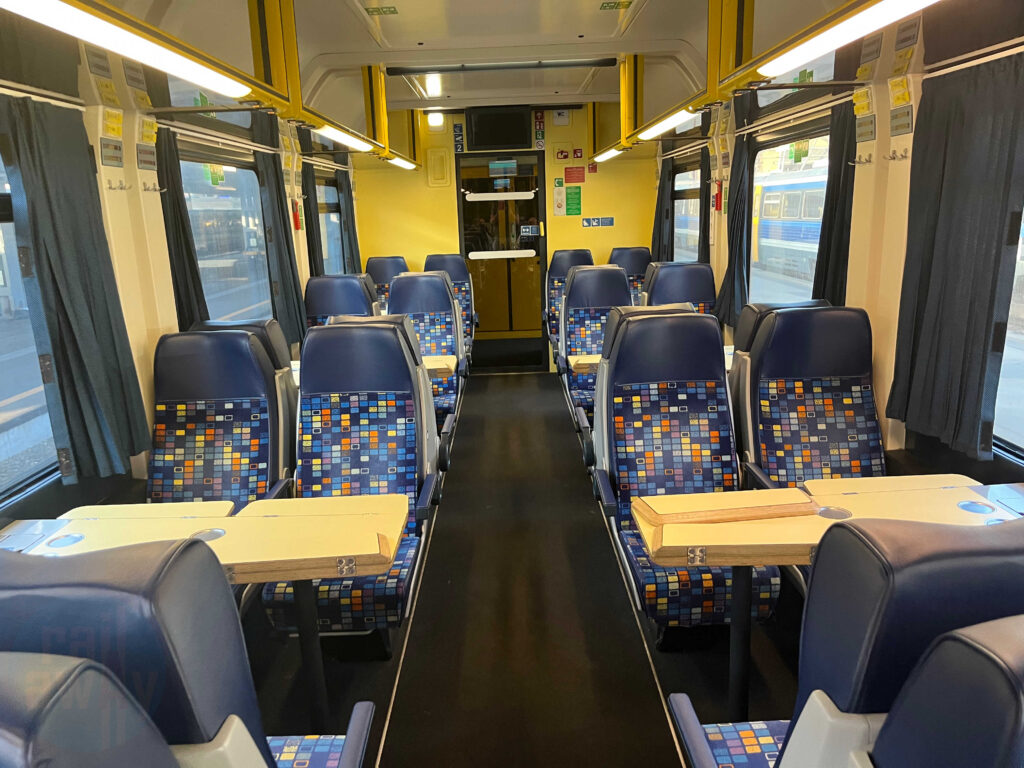
The EuroCity Hungaria conveys six carriages of Second Class accommodation. This is mainly open saloon seating, however, there is occasionally a compartment carriage. Seating is mostly in a 2+2 configuration around tables of four in the open saloon.
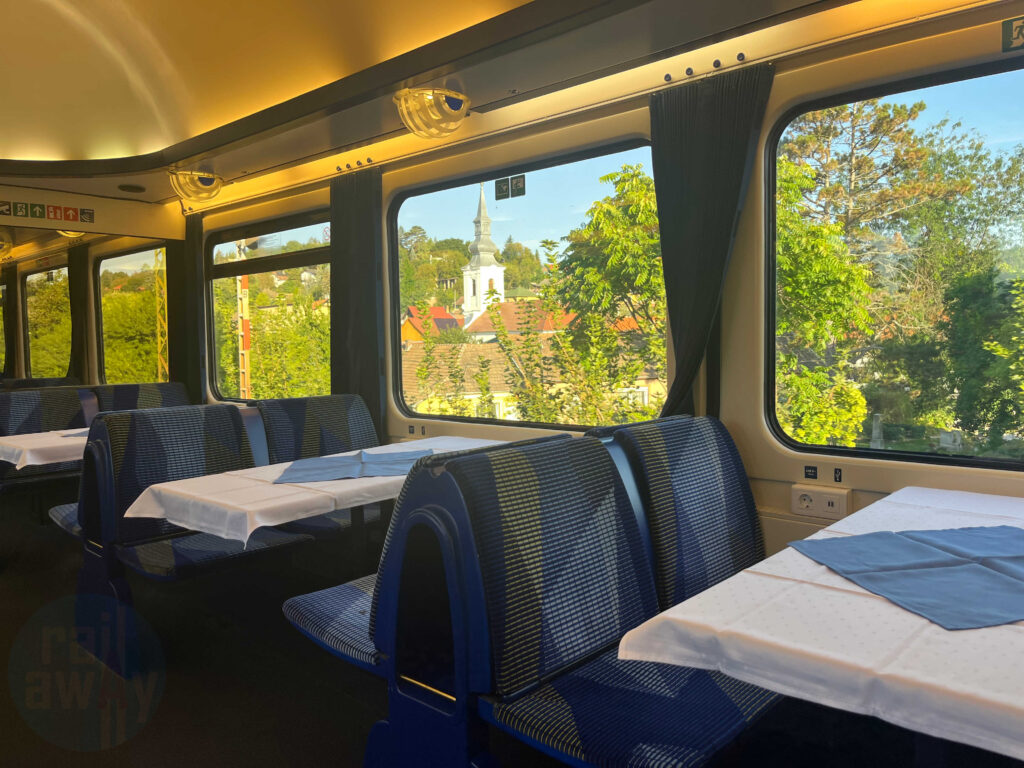
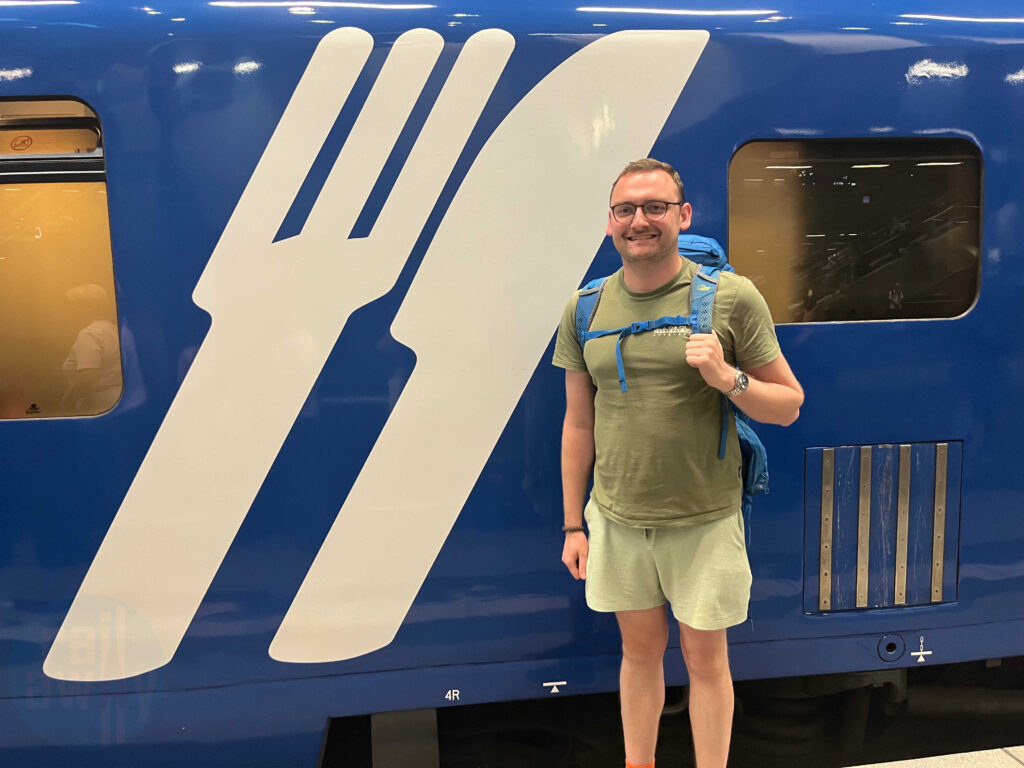
Dining Car
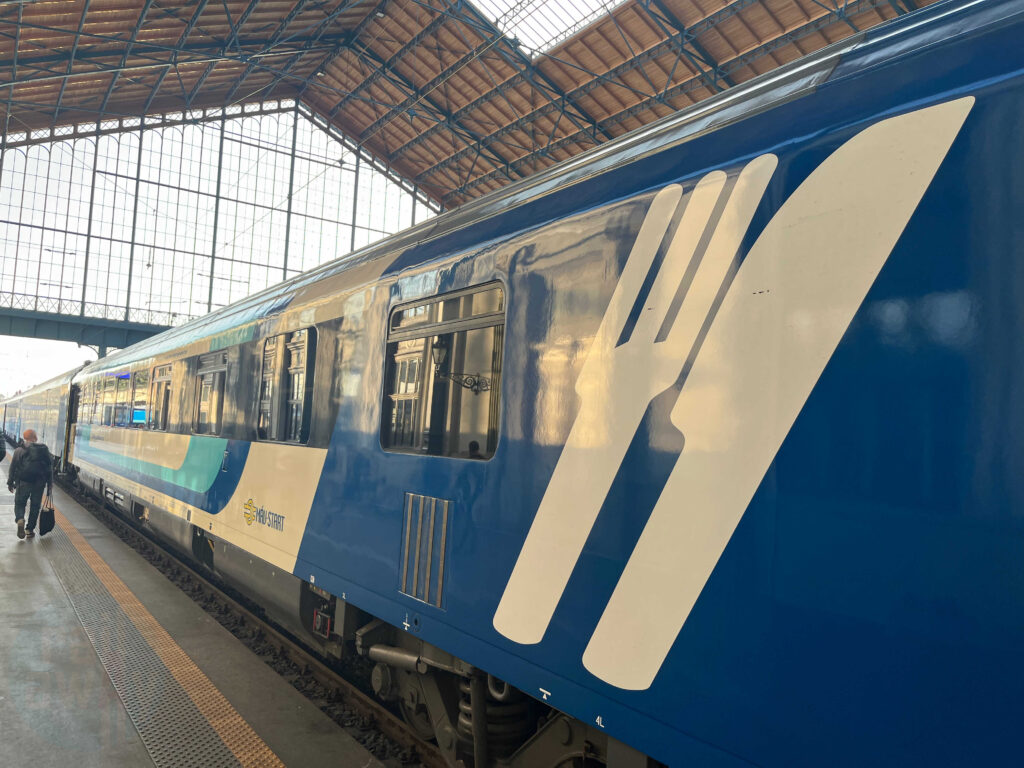
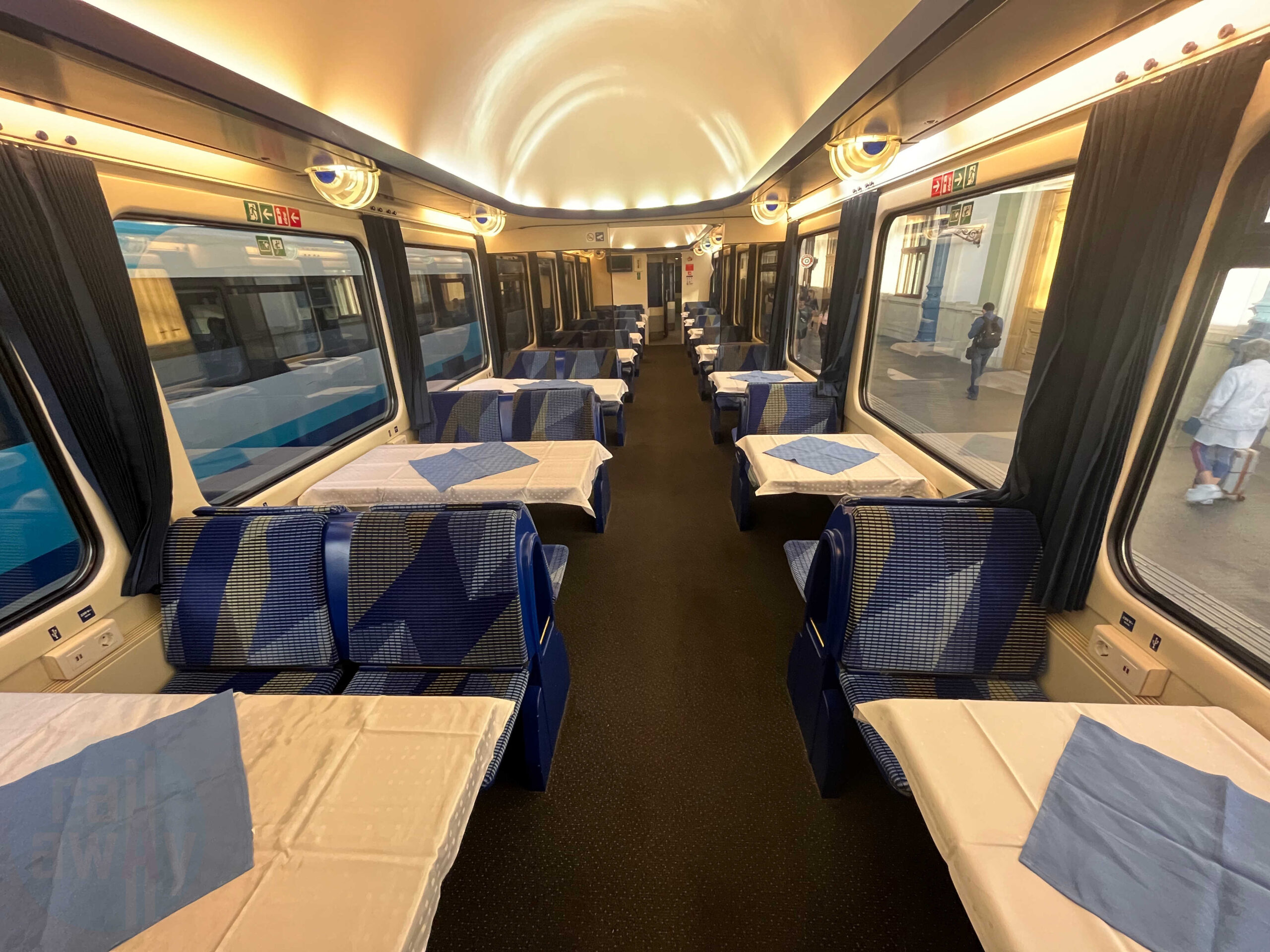
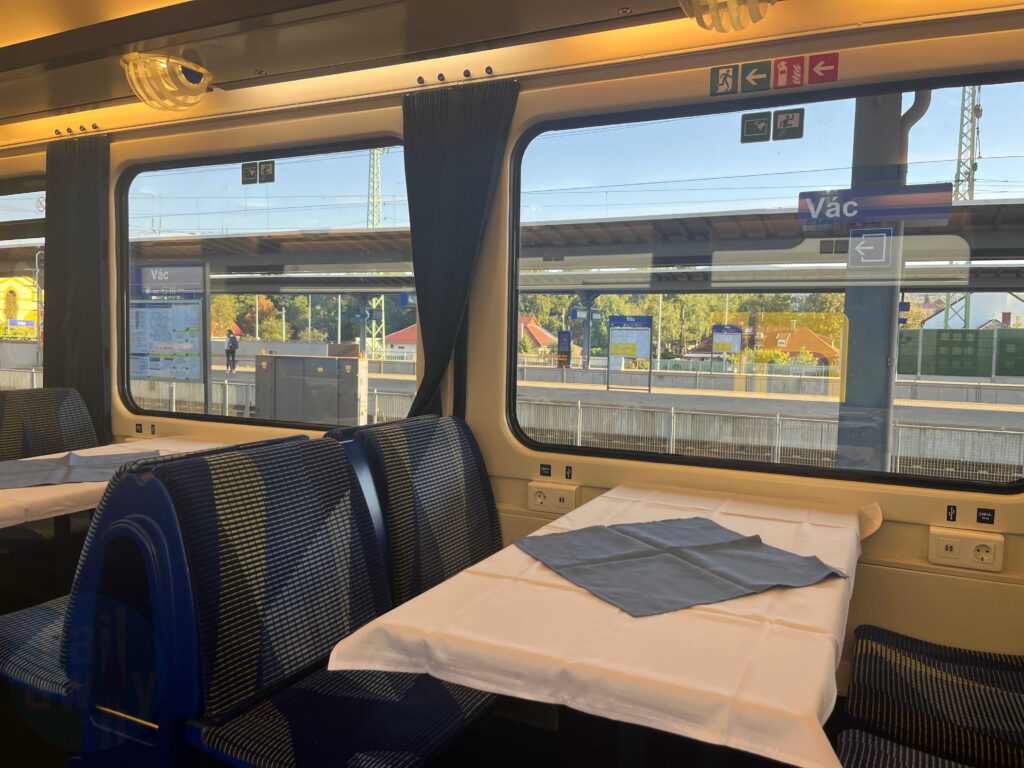
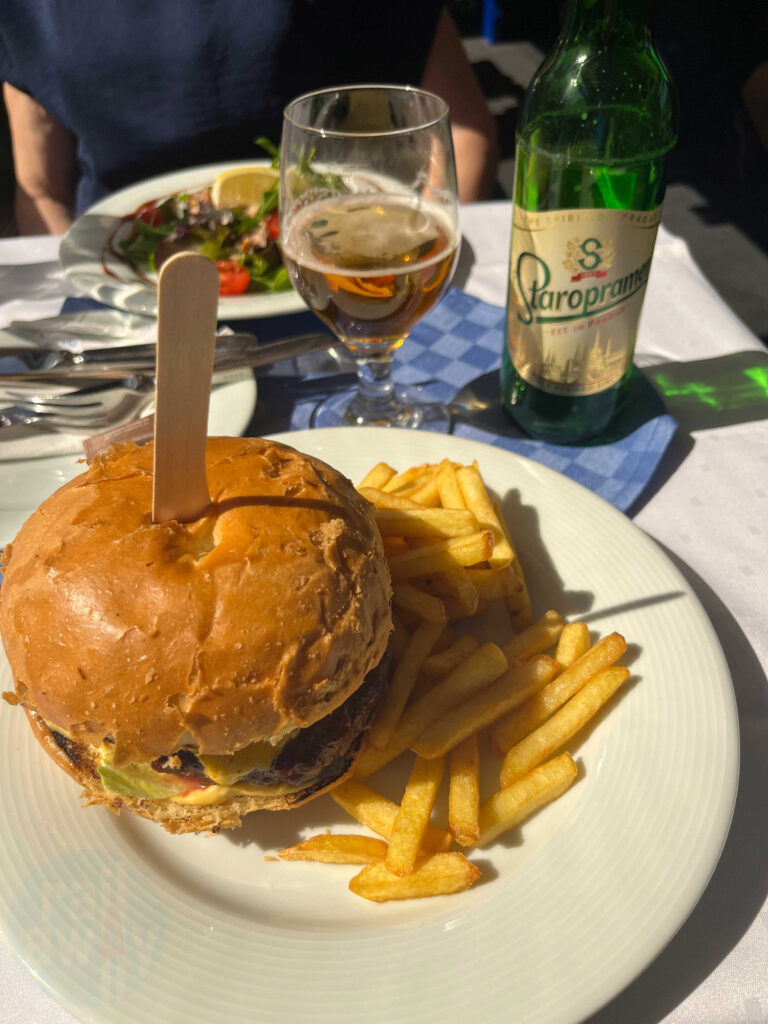
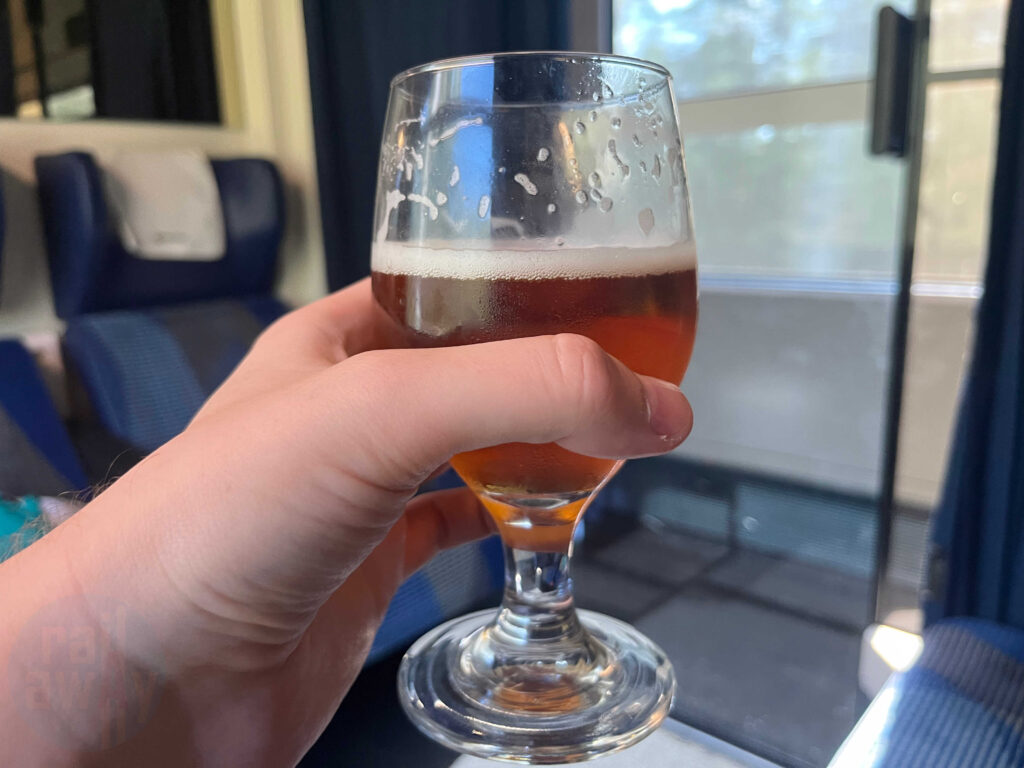
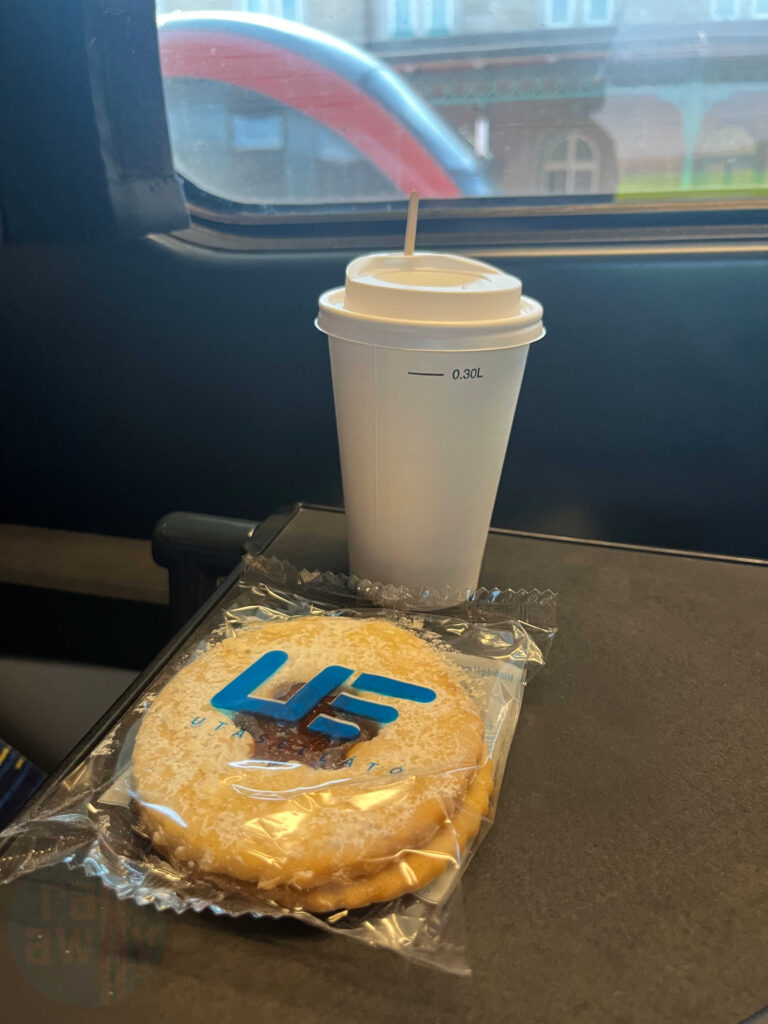
The Hungarian Dining Car, operated by service provider Utasellátó, is open to everyone on the train, serving freshly cooked hearty meals by a travelling chef from an expansive and inexpensive menu throughout the trip. I have to say they’re probably my most favourite in Europe and great a way to travel having sampled different dishes on my trips on the Adria InterCity, Corona InterCity and the EuroCity Báthory – if you’d like to check out those travel reports.
We took advantage of the Dining Car for breakfast, lunch and an afternoon tea break and I have to take my hat off to the waiter. He single-handedly served, at times, a full forty-two seater restaurant for the journey and I never saw him take a break. After more than eleven hours, when we disembarked in Berlin, I couldn’t help but feel for him as the train departed for Hamburg with a full restaurant car with new passengers. He was very professional including when the card machine broke down on him. Help the guy out and bring cash folks!
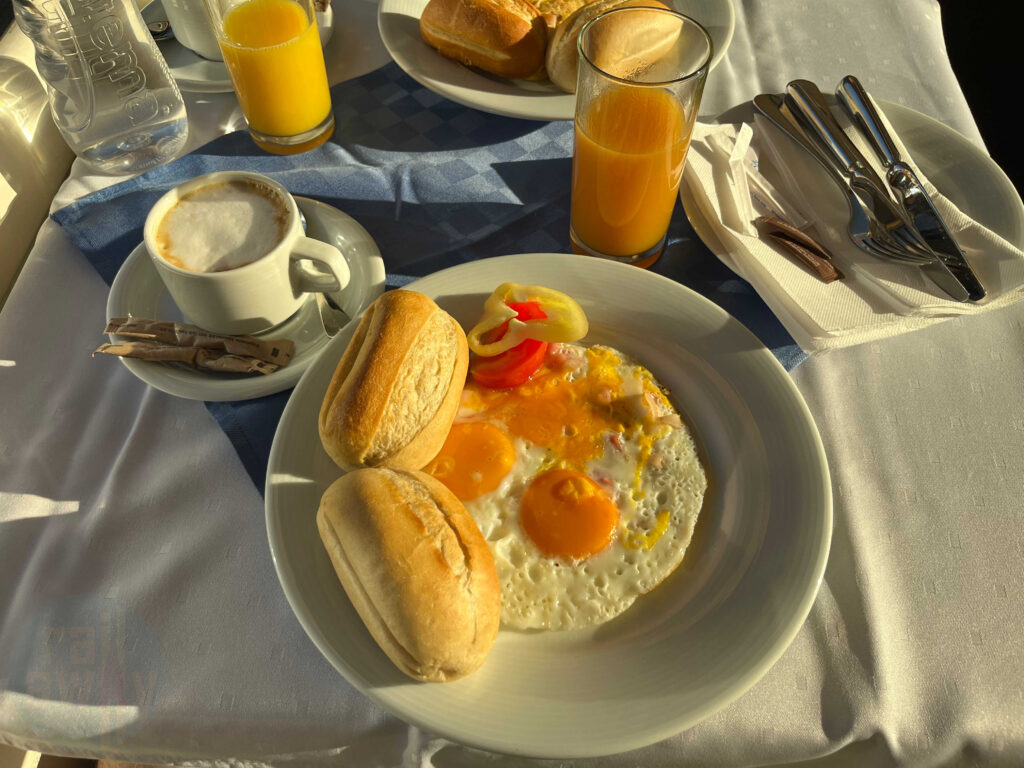
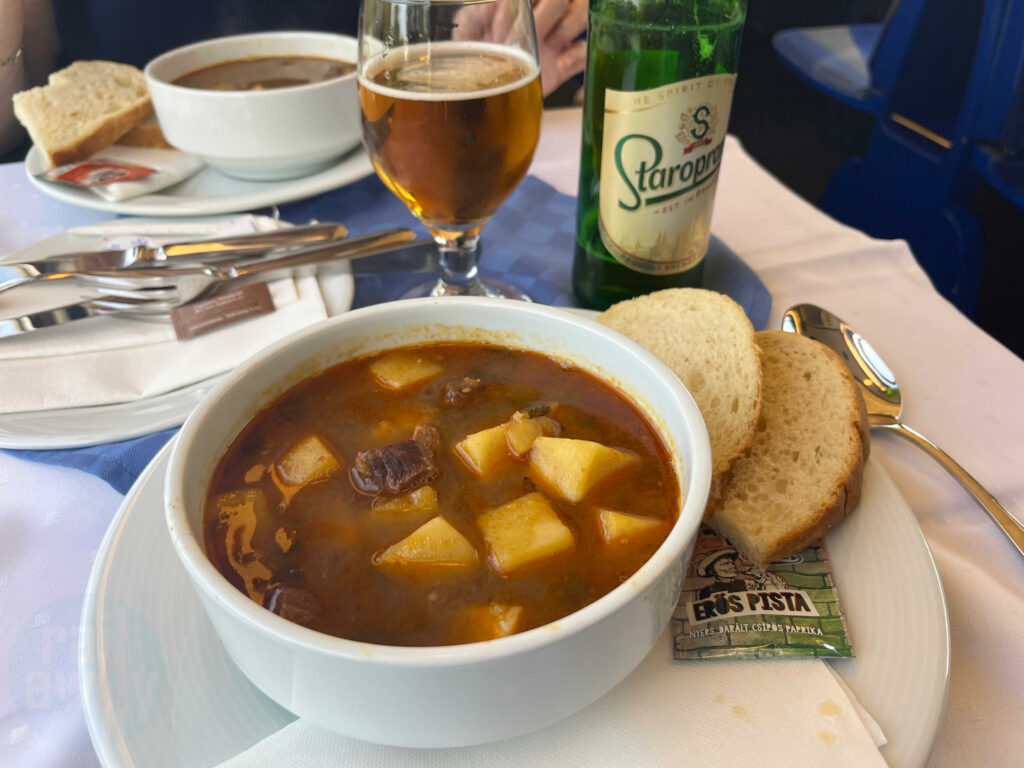
This time around I went for the fried eggs with bacon (5,90€) for breakfast, Goulash soup (6,90€) and START-burger with fries and a drink (9,90€). All dishes were delicious and served as if we were in a traditional restaurant in the Hungarian capital itself.
Scenery
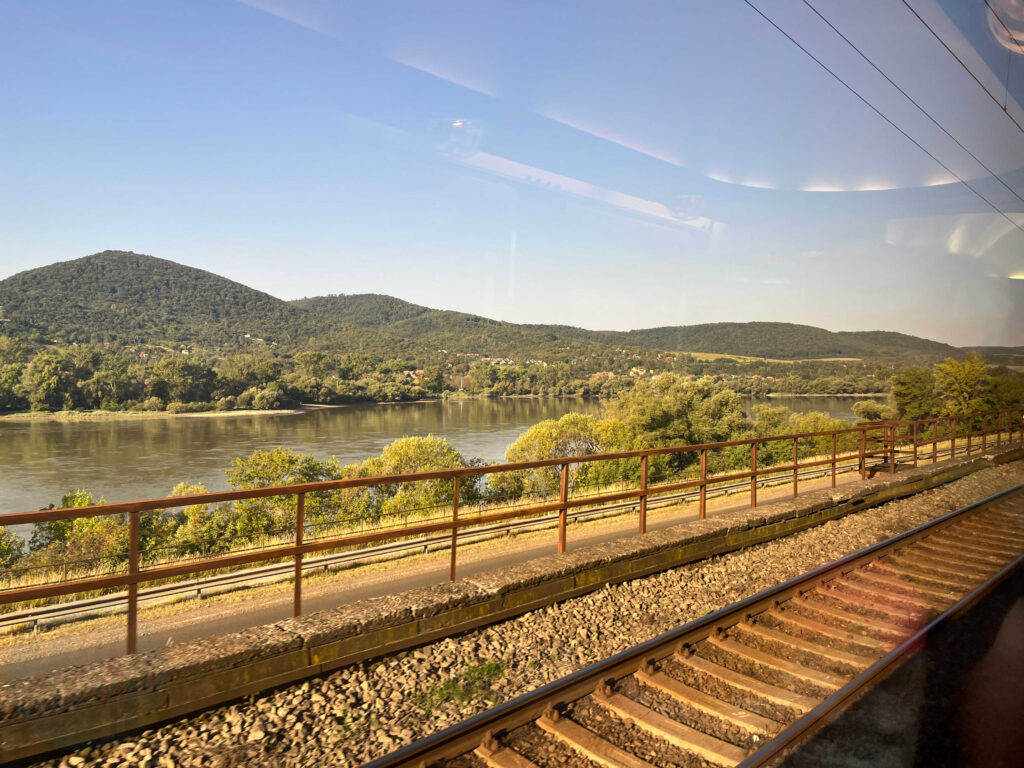
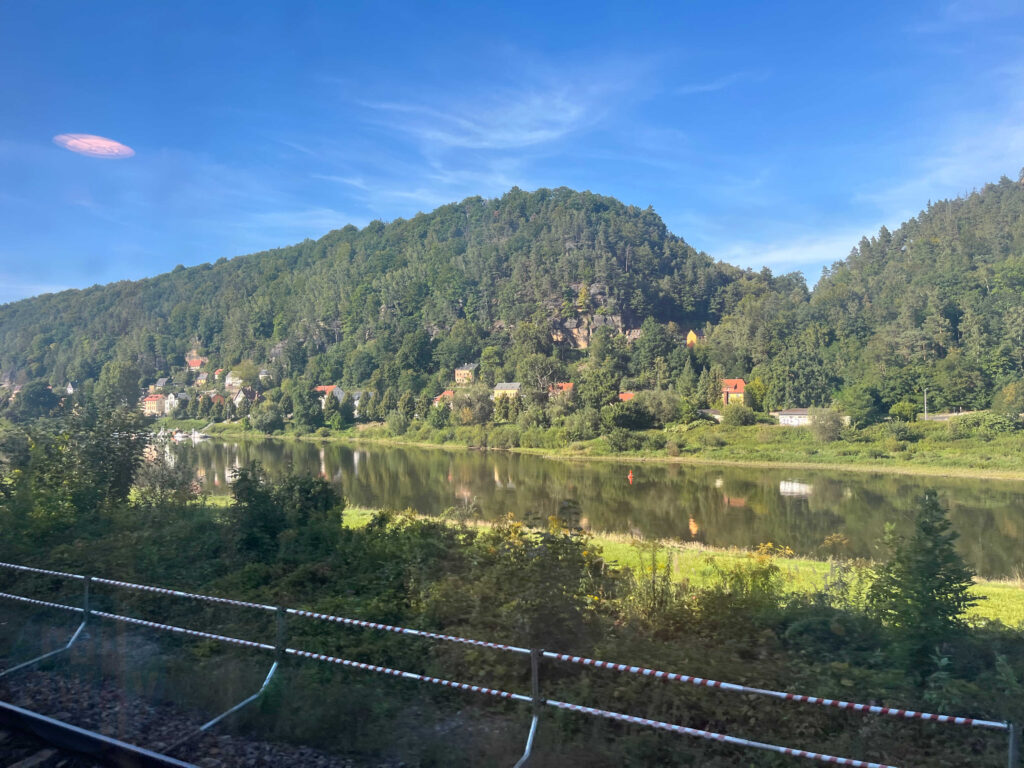
The EuroCity Hungaria takes in some delightful scenery en-route initially travelling along the river Danube, on the left hand side of the train, followed by the cityscapes of Bratislava and Prague. The train travels along some rolling hills in Czechia followed by a long stretch taking in the spectacular river Elbe between Prague and Dresden.
If you’d like to see the main scenery highlights on the trip, be sure to check out my ‘Scenery Showcase’ video below.
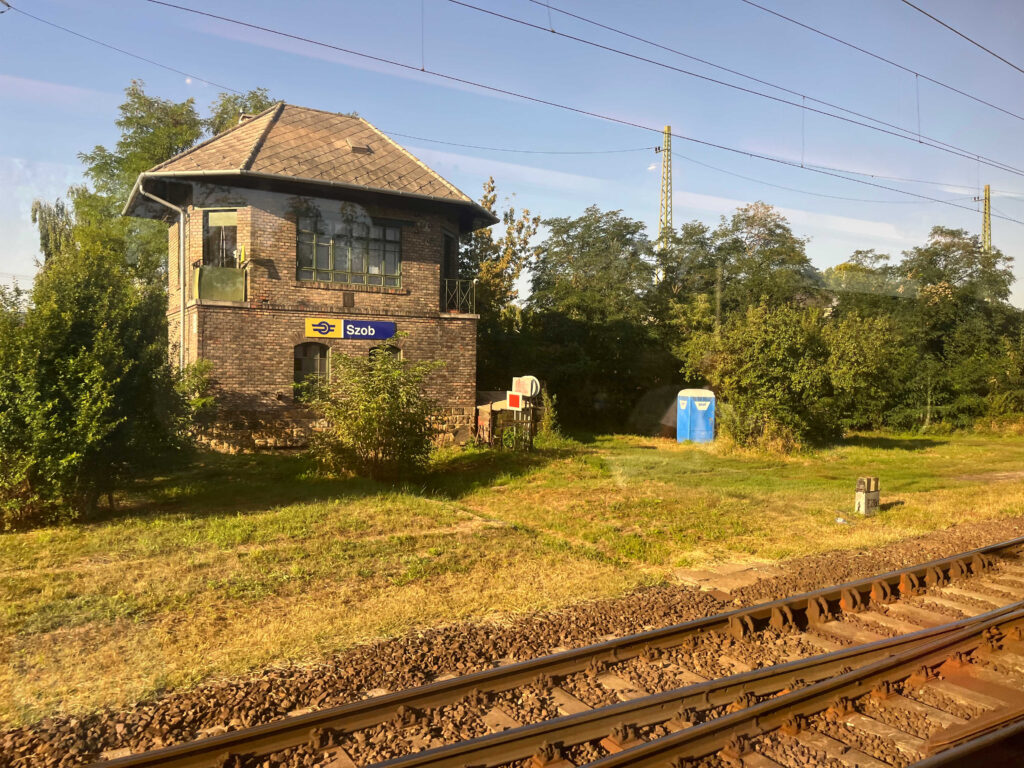
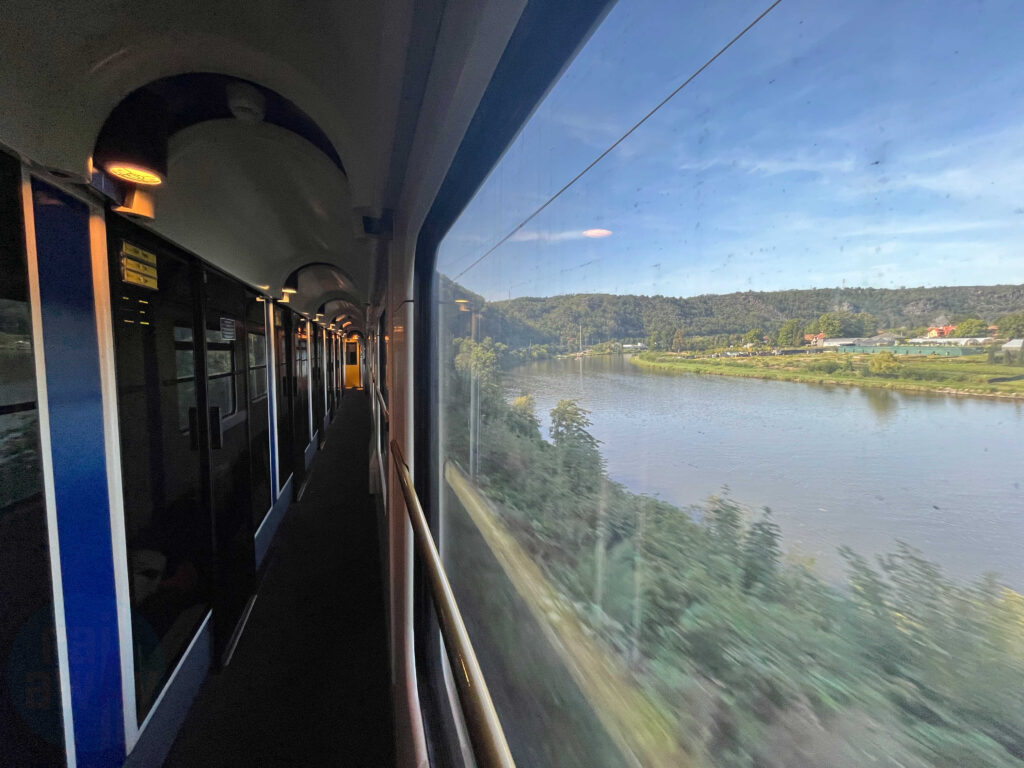
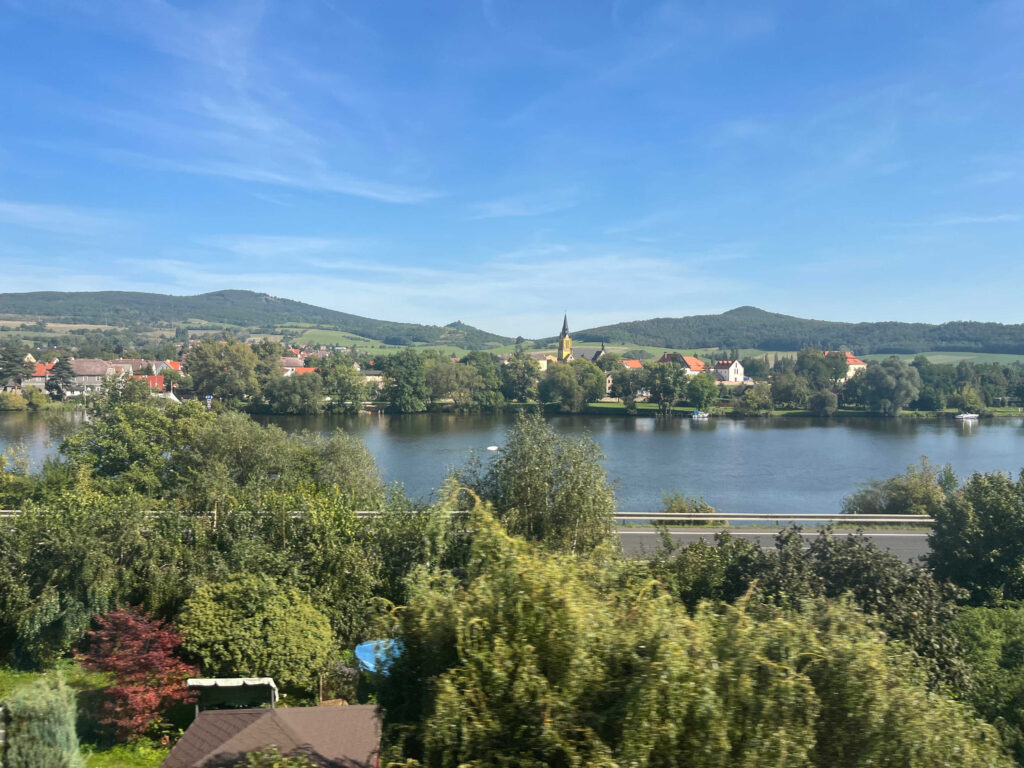
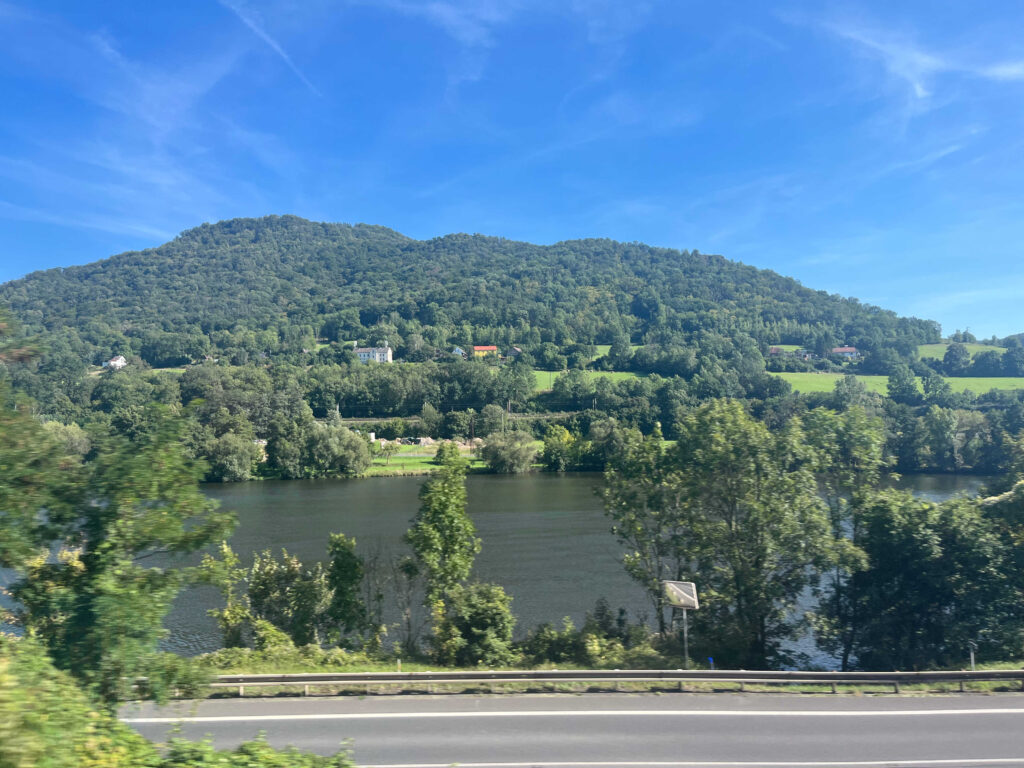
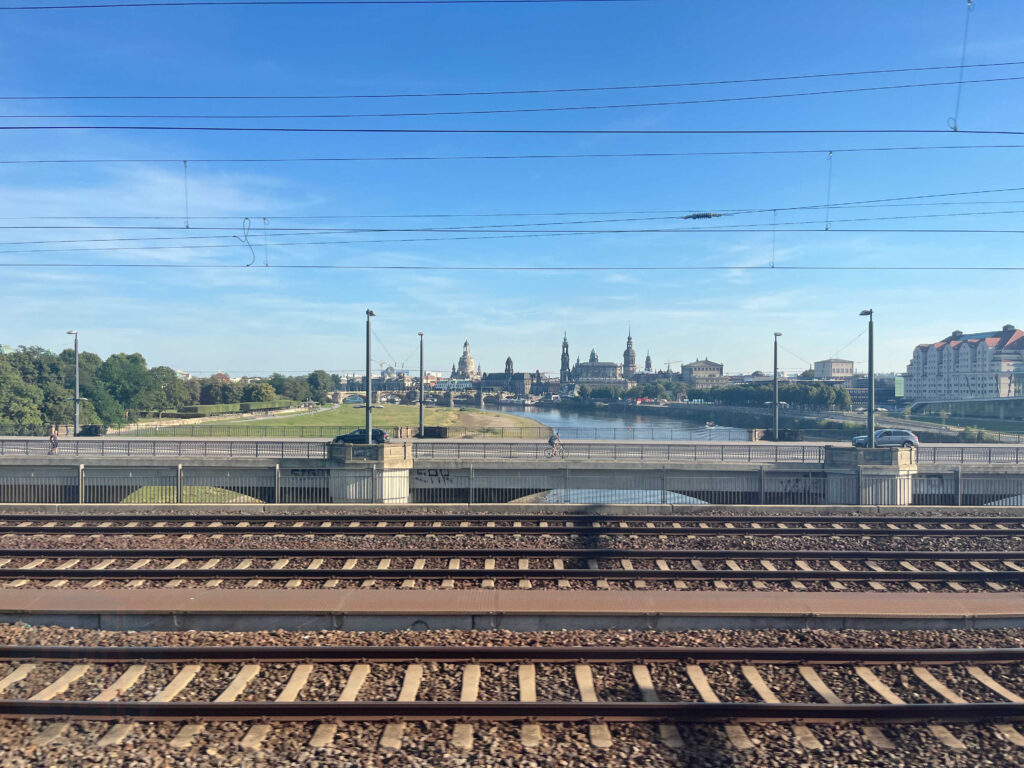
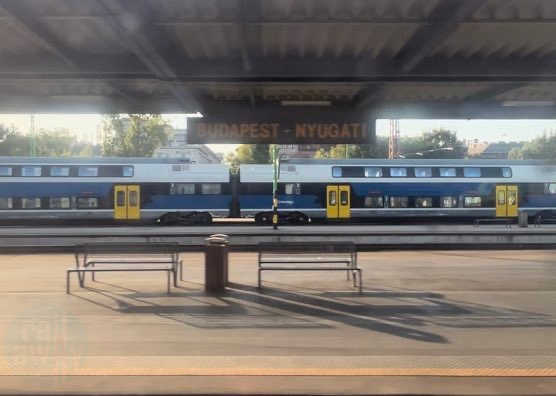
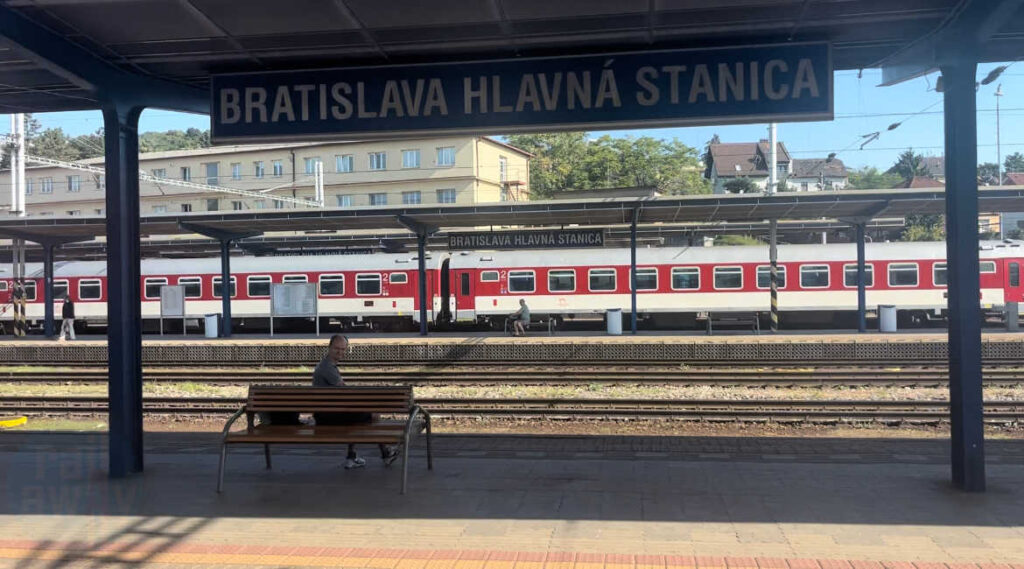
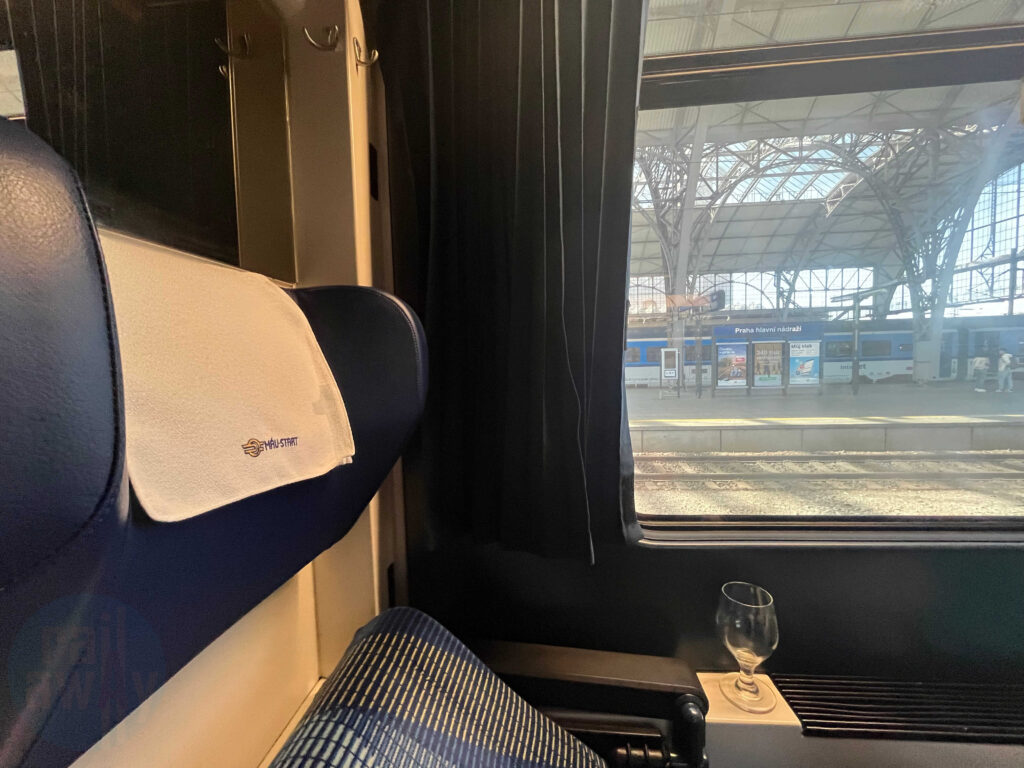
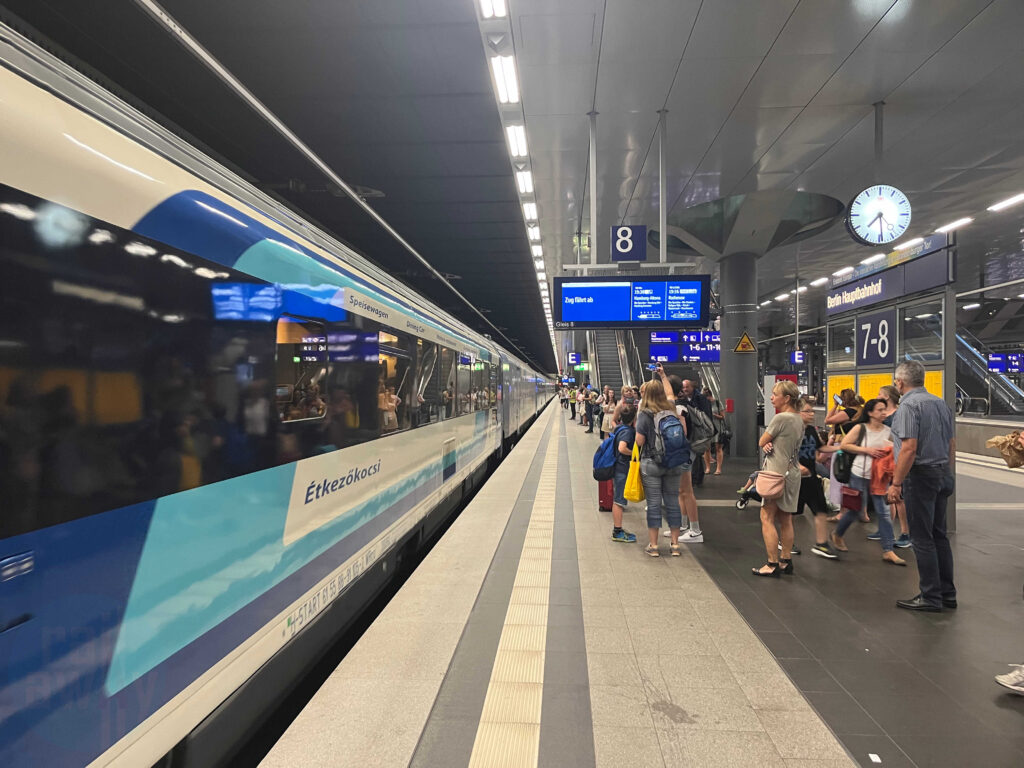
The stations in the four capitals of Budapest, Bratislava, Prague and Berlin are pictured below.
Booking and Fares
As is often the case with booking international train tickets, tickets are available on the retail systems of multiple companies.
As a general rule, you can only book on the operator’s website of the countries concerned for your specific origin or destination. For example, booking Budapest to Berlin, you could book with the Hungarian Railways, MÁV-START, or the German Railways, DB. For this journey, at the time of booking, I found it cheaper to book with MÁV-START, with DB charging a few Euros more.
Of course you can book to any of the stations the train calls at. So, if you wanted to travel from Prague to Dresden you could book at the Czech Railways, Ceske Drahy, or DB.
| Journey Leg | Second Class | First Class |
| Budapest to Berlin | from 30,00€ | from 45,00€ |

Plan Your European Rail Trip for Just £29*
(approx. €33 / $34)
Your custom European rail itinerary – expertly planned, ready to book and delivered within 72 hours.
Planning a multi-city train trip can be confusing and time-consuming. That’s where our Plan My Rail Trip service comes in. We research your route, compare ticket options, and show you how to book the cheapest and most efficient connections available at the time of research — checking both point-to-point tickets and Interrail / Eurail pass fares — so you don’t have to.
All for just £29* – no stress or hours spent researching.
Check out Plan My Rail Trip now at the Rail-Away Shop:
Please note: the above link takes you to the Rail-Away Buy Me A Coffee website where you can review options and, if you choose to, complete your purchase.
*Plan My Rail Trip permits 5 or less travel days and 4 or less stopover locations. Those requiring more will need to purchase the Plan My Rail Trip Plus option. Fares quoted are subject to availability and change. Rail-Away provides research and booking guidance only and does not sell tickets.
Conclusion
The EuroCity Hungaria did live up to expectations and more. The trip was long, but it actually didn’t feel so, I think helped by having our own compartment for the trip. Second Class was busy, so we were glad to have spent a few more Euros for First Class. The scenery was delightful for much of the journey and with the restaurant on wheels serving fresh and tasty dishes from a wide selection the journey was highly enjoyable.
This travel report was first published in September 2023.
See more from Rail-Away


Planning a European train trip?
Save hundreds on Interrail* with our expert guide!

Flexible rail passes have their perks—but they’re often pricier than buying individual tickets.
Download our FREE Simple Guide to Booking European Train Travel and discover how to effortlessly save hundreds of Euros* by booking like a local!
*For example:
- Save €209 on the advertised Interrail trip to Slovenia and Croatia itinerary by booking point-to-point tickets right up to the day of travel**—compared to using the recommended Interrail pass.
- Save €107 on the advertised Top 10 Cheapest Cities in Europe itinerary by booking two weeks in advance**—again, compared to the recommended Interrail pass.
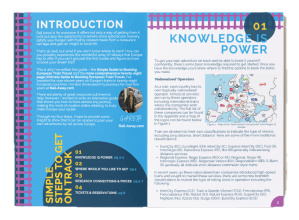
- Four easy steps, including:
- Knowledge Is Power – learn the best places to go before you book
- Where would you like to go? – tailor your itinerary to your travel goals
- Research Connections & Prices – use our proven methods to find the best fares and booking sites
- Tickets & Reservations – understand what tickets and passes are available to you
Also:
- A comprehensive list of European rail operators
- 12 beautifully designed, easy-to-follow pages
- Downloadable to your phone, tablet, or computer
**dynamically priced fares according to demand can result in lower or higher fares, book early for the cheapest fares
What else is in store?





*Please note that further Expert Guides and Ready-Made Itineraries are in development and will be available soon.
Already have the password?
Enter the password from your welcome email at the link below to access the Club Rail-Away home page:
Any issues, please get in touch!
*savings calculated as of 8th June 2025 for published itinerary for example dates on Interrail/Eurail website by purchasing point-to-point fares instead of recommended pass for the specified itinerary. Slovenia/Croatia trip for €77.00 travelling on 9th June 2025 and Top 10 Cheapest Cities itinerary for €228.00 travelling on 22nd June 2025 onwards.
Share your thoughts
Please get in touch if you have any feedback on this travel report by liking and sharing your thoughts below in the comments section. Have you made a similar trip? Please do share your own experiences on the rails.



Love hearing about your experience and this is very informative, thank you!
Sounds like a wonderful trip. Safe travels.