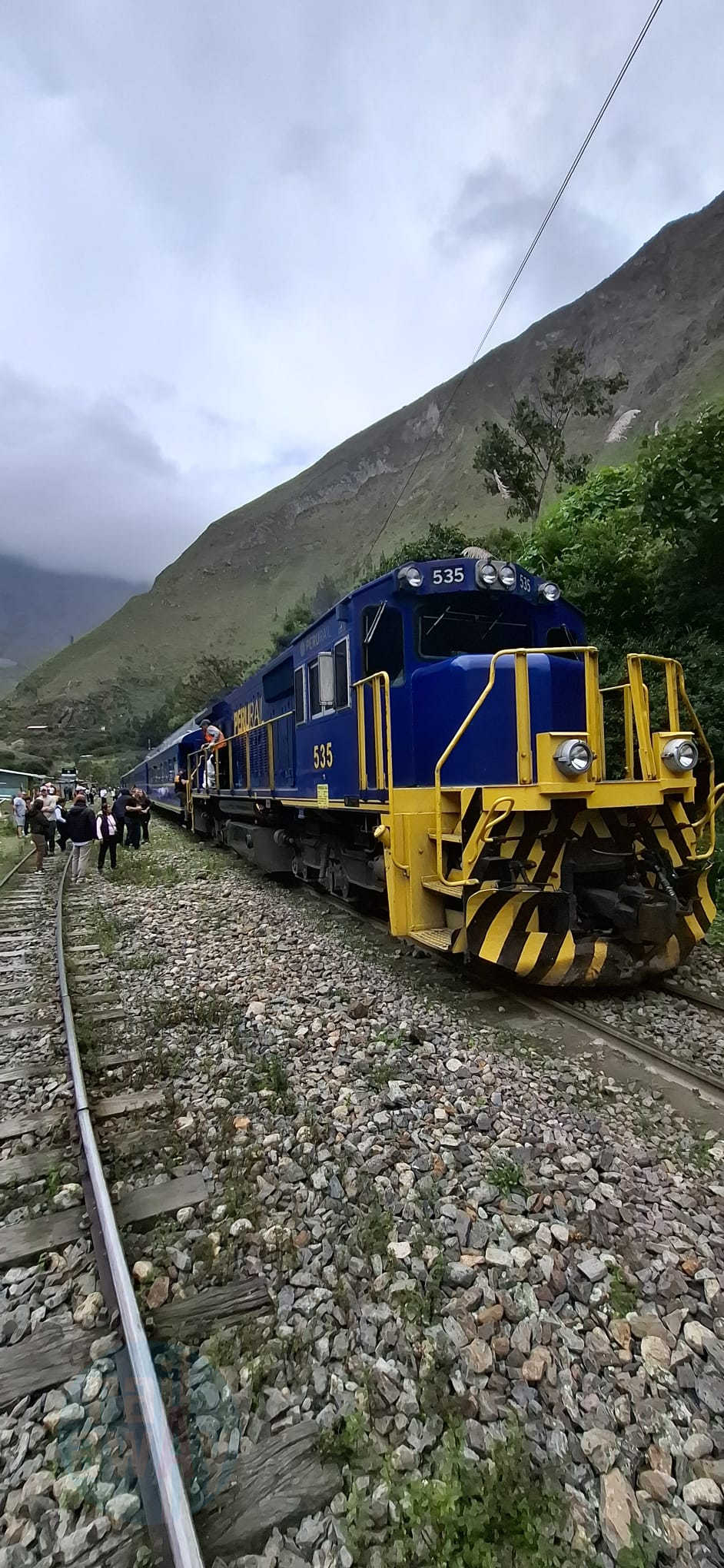
One of the world’s most spectacular railway journeys leads to one of the New Seven Wonders of the World. Join us aboard the PeruRail Expedition train as we travel from Ollantaytambo through Peru’s Sacred Valley to the legendary Inca citadel of Machu Picchu.
There is only one way to reach Machu Picchu, the treasure trove of the Inca kingdom – unless you’re adventurous enough to tackle the four-day Inca trail on foot or take a bus that still requires a lengthy walk at the end – and that is by train.
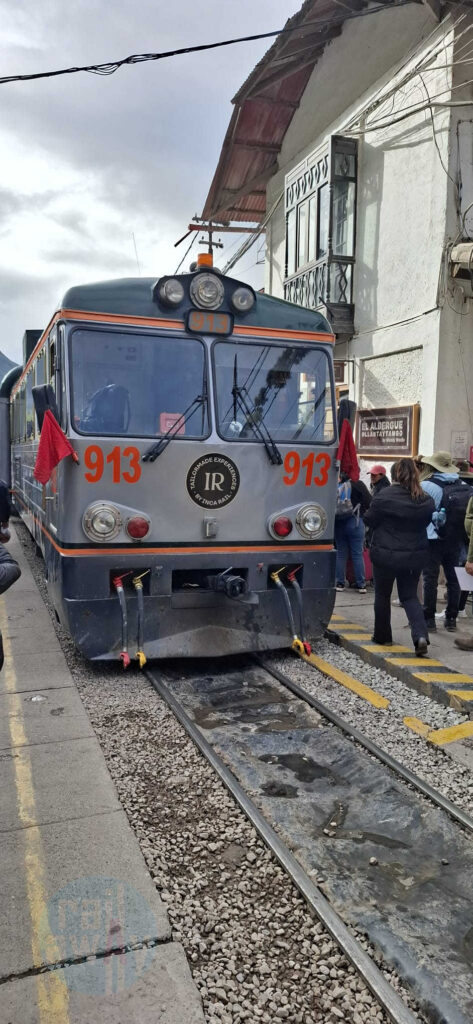
One warm and showery February day, we joined the blue and yellow seven-coach Expedition train at Ollantaytambo station. The train is operated by PeruRail. Our 27-mile (44 kilometre) journey of just over 90 minutes took us to the highlight of our month-long travels in South America – the mountain stronghold of the Incas. An alternative service is also run by Inca Rail.
The largely single-track route, with several loops of double track for passing, was authorised in 1907 to connect Cusco with Santa Ana and Quillabamba. Its primary purpose was to transport coffee, cacao and coco, and to integrate Cusco with the agricultural valleys of the Amazon basin.
However, the rediscovery of Machu Picchu in 1911, after being hidden for centuries, has led to the line becoming big tourist business. The railway was extended to Aguas Calientes, now known as Machu Picchu Pueblo (town) in 1928, and the full journey to Cusco (or Wanchaq) takes four or five hours and is a bi-modal journey by bus and train.
Here’s the all important route map from Ollataytambo to Machu Picchu:
Editor’s note: This is the first guest article on Rail Away, written by my mam, Maggie, with pictures taken by her and my dad, Alan, following their incredible journey through Peru. While it’s a little further afield than our usual European rail adventures, I hope you’ll enjoy travelling to one of the world’s most spectacular destinations by train.
Boarding the PeruRail to Machu Picchu
We arrived at Ollantaytambo station by private minibus, as we’d visited other sites in the area earlier, as part of our guided tour of Peru.
The small platform of Ollantaytambo was packed with tourists, as staff checked our tickets on the platform (and asked for our passports to verify passengers’ identities. Nationalities, passport numbers and dates of birth are printed on the boarding passes).
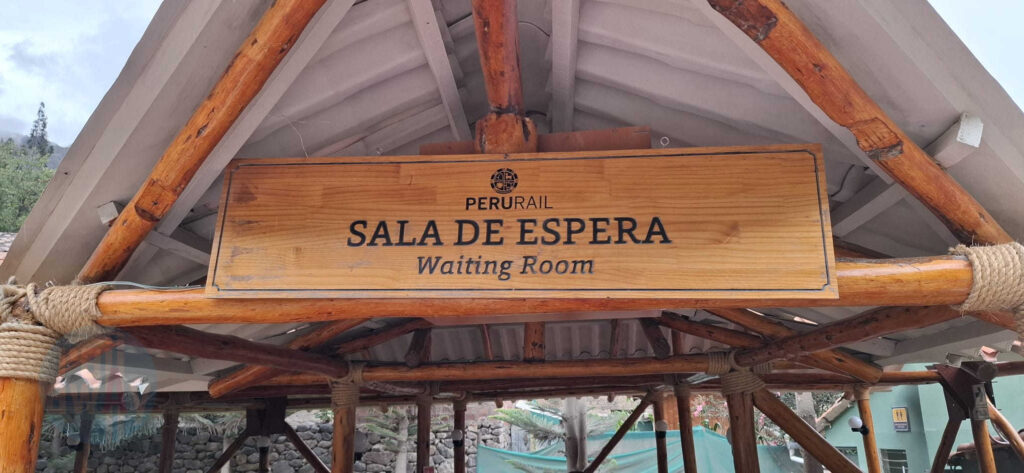
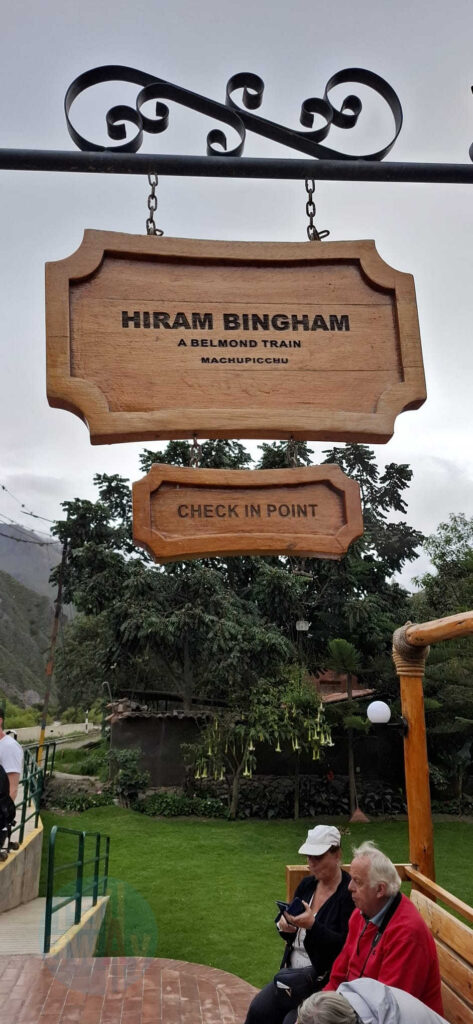
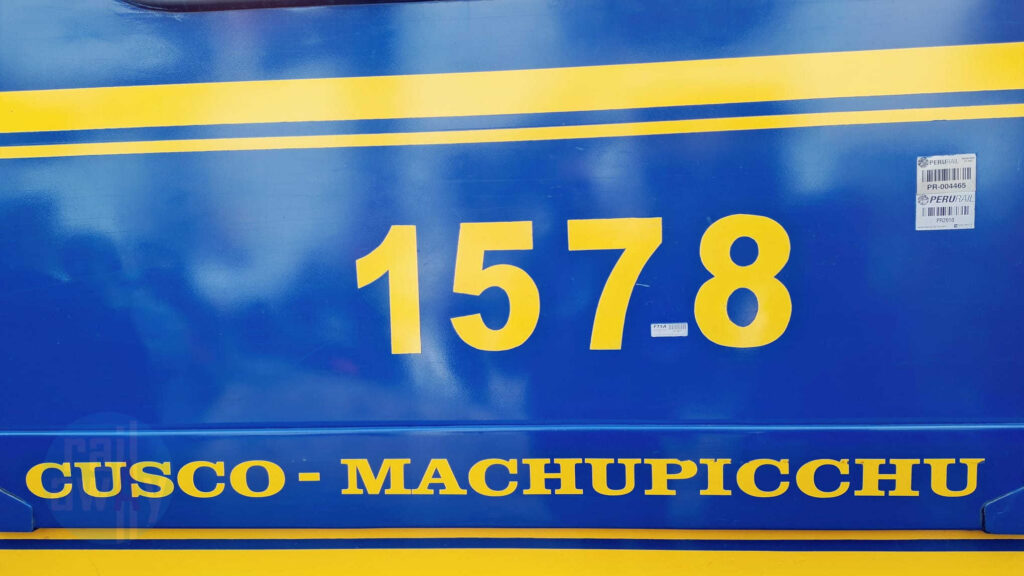
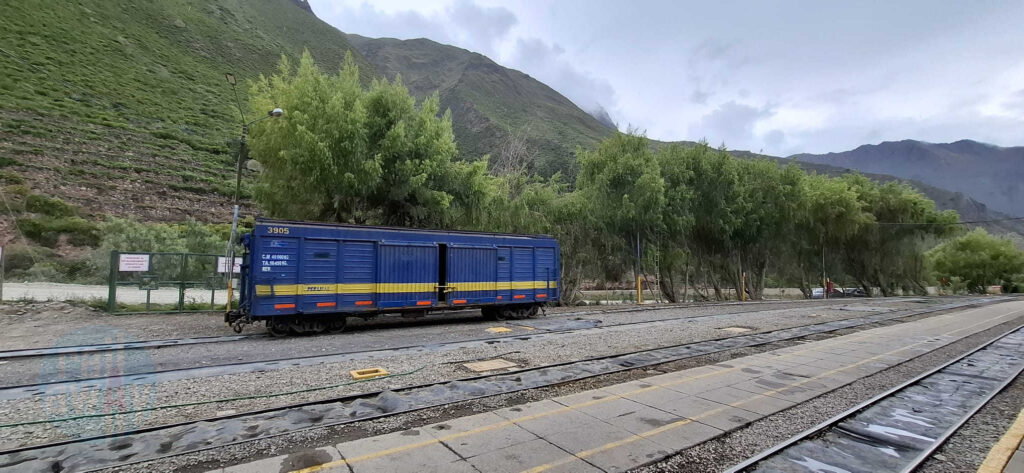
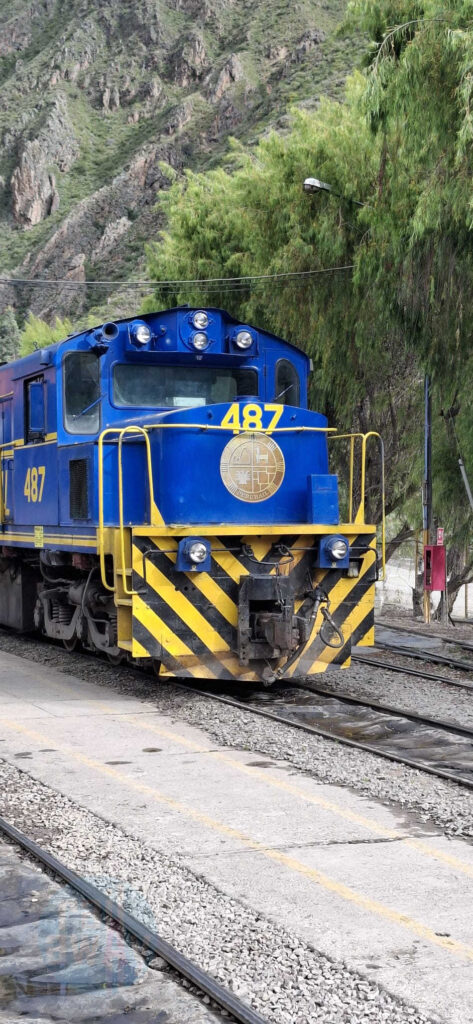
Fortunately, all the coaches had letters (cardboard letters were held up by staff so we could wait in the right place). But as our train came in, there was still a surge of passengers over the first set of tracks to our boarding point on coach F. Another train came in behind us, next to the platform edge, and perilously close as we were herded towards our coach.
We were glad we’d been given allocated seats, booked in advance by the tour providers: our guide told us that this is a fairly recent change and he recalled bun fights breaking out in the past as soon as the carriage doors were opened!
The creams and browns of the comfortable upholstery, with subtle paintings of indigenous art on the walls, made for a pleasing interior. So also, did the panoramic ‘dome’ windows, reminding me of Swiss trains such as the EuroCity Transalpin or the Glacier Express – which you can read about here (Glacier Express) and here (EuroCity Transalpin).
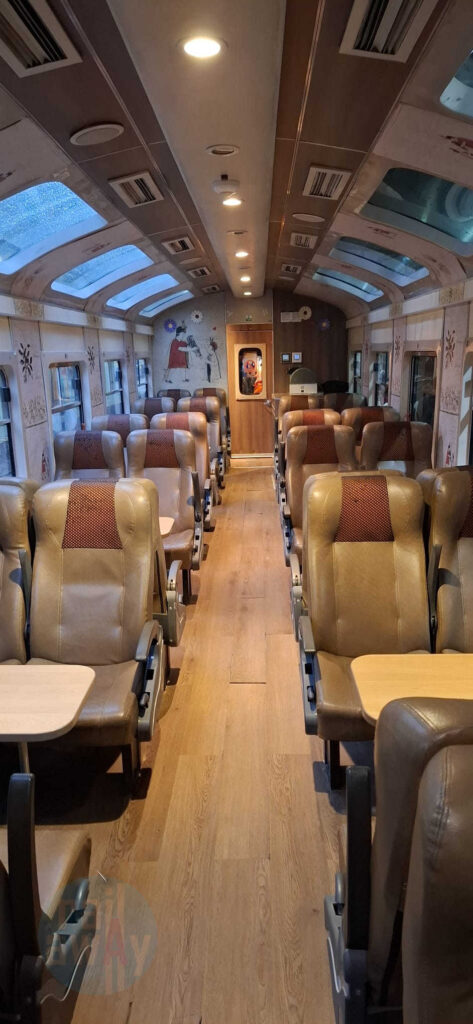
But the dome windows, of course, limit the amount of storage for luggage. We had been advised to leave our big suitcases in Lima or Cusco (the previous stopovers) and just take a five-kilo bag each or a small case. We opted for backpacks, which can be stored in the luggage racks or the space between the seats.
And so, we were off, enjoying a very pleasant hour-and-a-half towards Machu Picchu, as the train wove through the valley of the fast-flowing, grey and brown Urubamba river, hurtling over rocks. Rugged mountain peaks, shrouded in atmospheric cloud, peeped through our overhead windows.
We saw chickens, sheep, cows and horses in a lush green landscape with tall eucalyptus trees clinging to the slopes, pink pampas grass and giant cacti trackside, reminding us we were in a sub-tropical climate. Flat, corrugated houses passed by, a memorial commemoration, pedestrian rope bridges.
There were announcements in Spanish and English about safety and interesting facts, such as the white orchids we passed. By luck, our guide gave us forward-facing seats on the left of the train (the most scenic side).
The staff did two trolley rounds: the first distributing free cups of bottled water, and the second with chargeable hot and cold drinks and snacks.
In the last section of track towards Machu Picchu Pueblo station, signs of habitation vanished and green forest ruled. An announcement told us this part of the valley has its own eco-system.
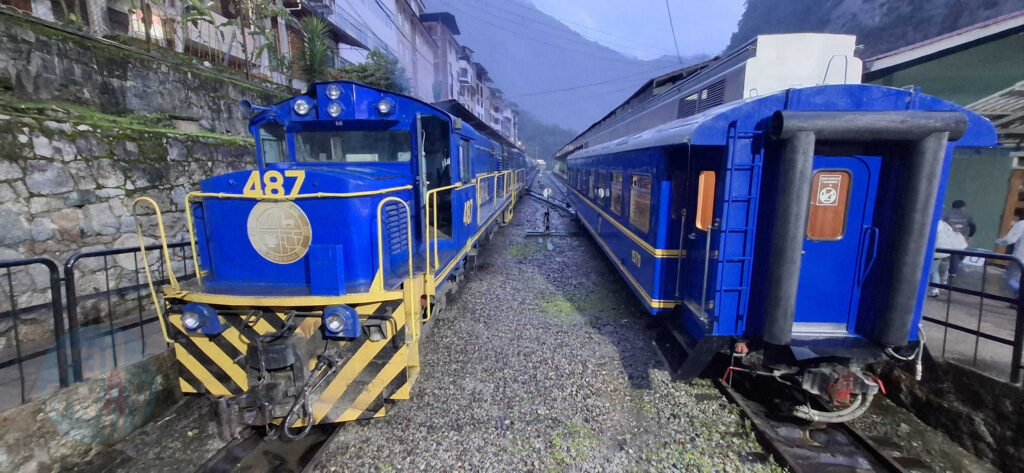
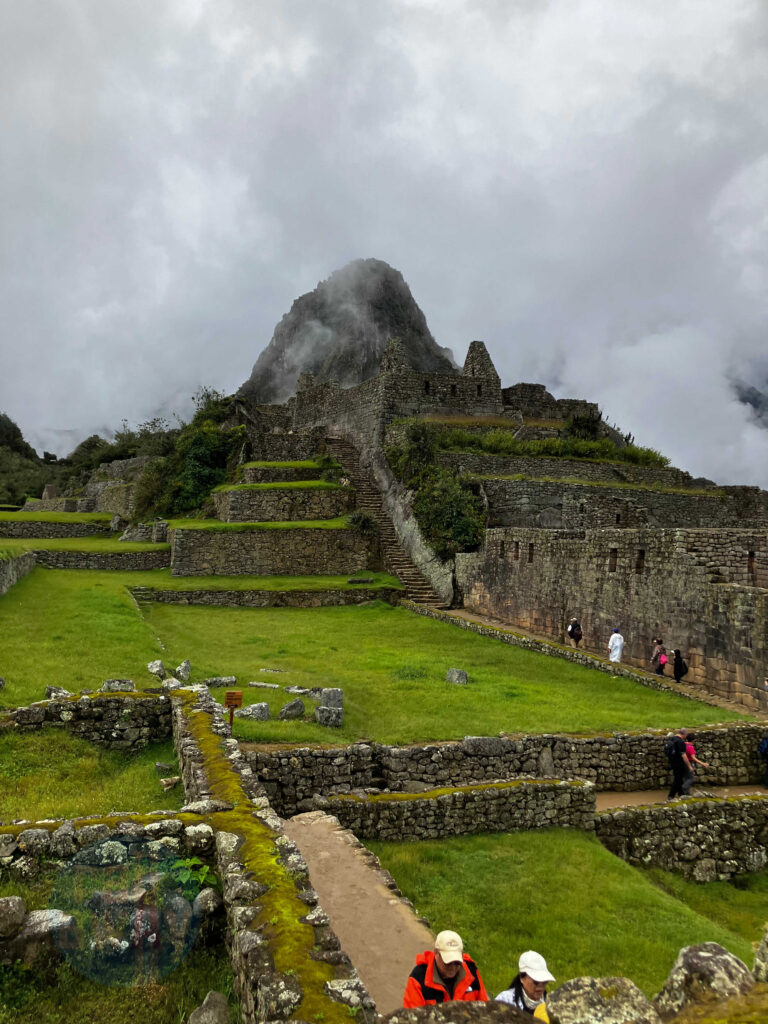
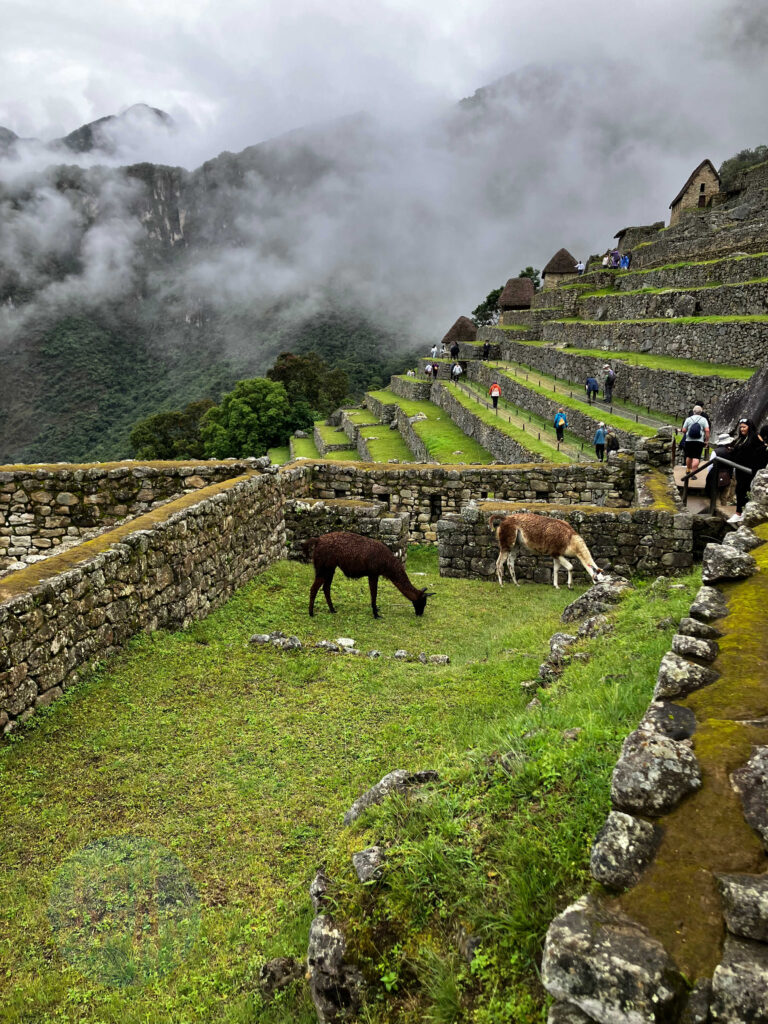
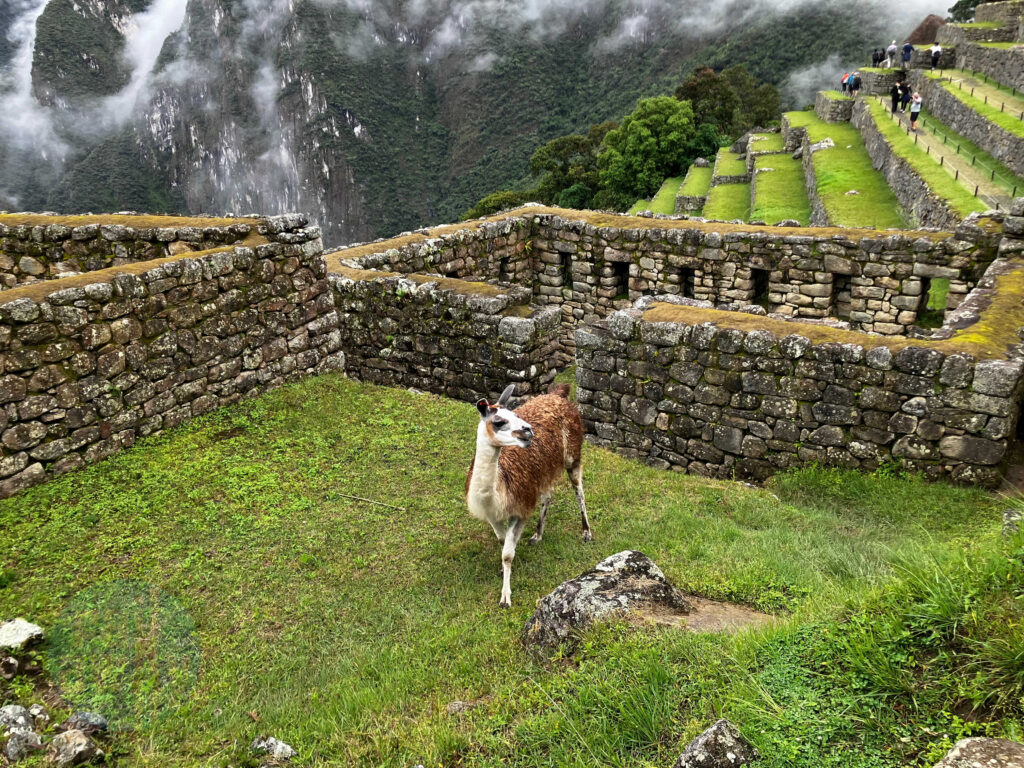
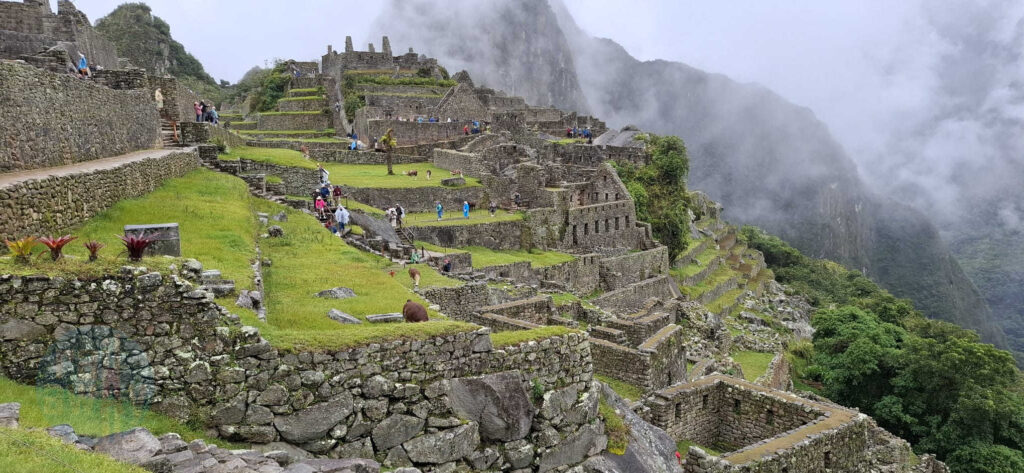
Having arrived at Aguas Calientes (now officially known as Machu Picchu Pueblo), we spent two nights in a hotel in the town. Here, we were bussed up the remote mountain to see the UNESCO heritage site in all its early engineering glory. We marvelled at how the stones had been fitted together without mortar and are still so snug a fit, they are perfectly stable to walk on. They were even built to move and settle in earthquakes, sometimes called ‘dancing stones’!
Morning cloud drifts across the terraces of Machu Picchu as llamas graze among the ancient stonework. The changing weather only added to the atmosphere of one of the world’s most remarkable archaeological sites.
All too soon, it was time to return to Ollantaytambo by train, then minibus to Cusco and our flights back to Lima, from where we were due to return home.
The Return Journey
Sadly, we didn’t have so much luck with the return trip. After less than a quarter of the journey, the engine started to stutter and we had a few long miles of moving just a couple of hundreds of metres, then stopping. The announcements we’d enjoyed on the way in, didn’t happen, but our guide told us the engine was running out of power and on a double track section, we came to a complete halt, not to move again with that engine.
The sun had come out revealing one of the disadvantages of panoramic windows, especially as the opening one at our level wouldn’t budge. We bought crisps and a bag of fruit and nuts, plus two Inca colas, just in time – the little bar soon ran out of food and water.
Other trains passed us, one a pullman type. Tantalisingly, we watched those passengers enjoying entertainment from musicians, while being served drinks and canapes. And then there was a tempting waft of a meaty smell as their dinner appeared!
After an hour or more stationary, our carriage door opened and people climbed down onto the track to stretch their legs and seek some air. One or two enterprising passengers even climbed on top of the broken-down engine and took photographs of each other! Maintenance men did try to work on the engine to get it going, but, unfortunately, their attempts were unsuccessful.
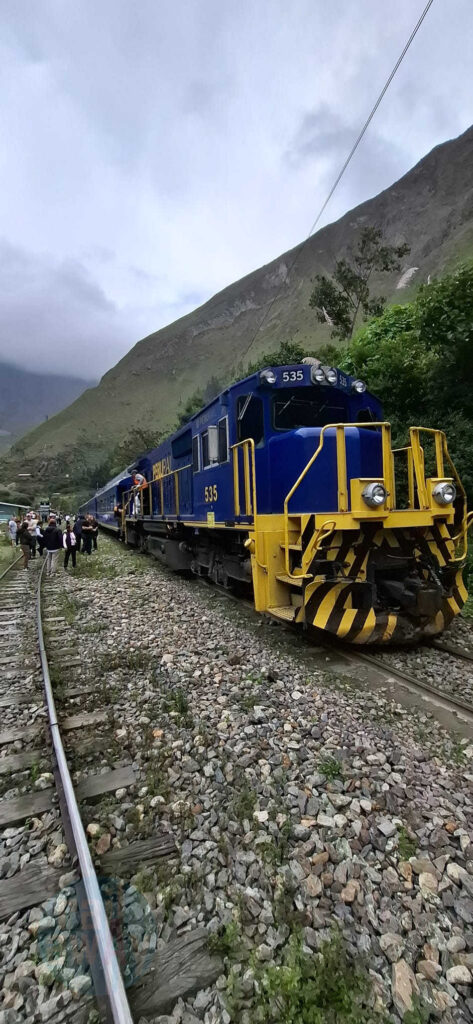
Eventually, a replacement engine arrived and we were able to complete our journey to Ollantaytambo, where the minibuses were waiting to whisk us off to the airport for our flights back to Lima. Our 90 minutes’ journey had taken six hours! So, our promised free time in Cusco didn’t materialise.
And, of course, the beautiful scenery we’d enjoyed on our outbound trip was overshadowed by the discomfort of burning sunshine and a lack of refreshments.
Although the delay was disappointing, it didn’t diminish the memories of the spectacular journey into Machu Picchu just two days earlier. Sometimes travel doesn’t go entirely to plan, and this became just another story to tell from an unforgettable adventure.
Explore More with Rail-Away
Whether you’re planning your next adventure or simply enjoy discovering remarkable rail journeys, explore more travel inspiration, practical guides and real journey experiences from across Europe.
Be inspired by real Journey experiences
Discover real rail adventures across Europe and beyond, from iconic routes and night trains to hidden gems.
Guides to Get You On Track
Browse practical guides, inspiring itineraries and expert resources to help you explore Europe by train.
Watch the Journey Unfold
Experience Europe’s most spectacular rail journeys through our videos and witness stunning scenery.
Plan Your Perfect Rail Trip
Need a helping hand? Get personalised advice and support to create your perfect European rail adventure.
Booking and Fares
Fares for the PeruRail Expedition train vary according to demand, with peak tourist seasons (roughly May to September) and popular departure times typically costing more. Booking well in advance is recommended, particularly during the busiest months.
Many visitors begin their journey in Cusco, where PeruRail offers combined coach-and-train tickets. Passengers travel by road to Ollantaytambo before boarding the train for the final 90-minute journey to Machu Picchu Pueblo. A limited number of direct train services also operate from Cusco’s San Pedro and Poroy stations, while PeruRail’s bimodal services connect via Wanchaq.
Tickets can be booked directly from PeruRail by clicking here.
| Journey Leg | Price |
| Ollantaytambo to Machu Picchu | from $58.90 (USD) each way |
| Wanchaq, San Pedro or Poroy to Machu Picchu | from $75.05 (USD) each way |
Conclusion
Despite the lengthy delay on our return journey, neither of us would hesitate to recommend travelling to Machu Picchu by rail.
The outbound journey alone is worth the trip, winding through the breathtaking Sacred Valley alongside the Urubamba River before arriving at the foot of one of the world’s greatest archaeological treasures. With panoramic views throughout and no roads leading to Machu Picchu Pueblo, the railway isn’t just the easiest way to reach the ancient citadel – it’s an unforgettable part of the experience itself.
For us, the PeruRail Expedition train proved that sometimes the journey really is just as memorable as the destination.
This journey experience report was first published in June 2026.
See more from Rail-Away

Join 450+ travellers using our expert free train guides!

Travel Europe by Train – Smarter and Easier
Get great routes, fare tips and tricks from our FREE insider guides
Get instant access to:
✓ 3 curated European rail itineraries for your next trip and be inspired
✓ Simple booking and money saving guide and book with confidence
✓ Night train tips and what to expect – optimise your time and experience