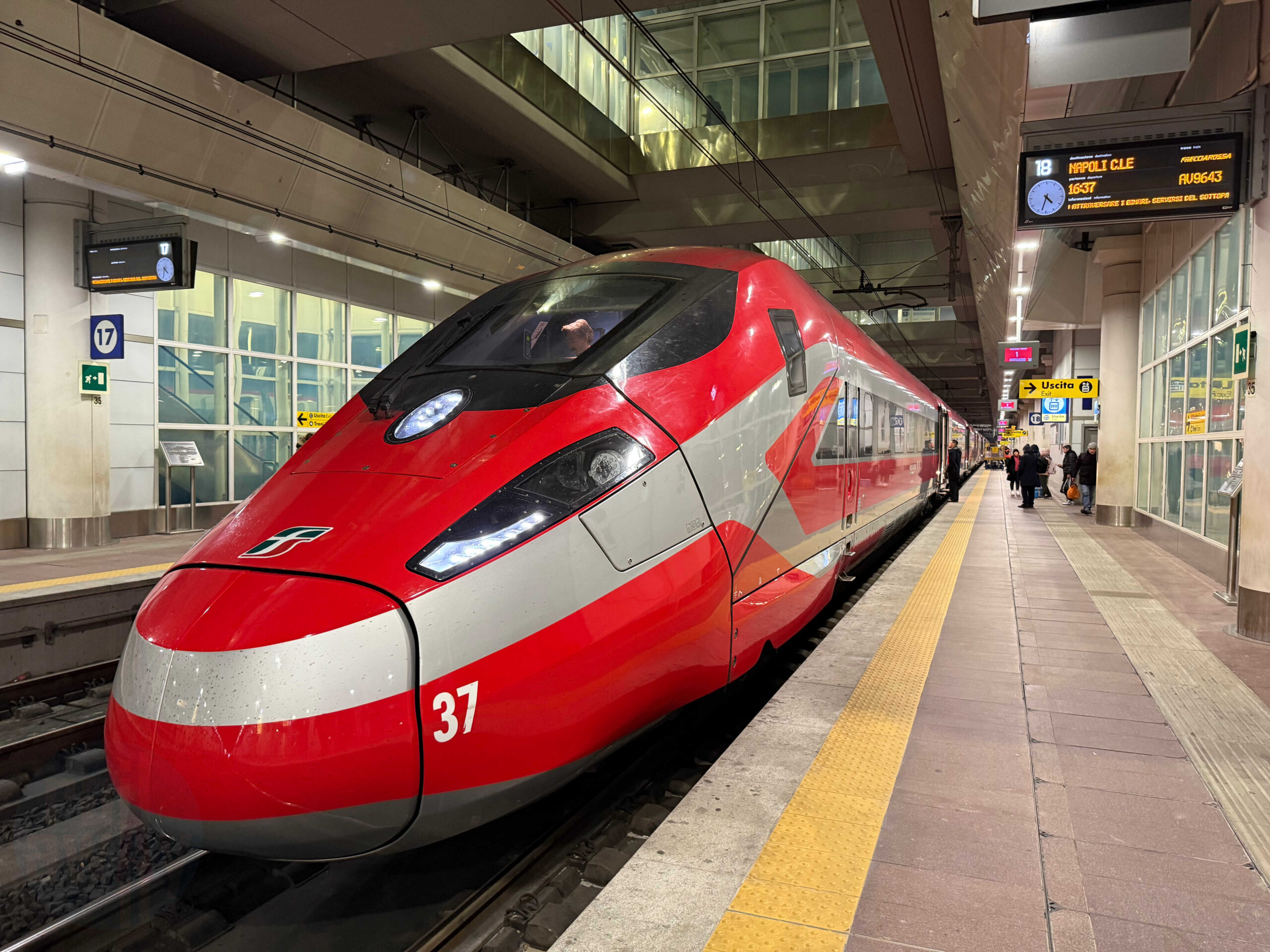
There’s a few reasons to look up to Italy when it comes to high-speed rail. The Italians were early adopters, launching their first high-speed route in 1977. This and the subsequent development of new lines dramatically cut journey times between major cities across the country.
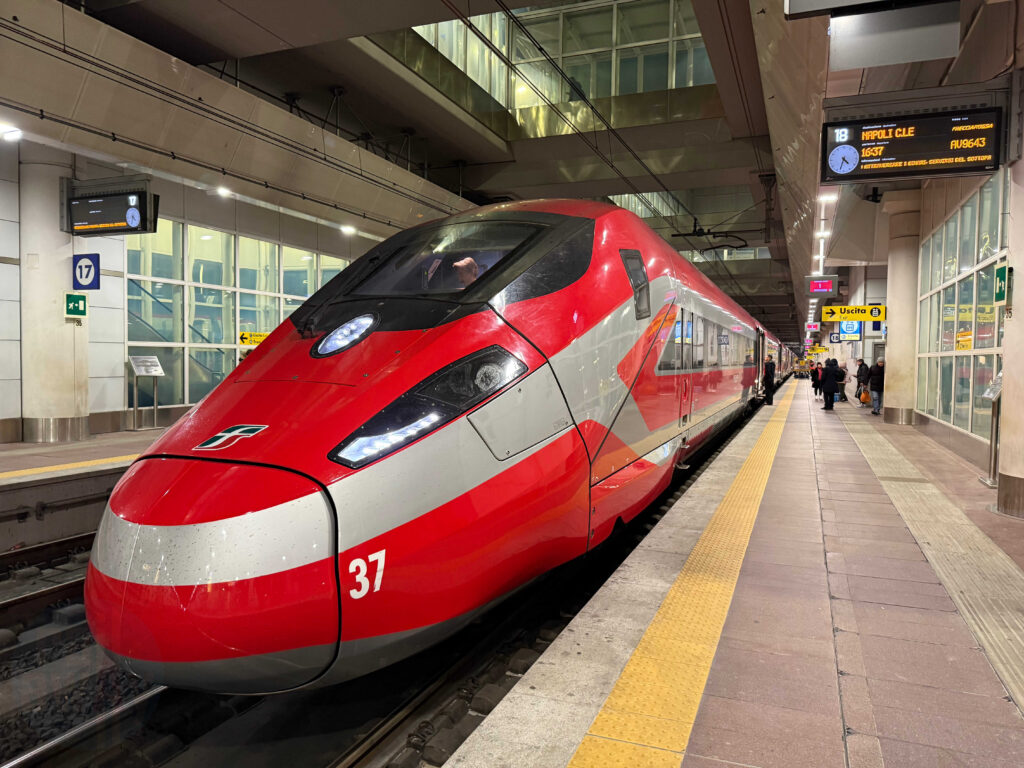
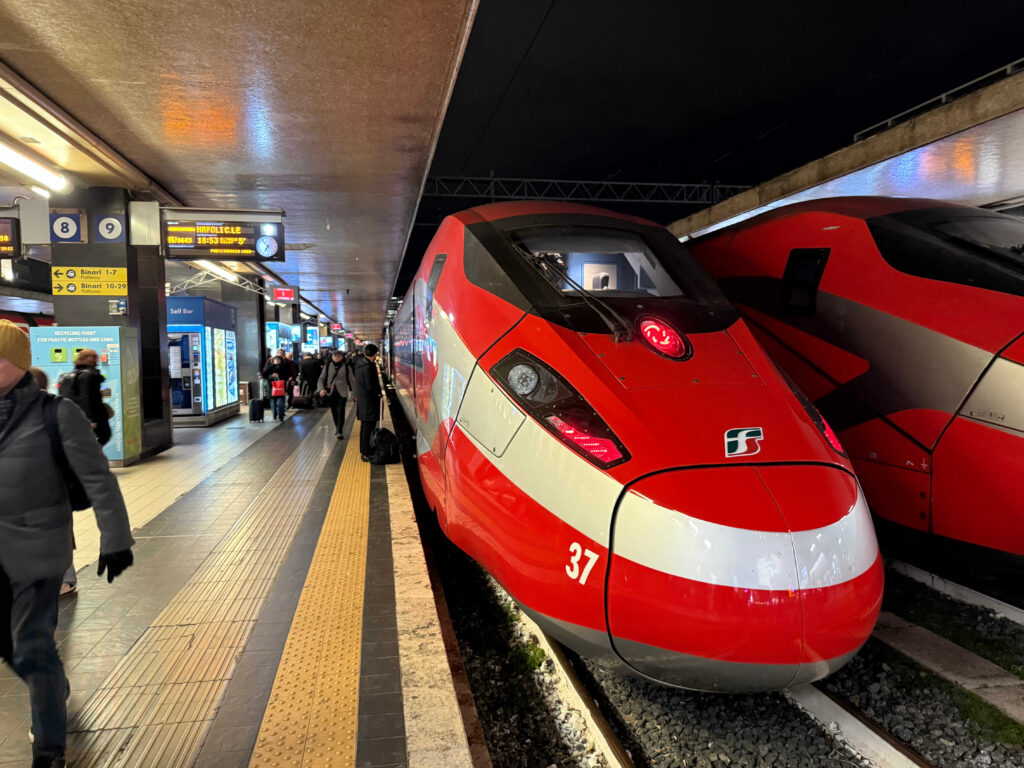
Flash forward to more recent times, in 2008, state-owned Trenitalia introduced the Frecciarossa (red arrow in Italian) brand for its fastest services. This flagship train operates alongside the less premium, but also high-speed variants part of the ‘Le Frecce’ group of trains – namely the Frecciargento (silver arrow) and Frecciabianca (white arrow). Today, the Frecciarossa links cities such as Milan, Florence and Rome at speeds of up to 300 km/h, competing with private operator, Italo who also operate high-speed services.
Curious to see how Italy’s top-tier rail product compares with other European premium rail experiences, I booked a journey in the best class of accommodation on the Frecciarossa – Executive Class. This was for a journey between Bologna and Rome, taking two hours.
Having recently been gifted a replica copy of Bradshaw’s Continental Rail Guide, I had to check the timetable for this route. To travel between these two cities back in 1913, it would take a long nine hours, with the last departure of the day being at 14:15! It’s safe to say it’s a different world now, however having booked the best class arguably in Europe, I wouldn’t have complained to enjoy such a long nine hour stint today.
Before talking about my experience and seeing what’s on offer, here’s the all important route map for the trip from Bologna Centrale to Roma Termini.
Departure from Bologna Centrale
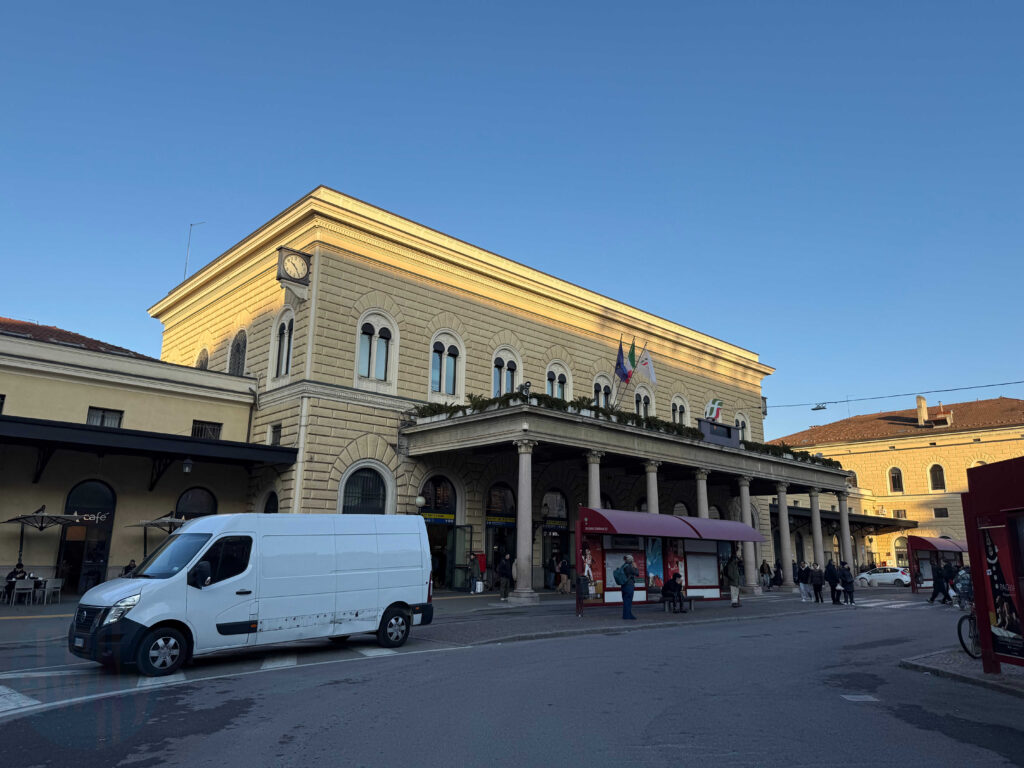
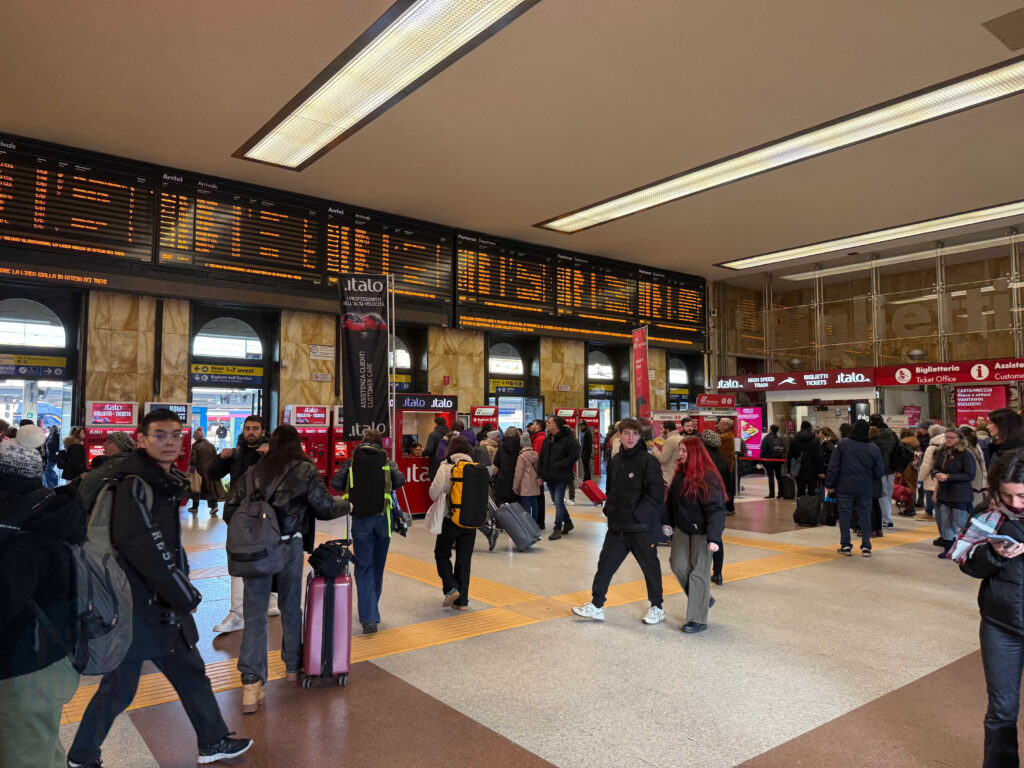
Serving the city centre of Bologna, Bologna Centrale railway station offers the usual facilities for travellers. Inside the main concourse there’s a ticket booking office and self-service ticket machines, along with waiting areas and clear departure boards for checking train departure status and platforms. There are also left-luggage facilities, useful to explore the city between trains without the weight of a small child on your back.
For food and drink, Bologna Centrale has several cafés, snack bars and takeaway outlets, plus small convenience shops and newsstands. Toilets and ATMs are available, and lifts and escalators connect the different platform levels, including the underground high-speed platforms. Overall, it’s a well-equipped station for changing trains or starting a journey across Italy.
Onboard the Frecciarossa 1000
The flagship Frecciarossa offers not one or two, but four classes of travel. I took a trip on one on a dark winter evening in early December booking the most expensive travel class, the Executive Class, as mentioned. Other classes onboard are Standard Class, Premium Class and Business Class, in order of premium-ness.
Executive Class Accommodation
The sleek Frecciarossa glided into Platform 18 at Bologna Centrale station. The doors opened and by the entrance to carriage number 1, home of the Executive Class, two crew members stepped onto the platform. Having to walk past them, this gave a slightly intimidating but exclusive club vibe. Slightly intimidated, I gave a polite nod and boarded the train, questionning whether I should really be there!
Having reminded myself that I did indeed have a ticket to arguably Europe’s most luxurious train carriage in regular passenger service, I walked as confidently as I could to the bottom of the carriage to my booked throne. Seat 1D.
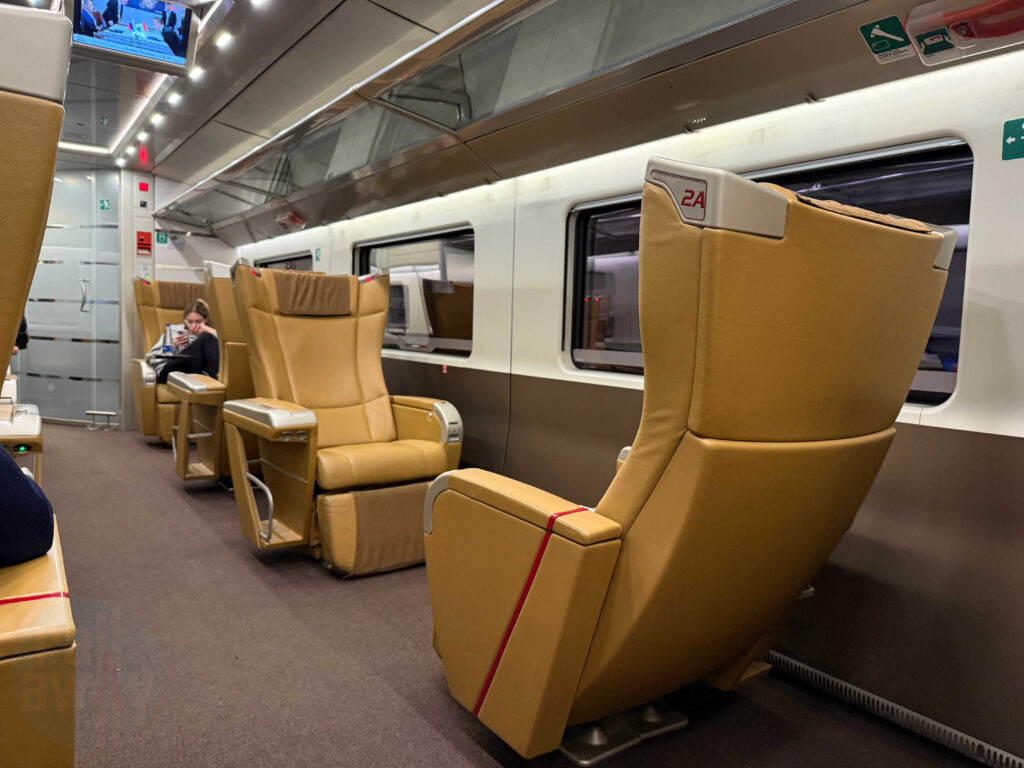
The seat numbers on high speed trains in Italy don’t follow the usual trend of other trains that have numbers only. In an airline-esque way, the ‘1’ represented the first row and ‘D’ was my seat by the window. ‘B’ and ‘C’ didn’t exist in Executive Class at least, with ‘A’ neighbouring ‘D’ across the aisle in a 1+1 configuration. ‘B’ and ‘C’ do exist in Economy Class, however, so there is some logic here.
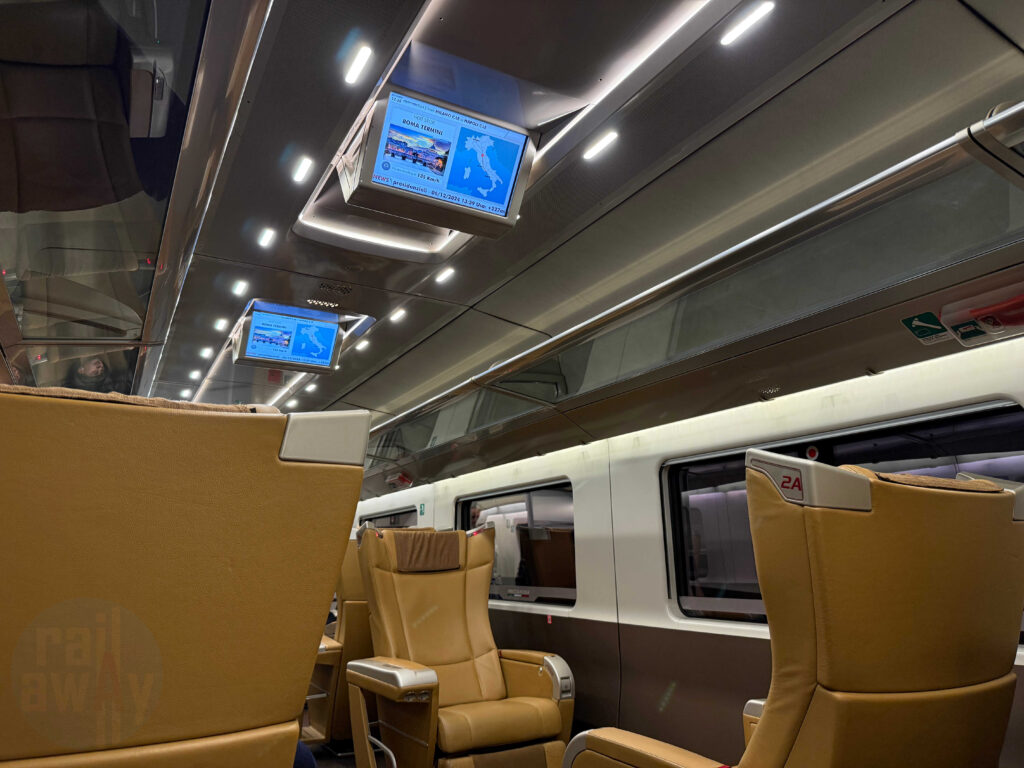
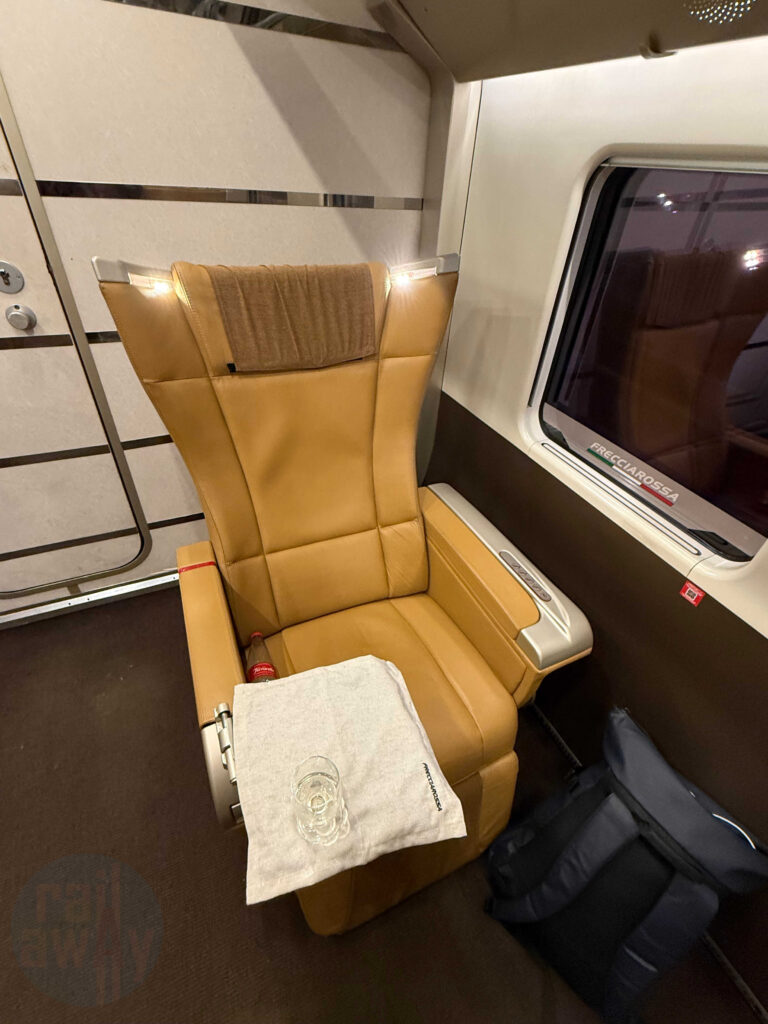
Seat 1D right in the corner offered a panoramic view of the rest of the carriage, perfect for people watching. There are ten seats in Executive Class on the Frecciarossa 1000 train. Today, there was a mixed clientelle of leisure and business travellers so in my t-shirt and shorts I felt accepted.
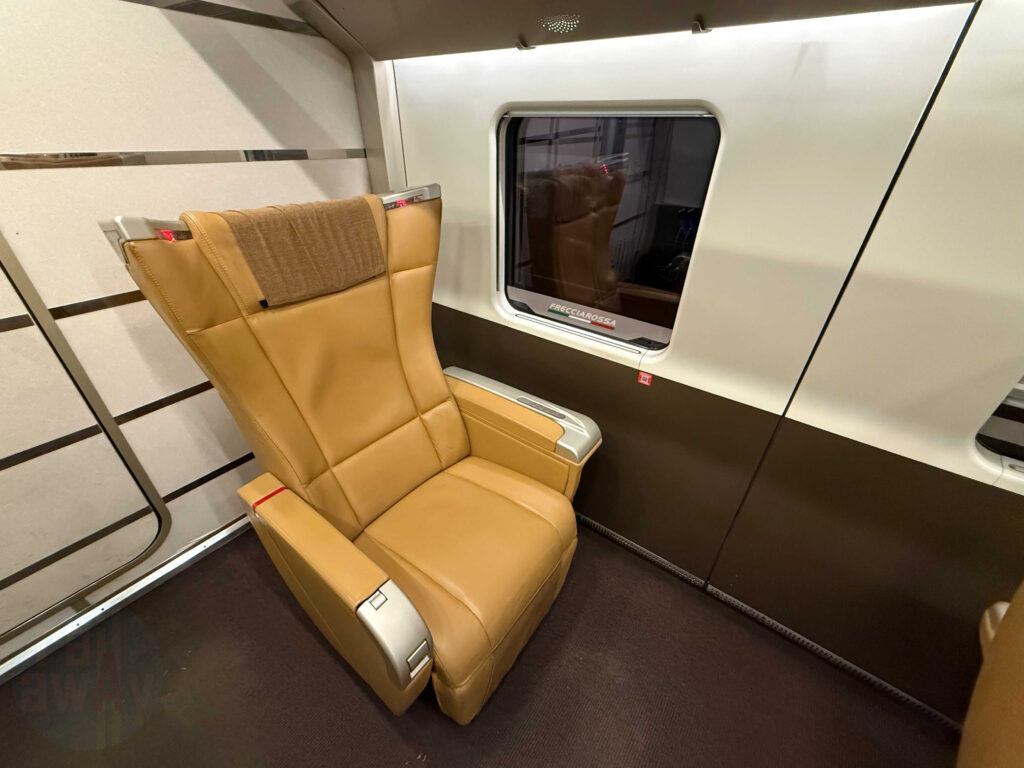
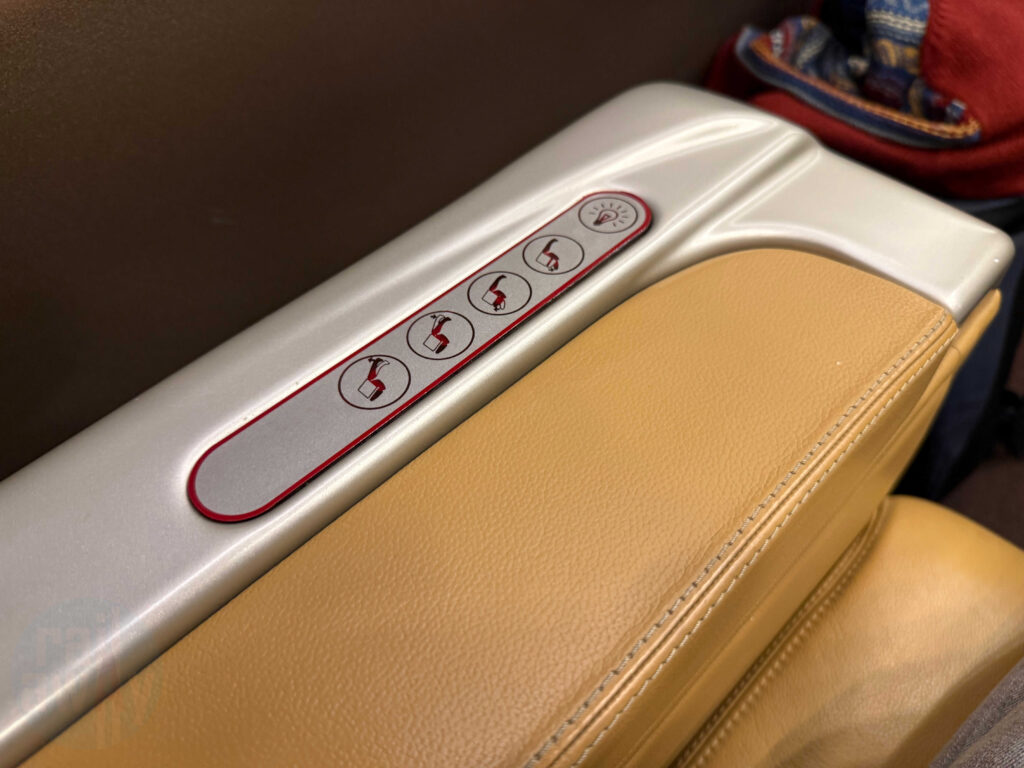
Each high-backed chair is adorned in a classy tan-coloured leather cover, giving slight vibes of an Italian sports car. The aforementioned 1+1 layout is a rare for a train with only two seats per row, really demonstrating next level travel aspiration.
Another feature is that the seats do rotate to face the direction of travel. Particularly useful for journeys that pass through Roma Termini station, which is a terminus where the train changes direction. You can opt to face your fellow travellers or cocoon yourself in solitary confinement. Booking the seat in the corner, with my neighbour rotated to face away from me I didn’t have a choice but to opt for the latter.
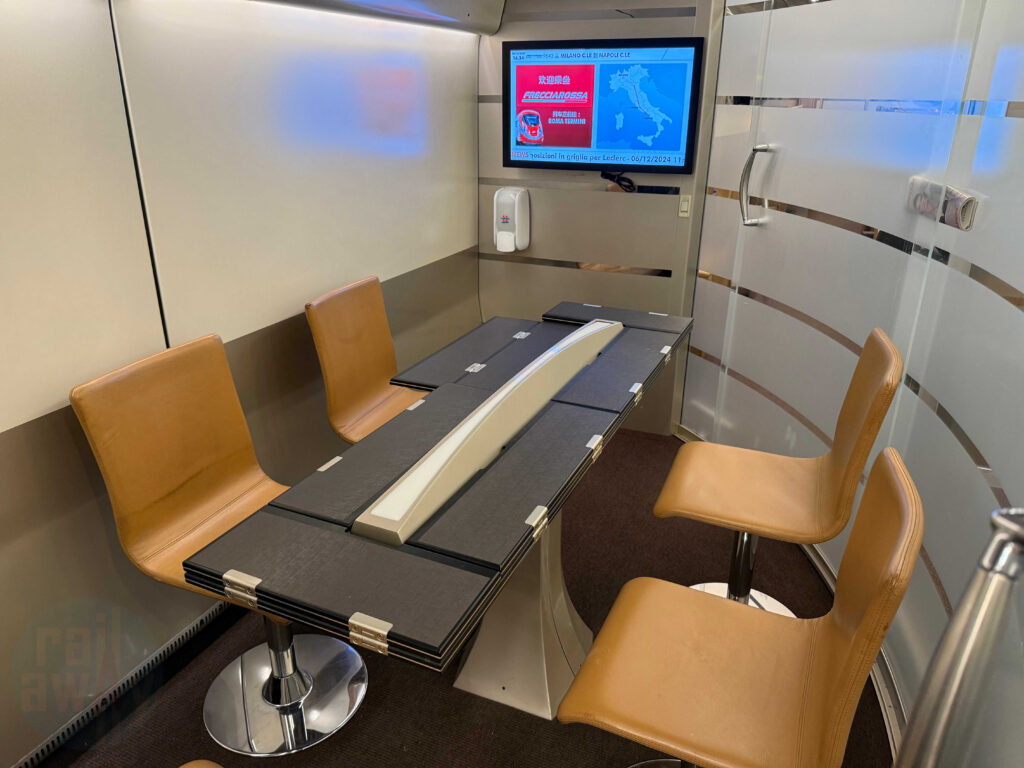
There’s more to the carriage. The Freccarossa Executive Class has its own five-seater meeting room, with the option to book it in advance. This was a cordoned-off room with a glass door for privacy with a small boardroom-style table. It also had its own television screen. The meeting room disappointgly has no windows to the outside world, however this does eliminate all sort of distraction for those trying to work. There is also an Executive Class toilet, but this didn’t appear to be much different to the rest of the train.
Executive Class Food and Drink
Within a minute of sitting down, as the sole passenger boarding in Bologna, I was met by a friendly host who presented me with a hot towel from a tray and offered me a drink.
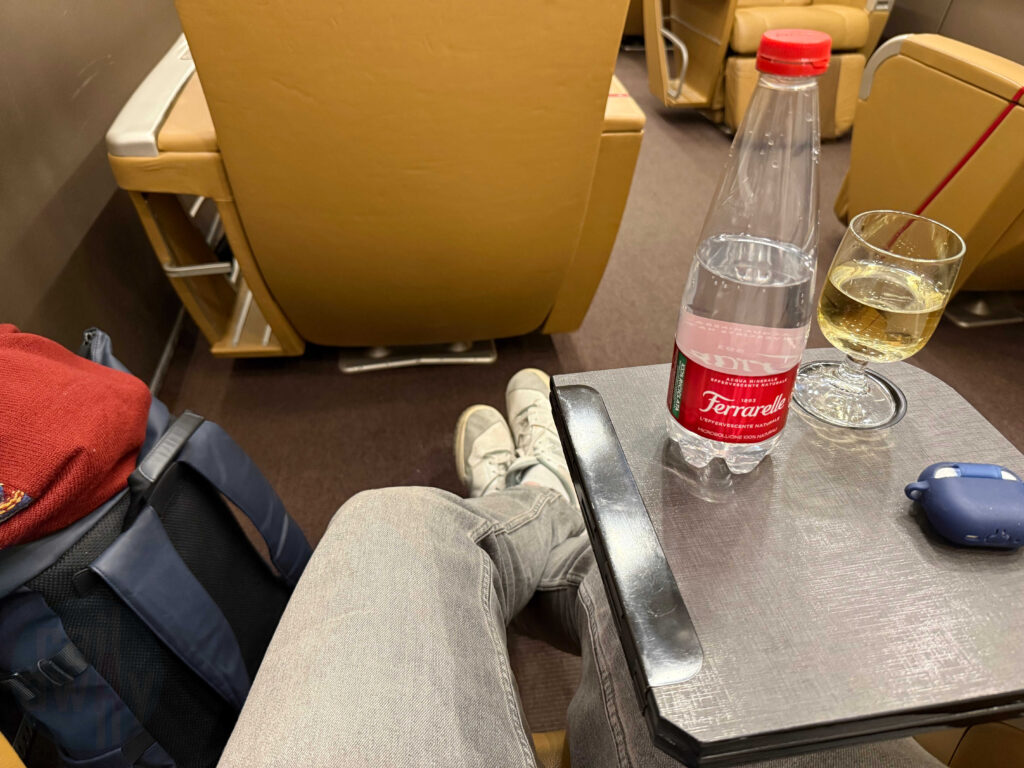
He pulled out the arm of the table in the throne and covered it with a small tablecloth, while handing me the menu – endorsed by Italian celebrity chef Carlo Cracco. This wasn’t a simple menu, there were no less than twelve pages of options. It was safe to say I was spoiled for choice and I was left pondering how they could fit all this food in the somewhat pokey galley by the entrance to the carriage.
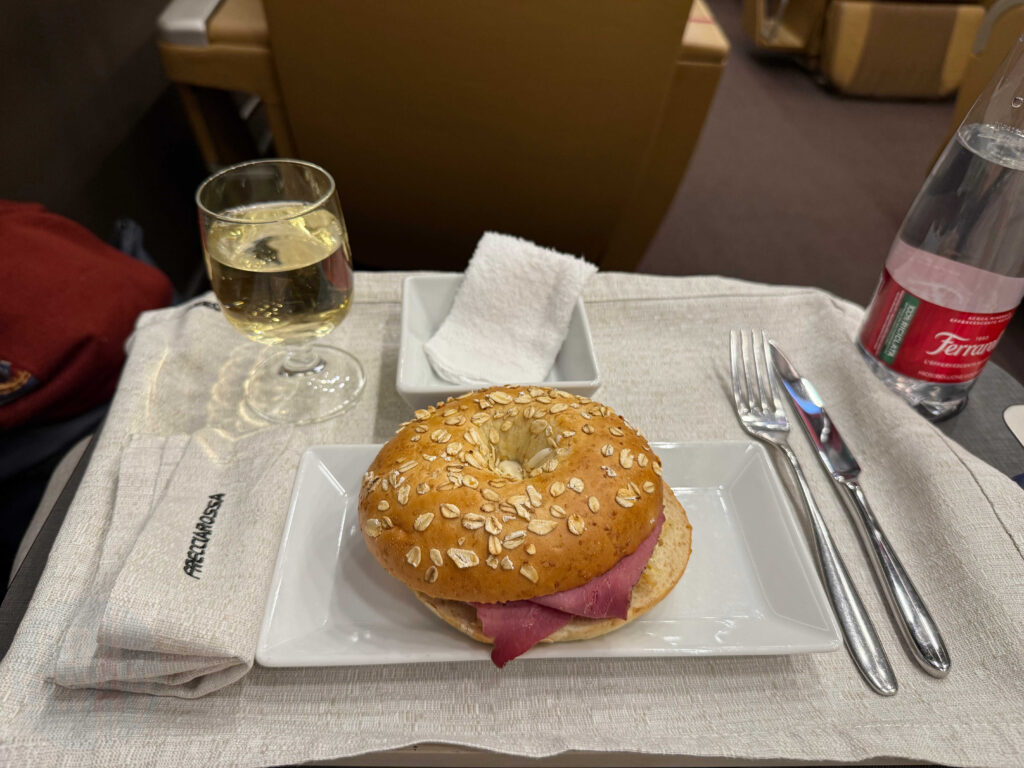
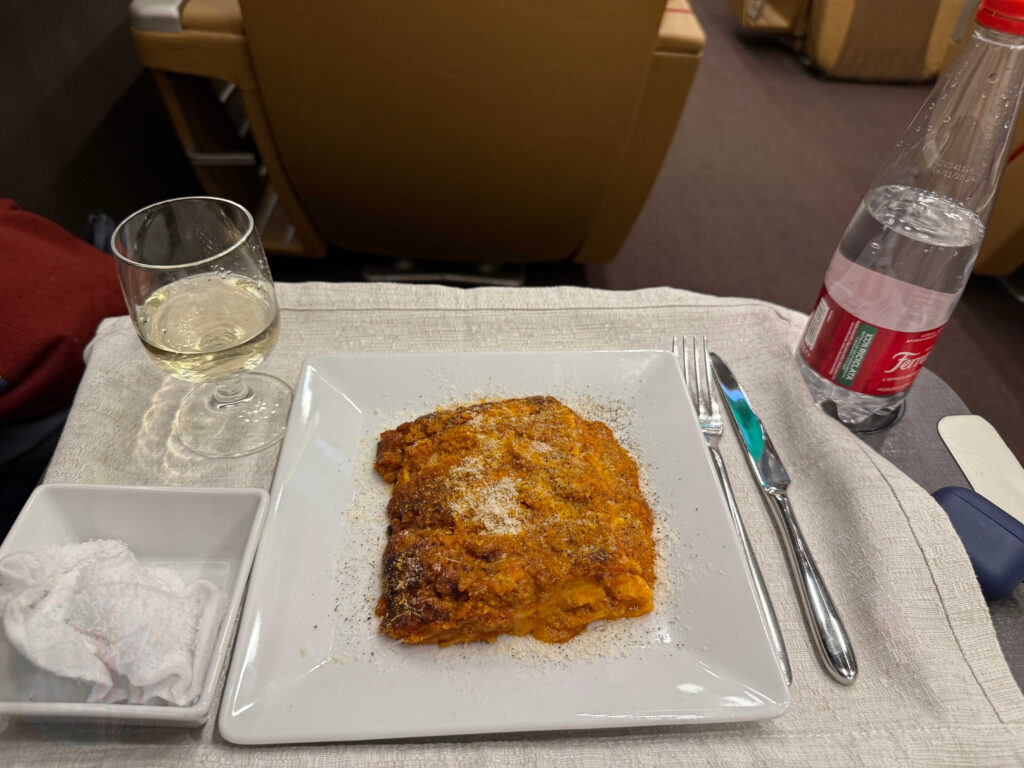
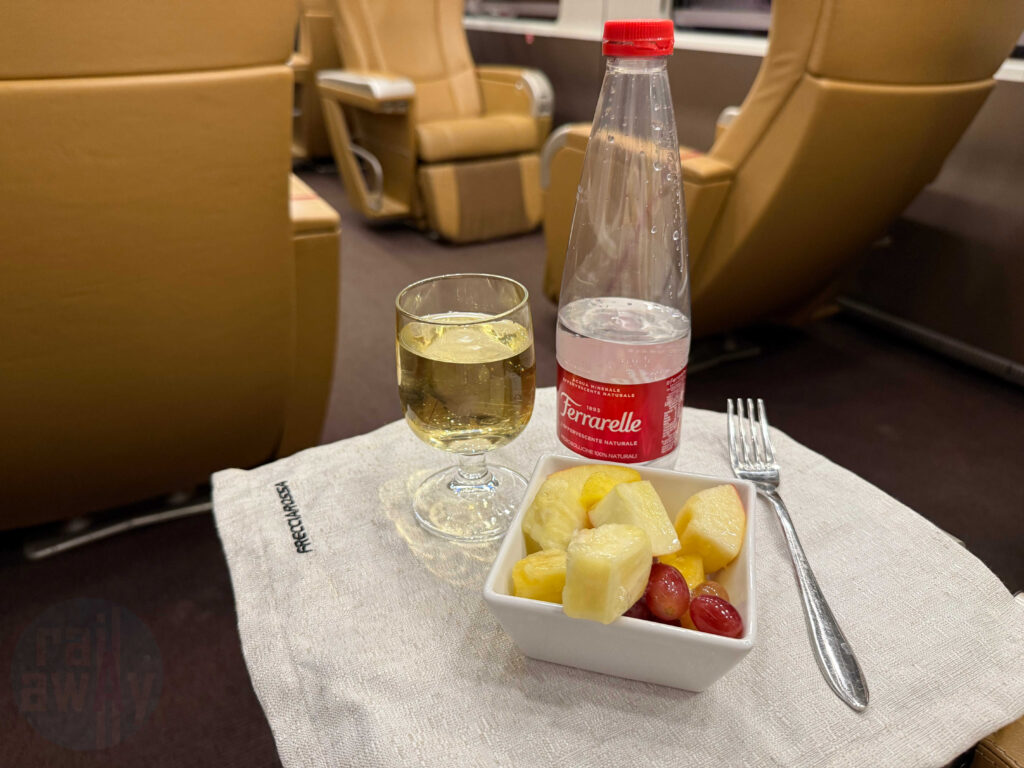
I opted for a Focaccia with bresaola, sautéed asparagus with marjoram and egg cream for a starter. This was then followed by Lasagne that happened to be gluten free, and a bowl of fresh fruit for afters. I chose to wash the meal down with a bottle of water and Italian white wine, losing count of all the top-ups given of the latter! The food was nicely presented, and tasty.
How does Executive Class compare to other classes?
Business Class Accommodation
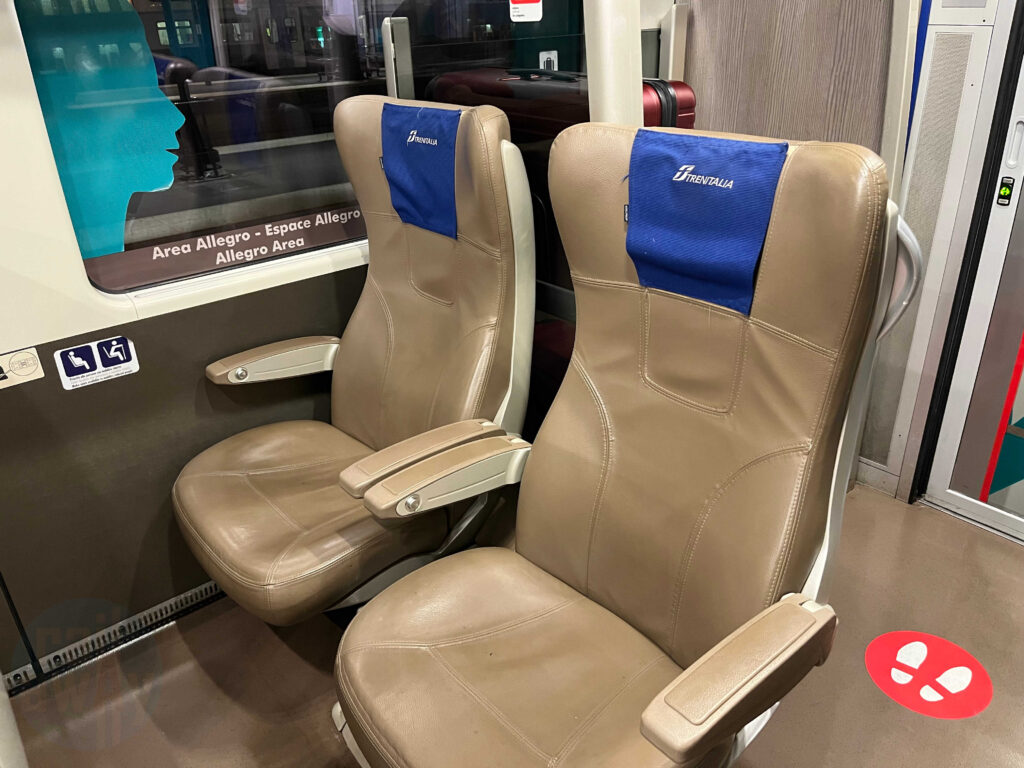
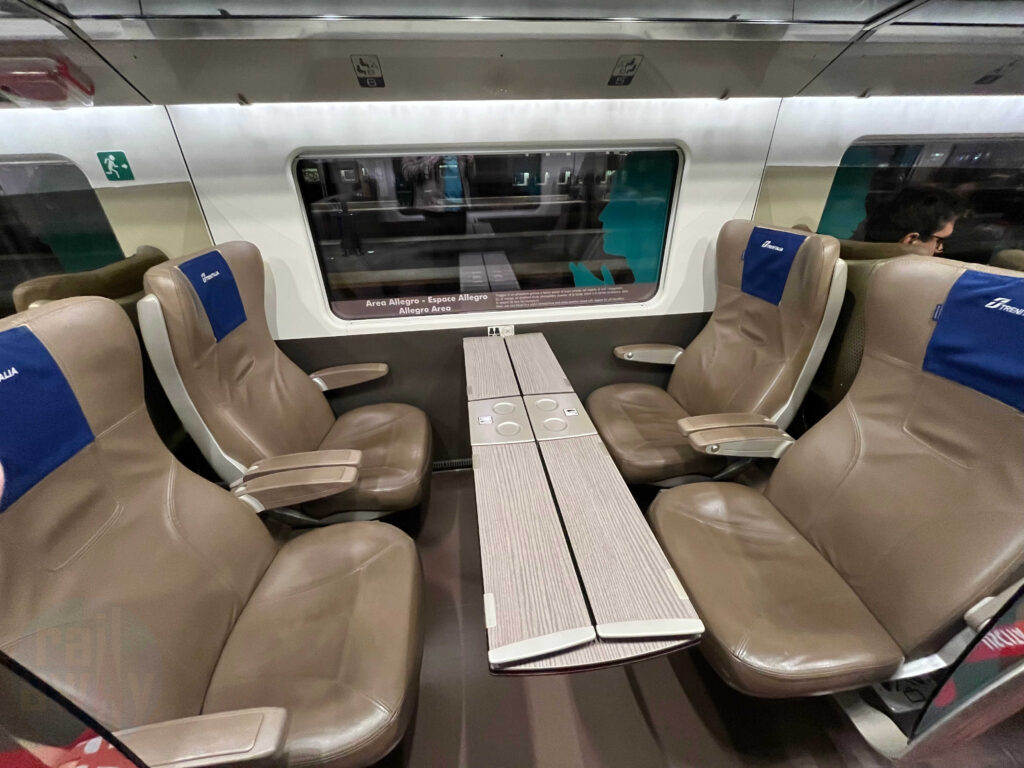
Business Class accommodation is the second most premium type of accommodation onboard the Frecciarossa 1000 train. I took this from Paris to Milan on a previous journey, which you can read about here. Seating is available with three seats across the aisle, in a 2+1 configuration with solo, seating for two or four. These seats are larger than in Premium and Economy classes. In Business Class, a welcome drink and snack box is offerred with food available to purchase from the onboard bistro.
Premium and Economy Class Accommodation
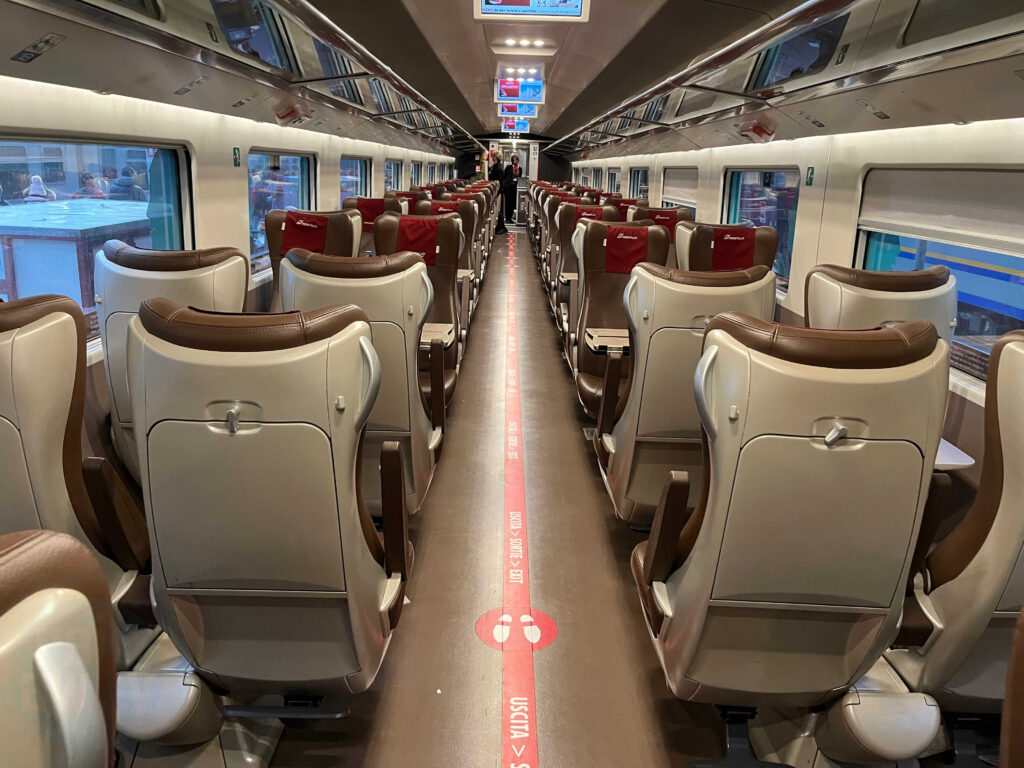
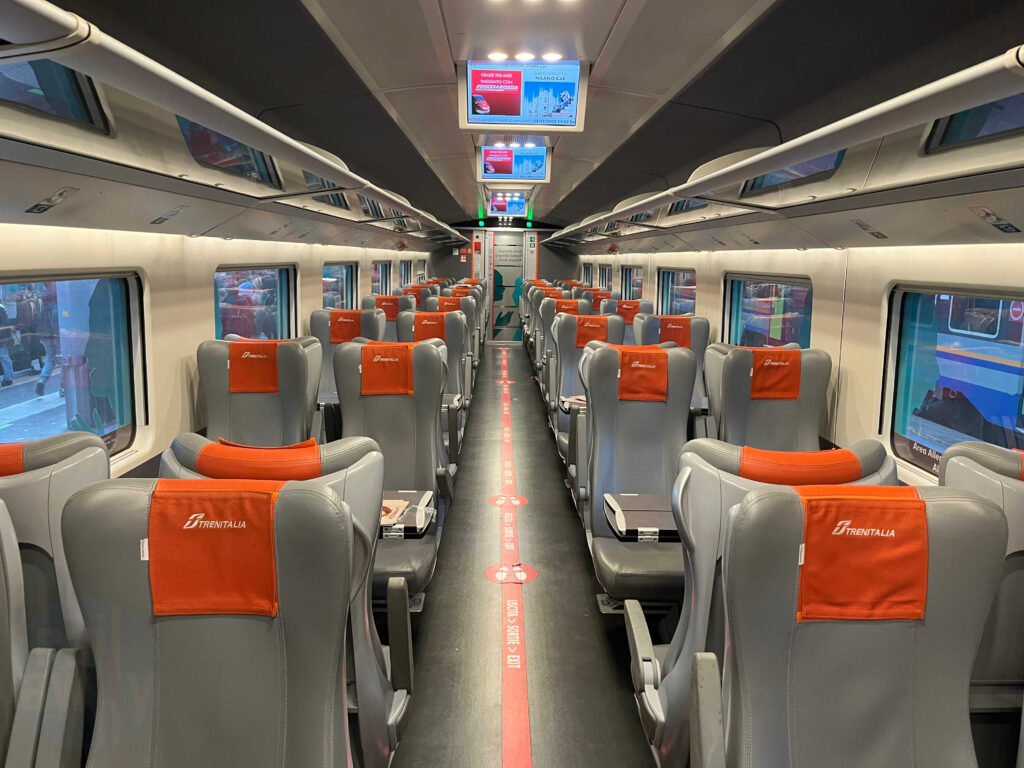
Premium and Economy Class accommodation comes with four seats across in a 2+2 configuration. The former, like Business Class, comes with the perk of a welcome drink and snack box. The seats are identical to Economy Class, despite a brown seat cover in Premium and a grey seat cover in Economy.
Explore More with Rail-Away
Whether you’re planning your next adventure or simply enjoy discovering remarkable rail journeys, explore more travel inspiration, practical guides and real journey experiences from across Europe.
Be inspired by real Journey experiences
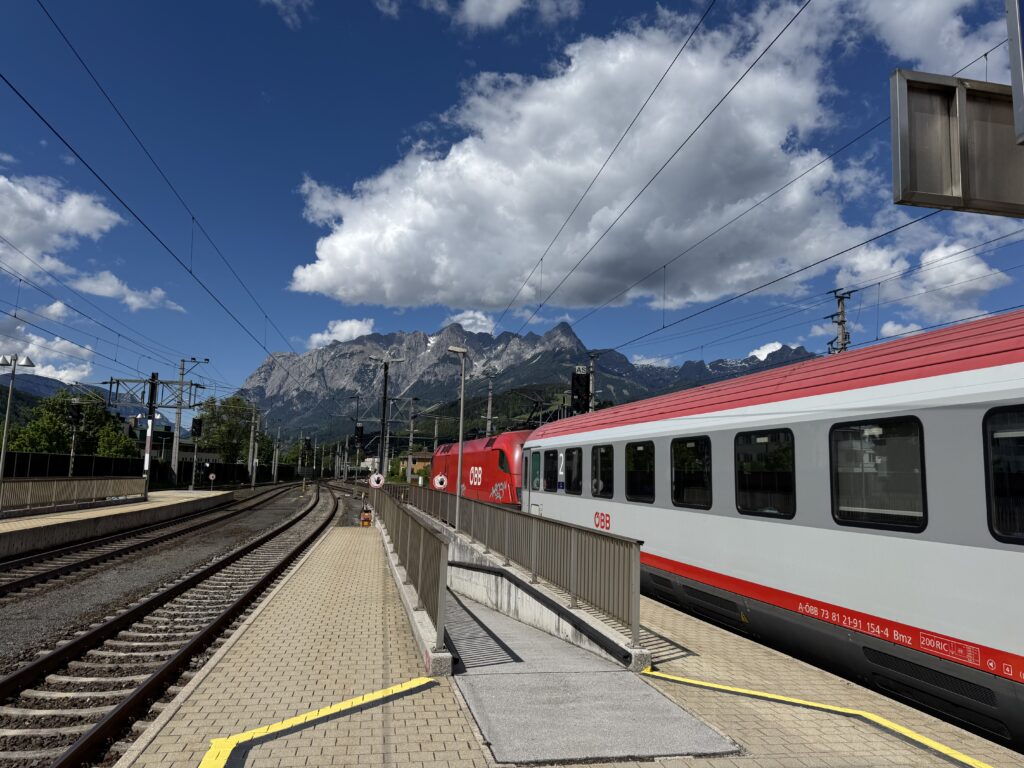
Discover real rail adventures across Europe and beyond, from iconic routes and night trains to hidden gems.
Guides to Get You On Track
Browse practical guides, inspiring itineraries and expert resources to help you explore Europe by train.
Watch the Journey Unfold
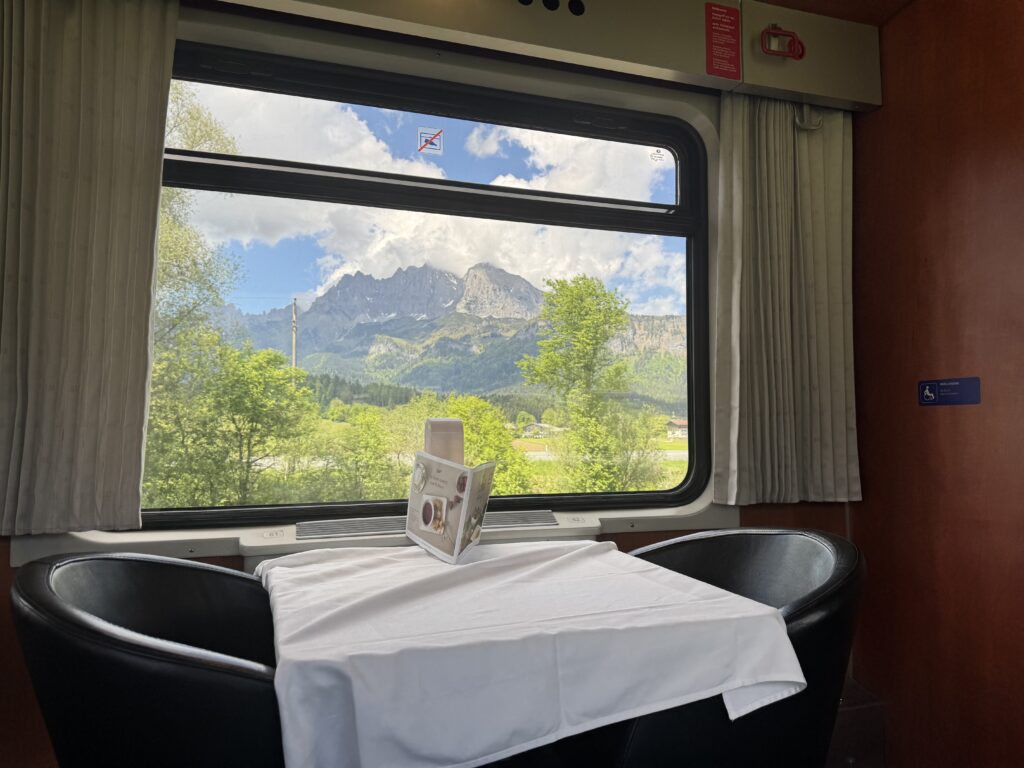
Experience Europe’s most spectacular rail journeys through our videos and witness stunning scenery.
Plan Your Perfect Rail Trip
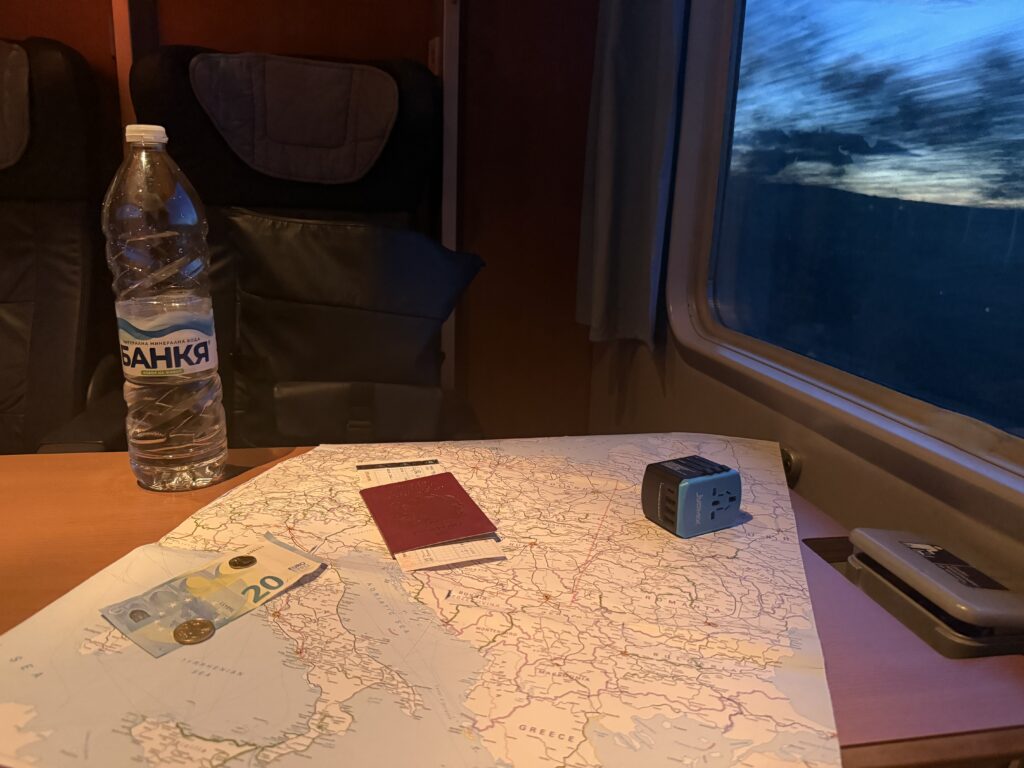
Need a helping hand? Get personalised advice and support to create your perfect European rail adventure.
Arrival at Roma Termini station
After an enjoyable journey in Executive Class on the Frecciarossa train, the train glided into Roma Termini station on Platform 9. The train would sit for a few minutes and continue onward to Napoli Centrale. Convieniently, Executive Class was at the front of the train on arrival, so it meant I didn’t have as far to walk to the statione exit as those in other carriages. Another small win of booking Executive Class.
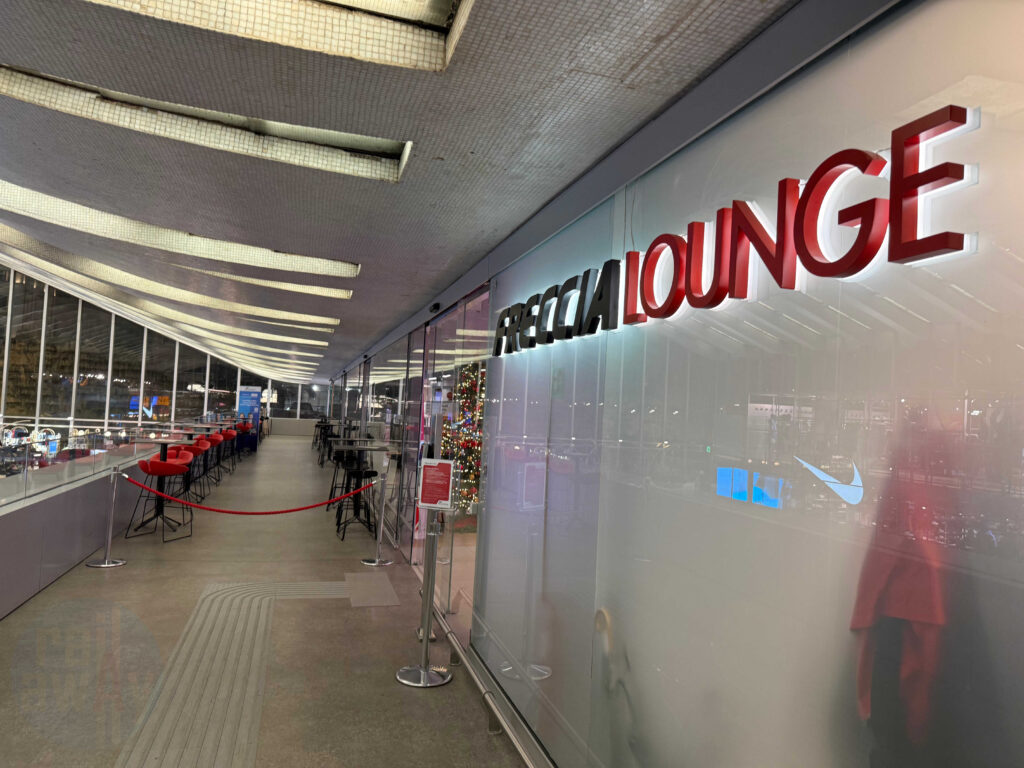
Freecia Lounge, Roma Termini
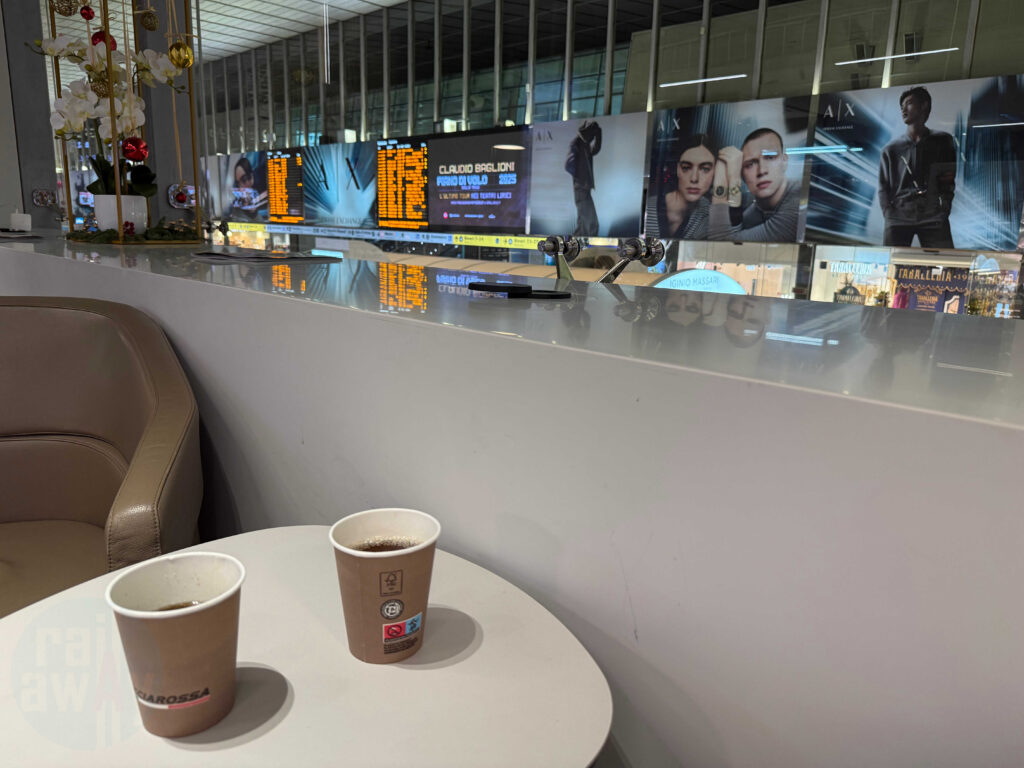
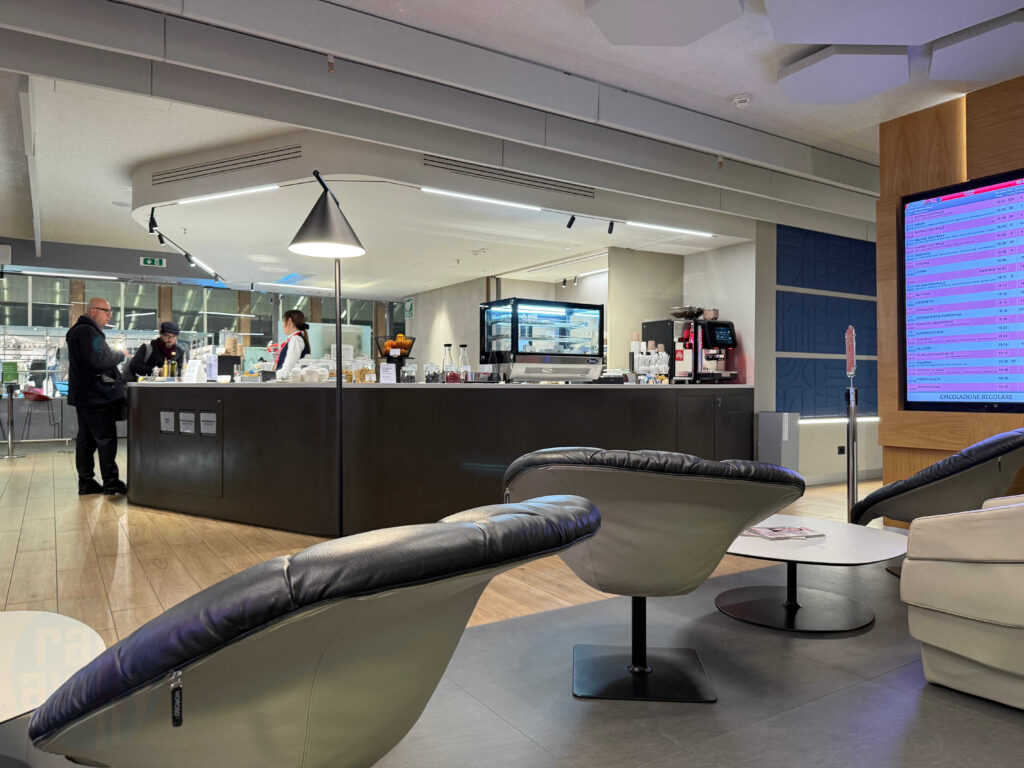
A ticket for Executive Class accommodation granted me access to the Freccia Lounge in Roma Termini, as in other key stations in Italy. Snacks and a limited selection of drinks were on offer, but I find these lounges are merely warm waiting rooms and don’t offer much, not really matching the experience onboard.
Booking and Fares
As you might expect, Europe’s most luxurious train comes at a premium cost, however this cost may not be as high as you might think depending when you book. Pricing is ‘dynamic’, just like air fares and hotels, and other long distance operators in Europe. This means prices increase as inventory is sold and the closer you book closer to departure – so book early to secure the best deals.
What I have found is that the later you book, the lower the differential is between the classes.
As it happened, I had a free upgrade voucher from Business Class being part of the Trenitalia CartaFreccia programme. This journey costed me €87,00 instead of three digits thanks to this. This is free for anyone to join, however, does require some Italian translation. Sign up directly on the Trenitalia website or app.
| Journey Leg | Standard Class | Premium Class | Business Class | Executive Class |
| Bologne to Rome | from €24,90 | from €28,90 | from €34,90 | from €152,90 |
Tickets can be purchased directly from Trenitalia. Alternatively, book with Omio at the link below and support the Rail-Away project.
Book with

Omio simplifies the process of booking train tickets, offering tickets from 1,000 travel companies worldwide. This eliminates the complexity of determining the appropriate operator for your train tickets.
If you book with Omio via the search panel below, Rail-Away earns a small commission that helps to support the running costs of the site at no extra cost to you – this is greatly appreciated
Book with Omio here:
x
Plan Your European Rail Trip for Just £29*
(approx. €33 / $34)
Your custom European rail itinerary – expertly planned, ready to book and delivered within 72 hours.
Planning a multi-city train trip can be confusing and time-consuming. That’s where our Plan My Rail Trip service comes in. We research your route, compare ticket options, and show you how to book the cheapest and most efficient connections available at the time of research — checking both point-to-point tickets and Interrail / Eurail pass fares — so you don’t have to.
All for just £29* – no stress or hours spent researching.
Check out Plan My Rail Trip now at the Rail-Away Shop:
Please note: the above link takes you to the Rail-Away Buy Me A Coffee website where you can review options and, if you choose to, complete your purchase.
*Plan My Rail Trip permits 5 or less travel days and 4 or less stopover locations. Those requiring more will need to purchase the Plan My Rail Trip Plus option. Fares quoted are subject to availability and change. Rail-Away provides research and booking guidance only and does not sell tickets.
How does the Frecciarossa compare to other trains in Europe?
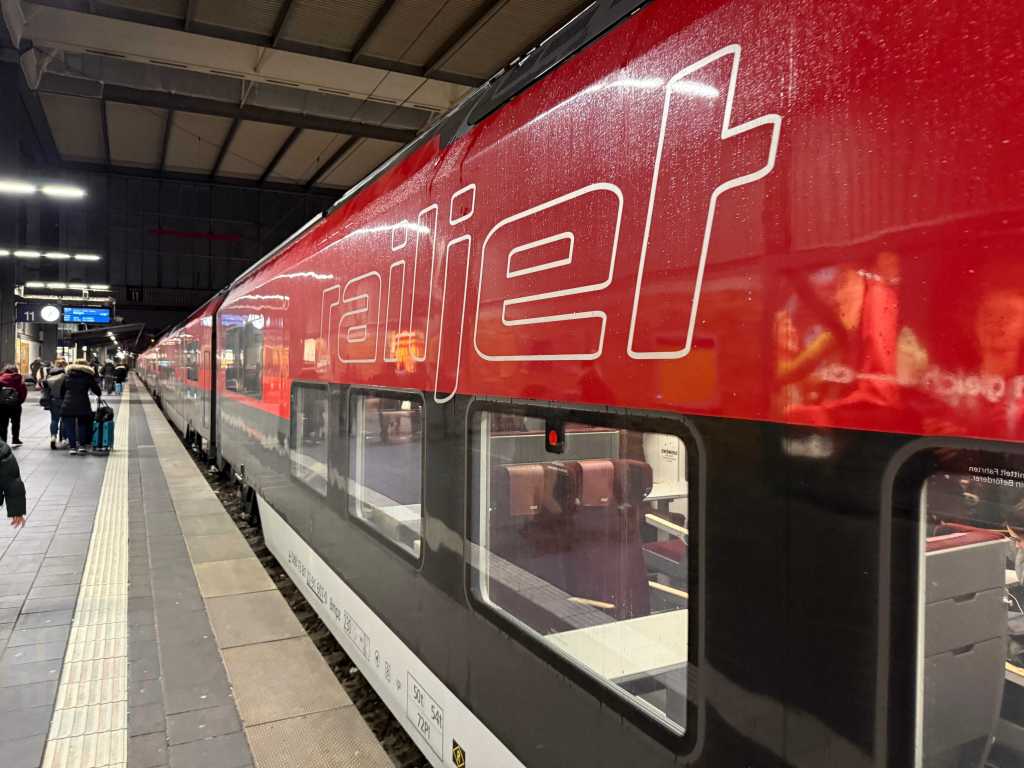
The biggest rival to the Frecciarossa is the RailJet, specifically the first generation type of the Austrial Federal Railways (ÖBB). Here a dedicated carriage for Business Class offers a similar throne-like seat. This is on a similar comfort level, but any food or drink must be purchased from the hosts. Take a look at this RailJet by clicking here to read about my trip across the Alps, or here for the comparison with the EuroCity that operates between Budapest and Vienna.
Conclusion
After two hours gliding south through the Italian countryside, the Frecciarossa 1000 rolled smoothly into Roma Termini bringing my short but memorable journey to an end. While the trip was far quicker than the nine-hour marathon travellers would have faced a century ago, the experience in Executive Class made it feel far more indulgent than hurried.
With just ten seats, attentive service and restaurant-quality dining served at your seat, Executive Class on the Frecciarossa 1000 offers a level of comfort rarely found on regularly scheduled trains in Europe. It feels less like conventional rail travel and more like a private lounge that just happens to be travelling at 300 km/h.
Of course, such luxury normally comes at a price, and for most travellers the excellent Business Class will likely be more than sufficient. However, when fares align or an upgrade opportunity appears, Executive Class is a wonderful way to experience Italy’s flagship high-speed service operated by Trenitalia.
For those curious about the upper end of European rail travel, this is easily one of the most memorable ways to travel between Italy’s great cities.
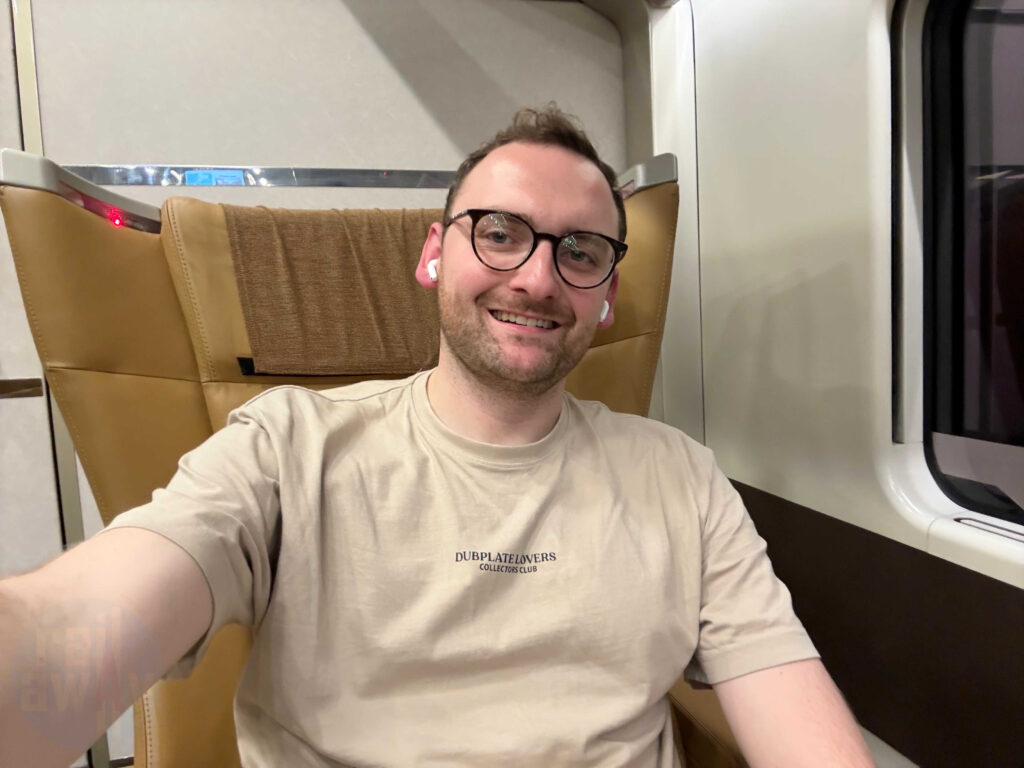
This travel report was first published in April 2026.
See more from Rail-Away

Join 500+ travellers using our expert free train guides!

Travel Europe by Train – Smarter and Easier
Get great routes, fare tips and tricks from our FREE insider guides
Get instant access to:
✓ 3 curated European rail itineraries for your next trip and be inspired
✓ Simple booking and money saving guide and book with confidence
✓ Night train tips and what to expect – optimise your time and experience